Mythical Caves and Gardens: Crash Course World Mythology #32
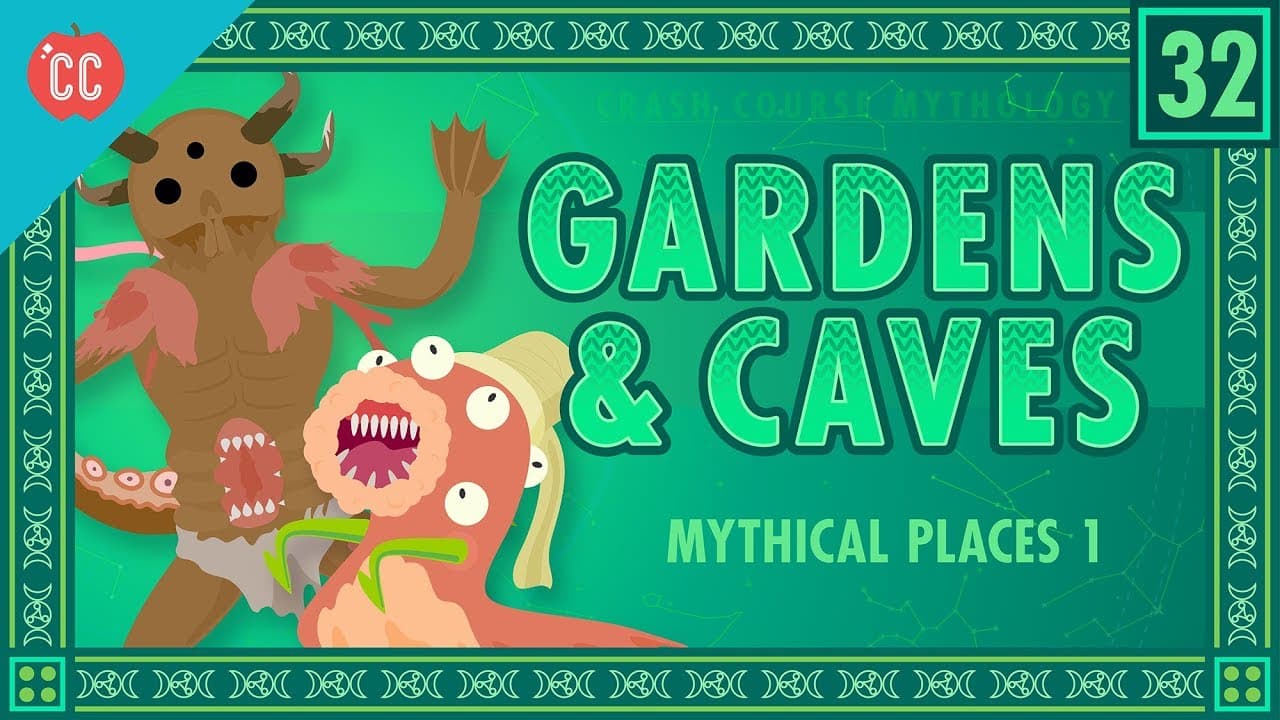
TL;DR
Exploration of mythical gardens and caves in world mythology.
Transcript
Hey there, I'm Mike Rugnetta, this is Crash Course Mythology, And today, we are going- spelunking! Spelunking in the world of myth! Also gardening in the world of myth. You know what they say: Dress for the job you want- not the one you have. Many myths take place outside of time and space, remember, "without form and void"? But often, myths have s... Read More
Key Insights
- Mythical settings like gardens and caves are symbolic in many creation stories, representing paradise and chaos, respectively.
- The Garden of Eden symbolizes a paradise lost due to human disobedience, serving as a metaphor for humanity's fall from grace.
- The Zuni creation myth portrays caves as chaotic origins from which humans emerge into enlightenment and harmony.
- Plato's allegory of the cave parallels the Zuni myth, depicting caves as places of ignorance and the surface as enlightenment.
- The contrasting myths of Eden and Zuni reflect different cultural perceptions of humanity's origins and current state.
- Gardens in myths often symbolize a perfect state, while caves represent darkness and the unknown.
- The Zuni myth involves transformation and adaptation as humans are guided to the surface and gradually perfected.
- The concept of sacred places in myths underscores humanity's quest for balance and enlightenment in the world.
Install to Summarize YouTube Videos and Get Transcripts
Explore YouTube Video Summarizer or Get YouTube Transcript Extractor
Questions & Answers
Q: What symbolic roles do gardens and caves play in myths?
Gardens and caves in myths often symbolize contrasting ideas. Gardens typically represent paradise, perfection, and a state of grace, as seen in the Garden of Eden. In contrast, caves symbolize chaos, darkness, and ignorance, as depicted in the Zuni creation myth. These settings help convey cultural narratives about human origins and enlightenment.
Q: How does the Garden of Eden symbolize humanity's fall?
The Garden of Eden symbolizes humanity's fall by representing a paradise from which humans are expelled due to disobedience. This myth reflects the idea of a lost perfect state and serves as a metaphor for humanity's transition from grace to a world marked by suffering and broken relationships, as highlighted by mythology scholars.
Q: What is the significance of the Zuni creation myth?
The Zuni creation myth is significant for its portrayal of humanity's emergence from chaotic caves into a world of enlightenment and harmony. It contrasts with the Eden myth by depicting the earth as a reward for escaping chaos, emphasizing transformation and adaptation as humans are guided to a more perfect state.
Q: How does Plato's allegory of the cave relate to the Zuni myth?
Plato's allegory of the cave relates to the Zuni myth by depicting caves as places of ignorance and the surface as enlightenment. Both narratives emphasize the journey from darkness to understanding, symbolizing humanity's quest for knowledge and truth, with Plato using the cave to illustrate philosophical enlightenment.
Q: What cultural perspectives do the Eden and Zuni myths reflect?
The Eden and Zuni myths reflect different cultural perspectives on human origins and current state. The Eden myth views earth as a punishment after losing paradise, while the Zuni myth sees it as a reward for overcoming chaos. These narratives influence cultural attitudes toward life and humanity's place in the world.
Q: How are humans transformed in the Zuni creation myth?
In the Zuni creation myth, humans are transformed from chaotic, incomplete beings into complete individuals as they emerge from caves. Guided by divine figures, they undergo physical changes, such as gaining mouths and losing webbed features, symbolizing their adaptation to the new world and achieving a state of harmony.
Q: What is the role of sacred places in Zuni mythology?
In Zuni mythology, sacred places play a crucial role in the journey toward balance and enlightenment. As humans emerge from the caves, they travel to various sacred sites, each representing stages of transformation. These sites are connected by the region's river, symbolizing the interconnectedness of their spiritual journey.
Q: How do gardens and caves symbolize human enlightenment?
Gardens and caves symbolize human enlightenment through their contrasting representations of paradise and chaos. Gardens, like Eden, signify a lost state of grace and perfection, while caves, as seen in the Zuni myth and Plato's allegory, represent ignorance and darkness. Emerging from caves symbolizes the journey to understanding and enlightenment.
Summary & Key Takeaways
-
This episode of Crash Course Mythology delves into the symbolic roles of gardens and caves in creation myths across cultures. It contrasts the Garden of Eden's paradise with the Zuni emergence story's chaotic caves, highlighting different cultural perspectives on human origins and enlightenment.
-
Gardens and caves are explored as significant settings in mythology, representing paradise and chaos, respectively. The episode discusses the Garden of Eden and the Zuni creation myth, illustrating how these settings symbolize humanity's fall from grace or emergence into enlightenment.
-
The episode examines the symbolic meanings of gardens and caves in myths, focusing on the Garden of Eden and the Zuni creation story. These settings reflect cultural views on humanity's origins, contrasting a lost paradise with a chaotic beginning leading to enlightenment.
Read in Other Languages (beta)
Share This Summary 📚
Summarize YouTube Videos and Get Video Transcripts with 1-Click
Try YouTube Summary with ChatGPT & Claude or YouTube Transcript Generator
Explore More Summaries from CrashCourse 📚




Summarize YouTube Videos and Get Video Transcripts with 1-Click
Try YouTube Summary with ChatGPT & Claude or YouTube Transcript Generator