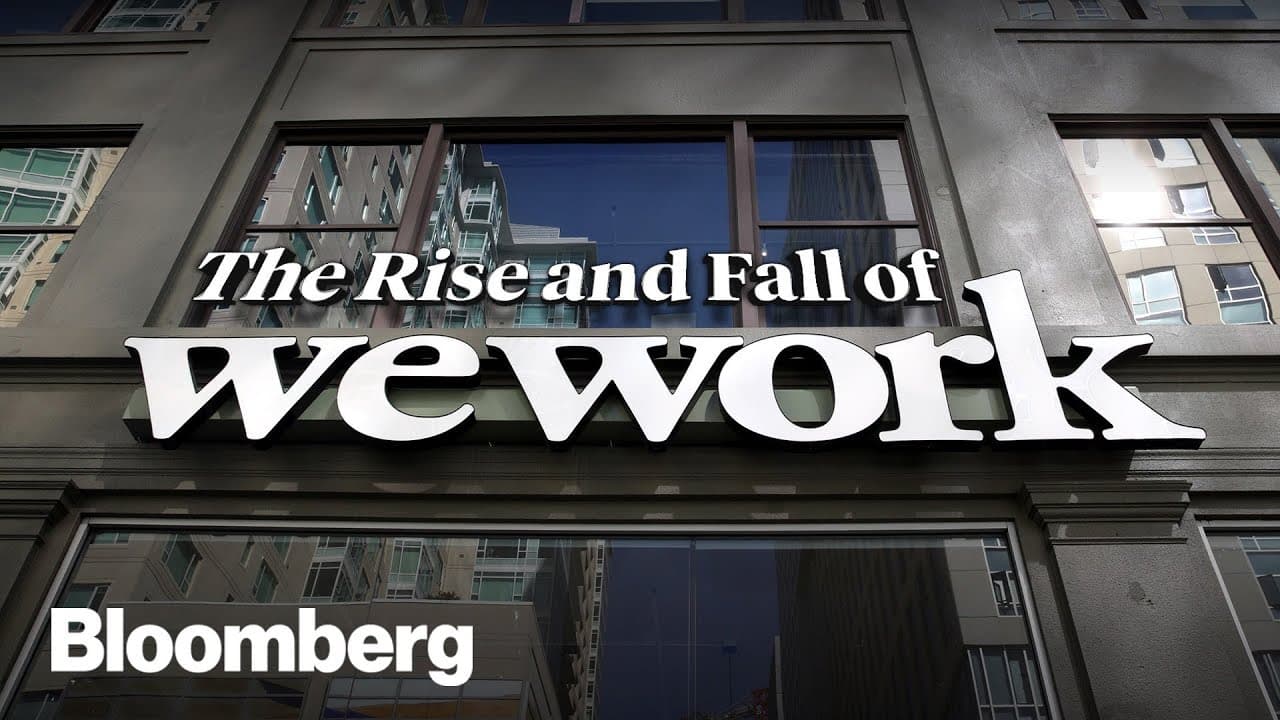
What Led to WeWork's Downfall?
TL;DR
WeWork's rapid rise and dramatic fall highlight the risks of unchecked growth and lack of oversight. Initially valued at $47 billion, WeWork's valuation plummeted due to poor financial management and leadership issues, culminating in a failed IPO and a bailout by SoftBank. The case underscores the importance of sustainable business practices.
Transcript
I think when you cover IPOs and high-flying startups you're used to seeing dramatic changes over short periods of time. But nothing in my experience has really compared to what WeWork has undergone. I think people felt like they blinked, and everything was different. At last reporting, they're running out of cash very quickly here. Sources have tol... Read More
Key Insights
- WeWork's valuation soared to $47 billion before collapsing.
- Adam Neumann's leadership style and decisions were pivotal in WeWork's trajectory.
- SoftBank's massive investments fueled WeWork's rapid expansion.
- Financial mismanagement and lack of oversight led to WeWork's downfall.
- The failed IPO exposed WeWork's financial vulnerabilities.
- WeWork's business model was compared unfavorably to IWG, a profitable competitor.
- SoftBank's bailout was crucial to WeWork's survival post-collapse.
- The WeWork saga serves as a cautionary tale for startups on the dangers of unchecked growth.
Install to Summarize YouTube Videos and Get Transcripts
Explore YouTube Video Summarizer or Get YouTube Transcript Extractor
Questions & Answers
Q: How did WeWork's valuation collapse?
WeWork's valuation collapsed due to a combination of factors, including reckless spending, poor financial management, and leadership issues. The company's rapid expansion, fueled by significant investments from SoftBank, was unsustainable. The failed IPO exposed WeWork's financial vulnerabilities, leading to a dramatic drop in valuation and necessitating a bailout to avoid bankruptcy.
Q: What role did Adam Neumann play in WeWork's rise and fall?
Adam Neumann, as co-founder and CEO, was instrumental in WeWork's initial success, promoting a vision of a new work environment. However, his leadership was marked by controversial decisions, such as self-enrichment practices and lack of financial oversight, which contributed to the company's eventual downfall. His resignation was a turning point in WeWork's crisis.
Q: Why did SoftBank invest heavily in WeWork?
SoftBank invested heavily in WeWork as part of its strategy to back transformative companies with high growth potential. SoftBank's Vision Fund aimed to accelerate WeWork's expansion globally, believing in its innovative co-working model. However, the lack of profitability and governance issues at WeWork eventually led to financial instability, challenging SoftBank's investment strategy.
Q: What were the financial issues revealed by WeWork's IPO filing?
WeWork's IPO filing revealed significant financial issues, including massive losses and unsustainable spending. In the first half of 2019 alone, WeWork lost $690 million, with total losses nearing $3 billion over three years. The filing also highlighted questionable leadership practices, such as Adam Neumann's self-dealing, which raised red flags among potential investors.
Q: How did WeWork's business model compare to IWG's?
WeWork's business model was often compared unfavorably to IWG's. While both companies operated in the co-working space, IWG was profitable and traded at a fraction of WeWork's valuation. WeWork's high valuation was seen as inflated, given its lack of profitability and financial instability, whereas IWG demonstrated a sustainable business model with consistent earnings.
Q: What were the consequences of WeWork's failed IPO?
The failed IPO had severe consequences for WeWork, leading to a dramatic devaluation and financial crisis. It exposed the company's unsustainable financial practices and governance issues, resulting in leadership changes and a bailout by SoftBank. The IPO failure also led to layoffs and restructuring efforts, as the company struggled to stabilize its operations.
Q: How did SoftBank's bailout affect WeWork?
SoftBank's bailout was crucial in preventing WeWork's bankruptcy, injecting $9.5 billion into the company. This financial rescue allowed WeWork to continue operations but at a significantly reduced valuation. The bailout also led to leadership changes and restructuring efforts, as SoftBank sought to stabilize the company and protect its investment amid ongoing financial challenges.
Q: What lessons can startups learn from WeWork's story?
Startups can learn important lessons from WeWork's story, particularly the risks of rapid expansion without sustainable business practices. The importance of financial oversight, effective leadership, and realistic valuations are critical. WeWork's downfall underscores the dangers of prioritizing growth over profitability and the need for governance structures to prevent reckless decision-making.
Summary & Key Takeaways
-
WeWork experienced a meteoric rise, reaching a $47 billion valuation, driven by ambitious expansion and significant investments from SoftBank. However, financial mismanagement, poor leadership, and a failed IPO led to its dramatic fall, necessitating a bailout to stay afloat. The company's story serves as a warning about the perils of rapid growth without adequate oversight.
-
Adam Neumann's leadership and vision initially propelled WeWork to success, but his controversial decisions and self-enrichment practices contributed to the company's decline. The failed IPO revealed WeWork's financial instability, forcing SoftBank to intervene with a substantial bailout to prevent bankruptcy.
-
The WeWork case highlights the risks associated with the startup culture of rapid expansion and easy money. Despite its innovative co-working model, WeWork's lack of profitability and governance issues ultimately led to its downfall, emphasizing the need for sustainable business practices and effective leadership.
Read in Other Languages (beta)
Share This Summary 📚
Summarize YouTube Videos and Get Video Transcripts with 1-Click
Try YouTube Summary with ChatGPT & Claude or YouTube Transcript Generator
Explore More Summaries from Bloomberg Originals 📚





Summarize YouTube Videos and Get Video Transcripts with 1-Click
Try YouTube Summary with ChatGPT & Claude or YouTube Transcript Generator