What Is Anthropic's Responsible Scaling Policy?
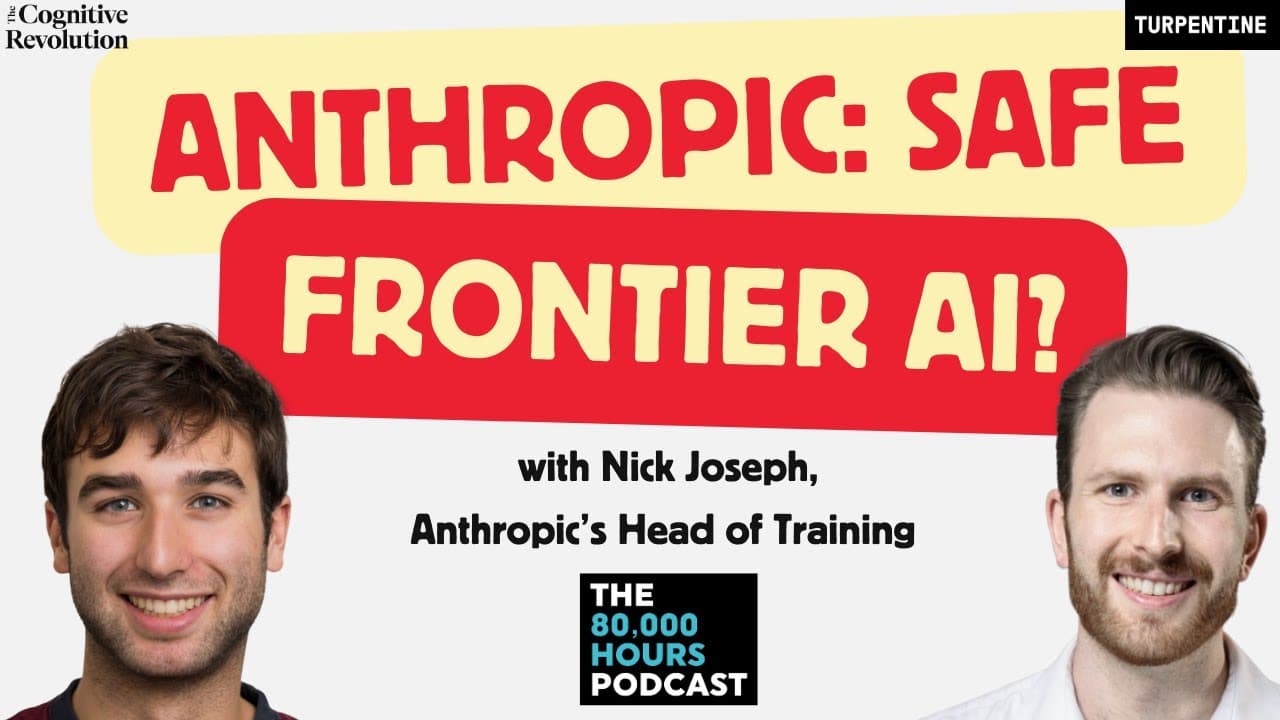
TL;DR
Anthropic's Responsible Scaling Policy (RSP) aims to govern the development of AI models by setting safety levels and evaluations to mitigate risks. The policy outlines precautions for different levels of model capabilities and requires rigorous testing to ensure safety. The RSP emphasizes aligning commercial incentives with safety goals, ensuring that models are deployed safely without compromising innovation or security.
Transcript
hello and welcome to the cognitive Revolution where we interview Visionary researchers entrepreneurs and Builders working on the frontier of artificial intelligence each week we'll explore their revolutionary ideas and together we'll build a picture of how AI technology will transform work life and Society in the coming years I'm Nathan lens joined... Read More
Key Insights
- Anthropic's Responsible Scaling Policy (RSP) sets safety levels and evaluations to manage AI risks.
- The RSP includes precautions for different capability levels to ensure safe AI model deployment.
- Anthropic's RSP aims to align commercial incentives with safety goals, integrating safety into business processes.
- Safety evaluations include tests for model capabilities like cyberattacks and autonomy to prevent misuse.
- The policy allows for iterative updates to adapt to new risks and evolving AI capabilities.
- Anthropic's RSP is a step towards potential future regulations and external auditing of AI safety.
- Concerns include the need for trust in good faith implementation and the challenge of defining precise safety measures.
- The RSP encourages collaboration and transparency to foster public trust and inform future AI safety regulations.
Install to Summarize YouTube Videos and Get Transcripts
Explore YouTube Video Summarizer or Get YouTube Transcript Extractor
Questions & Answers
Q: What is Anthropic's Responsible Scaling Policy?
Anthropic's Responsible Scaling Policy (RSP) is a framework designed to manage the development of AI models by setting safety levels and conducting evaluations to mitigate risks. It outlines precautions for different levels of model capabilities and requires rigorous testing to ensure safe deployment. The RSP aims to align commercial incentives with safety goals, integrating safety into business processes.
Q: How does the RSP ensure AI model safety?
The RSP ensures AI model safety by establishing safety levels and conducting evaluations to assess model capabilities. It includes precautions for different capability levels, such as enhanced security measures and red teaming, to prevent misuse. The policy mandates rigorous testing and iterative updates to adapt to new risks and evolving AI capabilities, aligning safety goals with commercial incentives.
Q: What are the key components of Anthropic's RSP?
Key components of Anthropic's RSP include setting safety levels, conducting evaluations to assess model capabilities, and implementing precautions for different capability levels. The policy requires rigorous testing to ensure safe deployment and aligns commercial incentives with safety goals. It allows for iterative updates to adapt to new risks and evolving AI capabilities, fostering transparency and collaboration.
Q: How does the RSP align commercial incentives with safety goals?
The RSP aligns commercial incentives with safety goals by integrating safety into business processes and making safety evaluations a prerequisite for model deployment. This approach ensures that safety teams are under the same pressure as product teams to meet safety standards before releasing models, thereby aligning the company's commercial success with its commitment to safe AI development.
Q: What challenges does the RSP face in implementation?
Challenges in implementing the RSP include ensuring trust in good faith execution, defining precise safety measures, and adapting to evolving AI capabilities. The policy relies on rigorous testing and iterative updates, but its effectiveness depends on the commitment of those implementing it. There is also a need for potential future regulations and external auditing to strengthen accountability and public trust.
Q: How does the RSP address potential AI misuse?
The RSP addresses potential AI misuse by setting safety levels and conducting evaluations to assess model capabilities, such as cyberattacks and autonomy. Precautions for different capability levels include enhanced security measures and red teaming to test for vulnerabilities. The policy mandates rigorous testing and iterative updates to adapt to new risks, ensuring responsible AI development and deployment.
Q: What role does transparency play in the RSP?
Transparency plays a crucial role in the RSP by fostering public trust and informing future AI safety regulations. The policy encourages collaboration and open communication about safety evaluations and precautions. By sharing insights and updates, Anthropic aims to build confidence in its commitment to safe AI development and contribute to the broader discussion on AI safety standards.
Q: How might the RSP influence future AI safety regulations?
The RSP might influence future AI safety regulations by serving as a model for responsible AI development. Its framework of safety levels, evaluations, and precautions provides a structured approach to managing AI risks. By demonstrating a commitment to rigorous testing and aligning safety with commercial incentives, the RSP could inform the development of regulatory standards and external auditing practices for AI safety.
Summary & Key Takeaways
-
Anthropic's Responsible Scaling Policy (RSP) establishes safety levels and evaluations to manage AI model risks. It includes precautions for different capability levels, ensuring safe deployment. The RSP aligns commercial incentives with safety goals, integrating safety into business processes. (50 words)
-
Safety evaluations test model capabilities like cyberattacks and autonomy to prevent misuse. The RSP allows iterative updates to adapt to new risks and evolving AI capabilities. It serves as a step towards potential future regulations and external auditing of AI safety. (50 words)
-
Concerns about the RSP include trust in good faith implementation and defining precise safety measures. The policy encourages collaboration and transparency to foster public trust and inform future AI safety regulations. It emphasizes aligning safety with commercial incentives, ensuring rigorous testing and responsible AI development. (50 words)
Read in Other Languages (beta)
Share This Summary 📚
Summarize YouTube Videos and Get Video Transcripts with 1-Click
Try YouTube Summary with ChatGPT & Claude or YouTube Transcript Generator
Explore More Summaries from Cognitive Revolution "How AI Changes Everything" 📚






Summarize YouTube Videos and Get Video Transcripts with 1-Click
Try YouTube Summary with ChatGPT & Claude or YouTube Transcript Generator