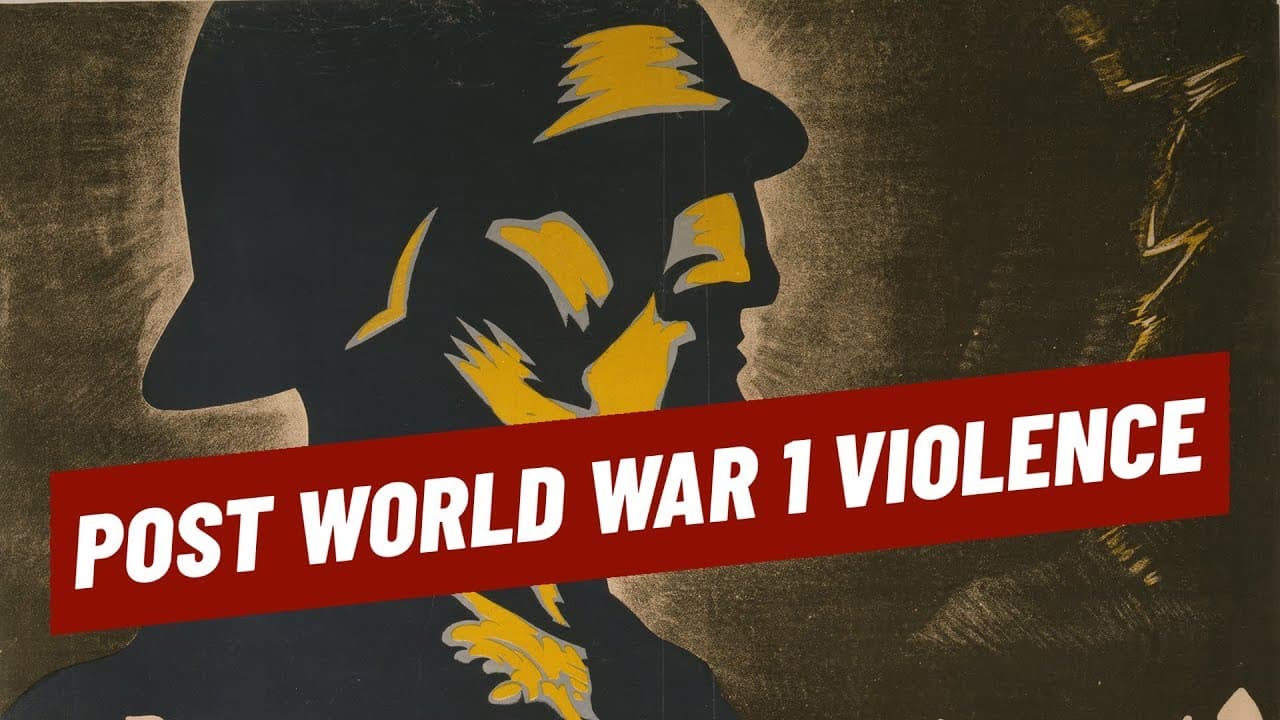
Post WW1 Violence Theory - Paris Peace Conference I BEYOND THE GREAT WAR
TL;DR
Discusses brutalization theory and 1919 Paris Peace Conference.
Transcript
Hi I'm Jesse and I'm Flo and welcome to an exciting new episode of beyond the Great War the segment where we answer your questions about what happened 100 years ago. Hi Jesse. Hi Flo. Are you wondering why I'm here? Just a bit. Okay I'm here to tell you and all the viewers out there in YouTube-Land about well this new format that you just introduce... Read More
Key Insights
- The 'Beyond The Great War' format allows for in-depth answers to community questions, focusing on historical debates and detailed analysis.
- The brutalization theory suggests that societies exposed to Great War violence became desensitized, leading to post-war violence and acceptance of extreme ideologies.
- George Mosse argued that war experiences glorified violence, creating a culture that normalized aggression and influenced political rhetoric.
- Critics of the brutalization theory point out the lack of violence in countries like France and Britain, questioning its universal applicability.
- Robert Gerwarth suggests that post-war violence was more prevalent in defeated nations due to destabilization and the Russian Revolution's influence.
- The collapse of empires created power vacuums, leading to internal and external conflicts over state boundaries and governance.
- The Paris Peace Conference aimed to establish a new world order, but faced challenges from differing national interests and the absence of defeated powers.
- The conference's outcomes were influenced by domestic politics, emotional war legacies, and prior commitments, creating a complex negotiation environment.
Install to Summarize YouTube Videos and Get Transcripts
Explore YouTube Video Summarizer or Get YouTube Transcript Extractor
Questions & Answers
Q: What is the brutalization theory?
The brutalization theory, as articulated by George Mosse, suggests that societies exposed to the violence of the Great War became desensitized, leading to a culture that normalized violence. This cultural shift influenced political discourse and allowed for the acceptance of extreme ideologies and further conflicts, despite the war's end.
Q: Why is the brutalization theory criticized?
Critics argue that the brutalization theory cannot fully explain post-1918 violence, as countries like France and Britain did not experience the same level of violence despite similar wartime experiences. This suggests that other factors, such as political or social conditions, may have influenced the prevalence of post-war violence.
Q: What alternative explanation does Robert Gerwarth offer for post-war violence?
Robert Gerwarth proposes that post-war violence was primarily a result of the destabilizing effects of defeat, the influence of the Russian Revolution, and the collapse of empires. These factors created power vacuums and radicalized populations, leading to internal conflicts and border disputes in the immediate post-war years.
Q: What were the main goals of the Paris Peace Conference?
The Paris Peace Conference aimed to formally end WWI and establish a new world order to prevent future conflicts. Delegates sought to negotiate peace treaties, address territorial disputes, and create mechanisms like the League of Nations to foster international cooperation and stability.
Q: What challenges did the Paris Peace Conference face?
The conference faced challenges due to diverging national interests, the absence of defeated powers, and the lack of a clear procedural framework. Domestic political pressures, emotional war legacies, and prior commitments further complicated negotiations, leading to a complex and contentious peace process.
Q: How did the conference address national self-determination?
National self-determination was a contentious issue, as it conflicted with existing territorial claims and colonial interests. The conference attempted to redraw borders based on ethnic and national lines, but faced difficulties in balancing these ideals with political realities and the desires of victorious powers.
Q: Why were the defeated Central Powers excluded from the conference?
The defeated Central Powers were excluded as the victors sought to impose terms without negotiation, holding them responsible for the war. This exclusion marked a departure from traditional peace negotiations and contributed to the perception of the peace process as punitive, rather than conciliatory.
Q: What role did the Big Four play in the conference?
The Big Four—leaders from the US, Britain, France, and Italy—dominated the conference, making key decisions and shaping the outcomes. Their differing agendas and priorities influenced the direction of negotiations, as they sought to balance national interests with the overarching goal of securing lasting peace.
Summary & Key Takeaways
-
The 'Beyond The Great War' series provides detailed responses to historical questions, with its first episode exploring the brutalization theory and the Paris Peace Conference.
-
The brutalization theory posits that wartime violence desensitized societies, leading to further conflicts and the rise of violent ideologies despite the war's end.
-
The Paris Peace Conference sought to create a lasting peace post-WWI, but faced significant challenges due to differing national agendas and historical grievances.
Read in Other Languages (beta)
Share This Summary 📚
Summarize YouTube Videos and Get Video Transcripts with 1-Click
Try YouTube Summary with ChatGPT & Claude or YouTube Transcript Generator
Explore More Summaries from The Great War 📚
Summarize YouTube Videos and Get Video Transcripts with 1-Click
Try YouTube Summary with ChatGPT & Claude or YouTube Transcript Generator