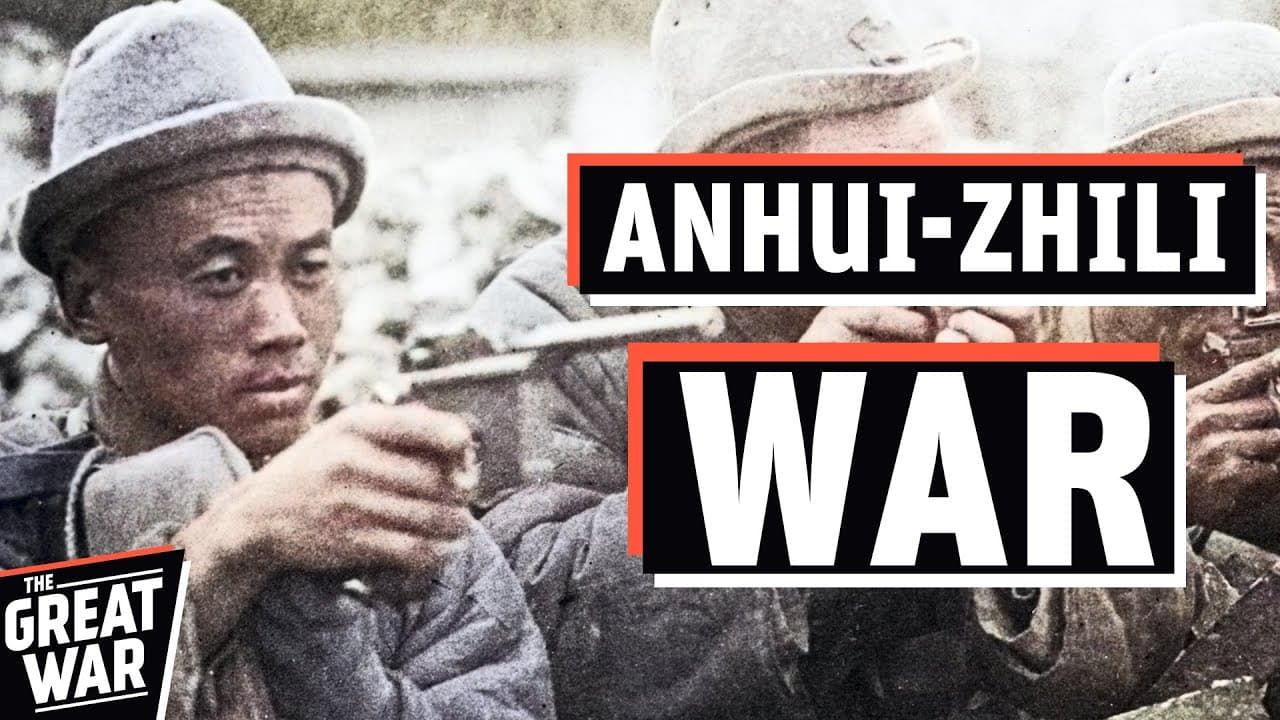
When China Was Ruled By Warlords - The Zhili–Anhui War (Documentary)
TL;DR
China's early 20th-century warlord era was chaotic and violent.
Transcript
hi I'm Jesse Alexander and welcome to the Great War in the early 1920s China was in the throws of a chaotic and violent period dominated by Regional Warlords the old Empire was gone replaced by rival factions and military leaders attempting to both unify China and protect their independence at the same time some Chinese contemporaries compared the ... Read More
Key Insights
- The early 1920s in China were marked by chaos and violence, with regional warlords vying for power following the fall of the Qing Dynasty.
- Sun Yat-sen, a key revolutionary figure, advocated for a US-style republic but struggled to maintain control amid rising warlord influence.
- Yuan Shikai's attempt to restore monarchy by declaring himself Emperor in 1915 led to widespread revolt and his eventual downfall.
- China's involvement in World War I was seen as a means to regain lost territories, but internal divisions and warlord conflicts weakened the republic.
- The Zhili, Anhui, and Fengtian cliques were among the most powerful factions, each supported by foreign backers like Japan and Italy.
- Warlords maintained power through personal loyalty from their armies, often leading to betrayal and shifting alliances.
- The warlord era was characterized by a lack of central control, with regional autonomy becoming the norm by 1921.
- Cultural and political movements like the May Fourth Movement highlighted public discontent and further complicated the political landscape.
Install to Summarize YouTube Videos and Get Transcripts
Explore YouTube Video Summarizer or Get YouTube Transcript Extractor
Questions & Answers
Q: What led to the rise of warlords in China during the early 20th century?
The rise of warlords in China during the early 20th century was primarily due to the collapse of the Qing Dynasty and the failure to establish a stable central government. Regional military leaders took advantage of the power vacuum, leading to a fragmented political landscape where warlords controlled territories through personal loyalty and military strength.
Q: How did foreign powers influence the warlord era in China?
Foreign powers played a significant role in the warlord era by providing financial and military support to different factions. Japan, for instance, supported the Anhui clique, while Italy backed the Zhili clique. This external influence exacerbated internal conflicts, as warlords leveraged foreign aid to strengthen their positions and pursue their agendas.
Q: What was the significance of the May Fourth Movement during this period?
The May Fourth Movement was a significant cultural and political movement that emerged in response to the Treaty of Versailles, which favored Japan over China. It highlighted widespread discontent with the government's inability to protect national interests and led to increased calls for modernization and reform. The movement also influenced the political landscape by inspiring new ideologies and activism.
Q: How did Sun Yat-sen's vision for China differ from the warlords' approach?
Sun Yat-sen envisioned a unified, republican China modeled after Western democracies, emphasizing national identity and modernization. In contrast, warlords prioritized regional control and personal power, often at the expense of national unity. Sun's inability to consolidate power and the warlords' focus on military dominance led to ongoing fragmentation and conflict.
Q: What role did Yuan Shikai play in the warlord era?
Yuan Shikai was a key figure in the early warlord era, initially serving as a military leader under the Qing Dynasty. He became the first president of the Republic of China but later declared himself Emperor, sparking widespread revolt. His actions contributed to the further destabilization of China and the rise of regional warlords as central authority weakened.
Q: How did warlords maintain control over their territories?
Warlords maintained control over their territories by building personal loyalty within their armies, often through financial incentives and promises of power. They relied on a mix of military strength, strategic alliances, and foreign support to consolidate their positions. Betrayal and shifting allegiances were common, reflecting the volatile nature of the era.
Q: What were the main challenges faced by the central government during this period?
The central government faced significant challenges, including a lack of authority over regional warlords, foreign intervention, and internal divisions. The inability to establish a cohesive national identity and effective governance structure further weakened its position. Additionally, movements like the May Fourth Movement highlighted public discontent and increased pressure for reform.
Q: What impact did the warlord era have on China's development?
The warlord era significantly impacted China's development by delaying political unification and modernization efforts. The constant conflicts and shifting alliances hindered economic growth and social stability. However, the period also spurred cultural and intellectual movements, laying the groundwork for future reforms and the eventual rise of new political ideologies.
Summary & Key Takeaways
-
The early 1920s in China were dominated by regional warlords following the collapse of the Qing Dynasty. Sun Yat-sen's republican ideals struggled against the backdrop of military leaders vying for power. This period was marked by internal strife and foreign influence, leading to a fragmented political landscape.
-
Yuan Shikai's attempt to declare himself Emperor in 1915 sparked widespread revolt, leading to his downfall and further destabilization. The Zhili, Anhui, and Fengtian cliques emerged as powerful factions, each supported by foreign powers, contributing to the era's complex political dynamics.
-
The warlord era saw a lack of central control, with regional autonomy becoming prevalent. Cultural movements like the May Fourth Movement reflected public discontent, while warlords maintained power through personal loyalty and shifting alliances, leading to ongoing conflict and instability.
Read in Other Languages (beta)
Share This Summary 📚
Summarize YouTube Videos and Get Video Transcripts with 1-Click
Try YouTube Summary with ChatGPT & Claude or YouTube Transcript Generator
Explore More Summaries from The Great War 📚
Summarize YouTube Videos and Get Video Transcripts with 1-Click
Try YouTube Summary with ChatGPT & Claude or YouTube Transcript Generator