What Happened on the Eastern Front in 1917?
TL;DR
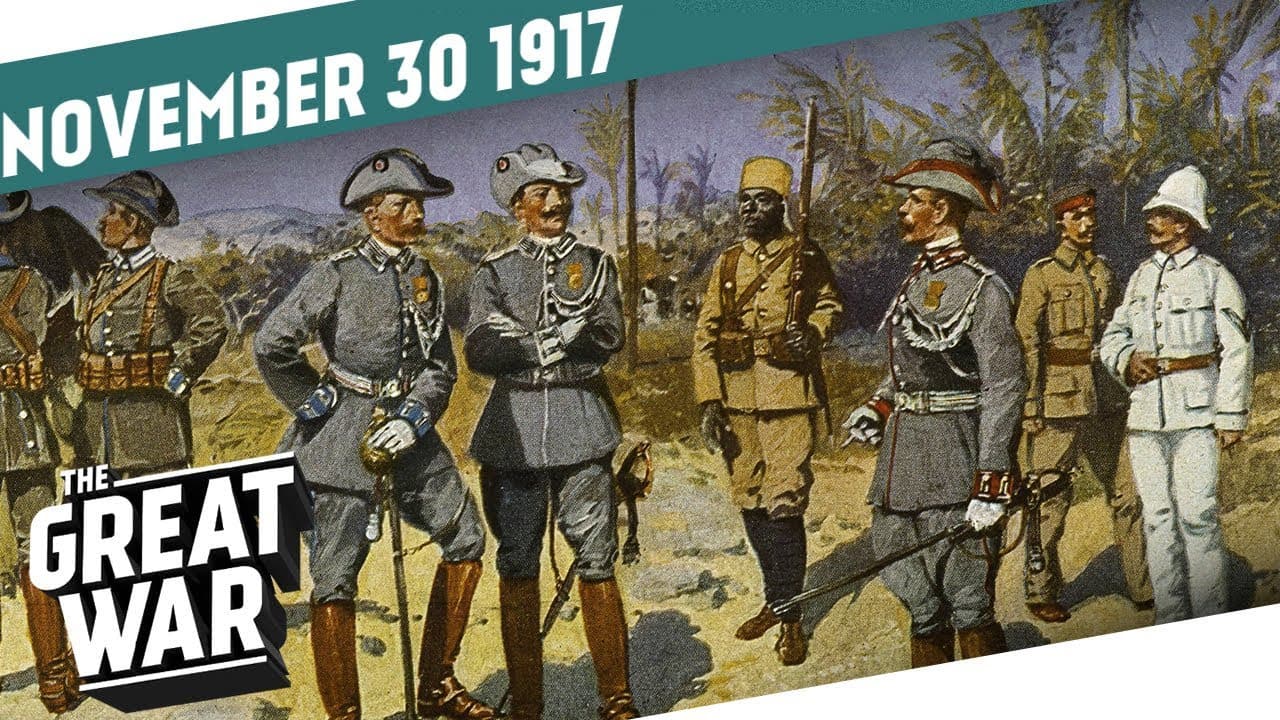
The Eastern Front goes quiet as hostilities cease, marking a significant shift in World War I. The Germans invade Portuguese East Africa, securing supplies for continued operations. Meanwhile, the Battle of Cambrai sees new tactics on both sides, and Armando Diaz implements reforms to boost morale on the Italian Front.
Transcript
The war on the Eastern Front has been actively fought since August 1914, and all sides have claimed great victories as the front lines have moved back and forth across the endless expanse of land, and now, 39 months after the fighting began, the Eastern Front goes quiet. I’m Indy Neidell; welcome to the Great War. Last week the British attacked wit... Read More
Key Insights
- The Eastern Front hostilities ceased this week, marking a turning point in the war.
- German General Paul von Lettow-Vorbeck secured supplies by invading Portuguese East Africa.
- The Battle of Cambrai involved new Hutier assault tactics, contrasting with British tank strategies.
- Armando Diaz reformed the Italian army, increasing rations and improving soldier morale.
- Trotsky published secret treaties, revealing Allied plans and causing diplomatic embarrassment.
- German forces prepared to transfer 42 divisions from the Eastern to the Western Front.
- Mass demonstrations occurred in Budapest, supporting peace and the Bolshevik revolution.
- Italian propaganda efforts aimed to improve morale and support for the war among soldiers.
Install to Summarize YouTube Videos and Get Transcripts
Explore YouTube Video Summarizer or Get YouTube Transcript Extractor
Questions & Answers
Q: Why did hostilities cease on the Eastern Front in 1917?
Hostilities on the Eastern Front ceased in 1917 as the Russian Bolshevik government sought an armistice with Germany. This cessation marked a significant shift in World War I, allowing Germany to transfer troops to the Western Front. The armistice was part of broader Russian efforts to exit the war following internal political changes and the Bolshevik rise to power.
Q: What was the significance of the Battle of Ngomano in East Africa?
The Battle of Ngomano was significant as it allowed German General Paul von Lettow-Vorbeck to secure much-needed supplies by defeating Portuguese forces in East Africa. This victory enabled his troops to continue guerrilla operations against the British. The battle highlighted the strategic importance of East Africa in World War I and the resourcefulness of von Lettow-Vorbeck's forces.
Q: How did the publication of secret treaties impact World War I diplomacy?
The publication of secret treaties by Bolshevik Foreign Minister Leon Trotsky exposed the territorial ambitions of the Allies, causing diplomatic embarrassment. It revealed plans for post-war division of territories, undermining promises made to various groups, such as the Arabs. This disclosure strained relations among the Allies and raised questions about the sincerity of their war aims.
Q: What new tactics were employed during the Battle of Cambrai?
During the Battle of Cambrai, the British employed tanks in large numbers for the first time, aiming to break through German lines. However, the Germans countered with new Hutier assault tactics, which involved infiltration and surprise attacks. These tactics proved effective, highlighting the evolving nature of warfare during World War I and the ongoing tactical innovations by both sides.
Q: What reforms did Armando Diaz implement in the Italian army?
Armando Diaz implemented several reforms in the Italian army to improve morale and combat effectiveness. These included increasing rations, enhancing the variety of food, raising wages, and extending annual leave. Diaz also focused on propaganda efforts to foster support for the war, aiming to counter anti-war sentiment and improve soldiers' connection to the war's objectives.
Q: How did the transfer of German divisions from the Eastern to the Western Front affect the war?
The transfer of 42 German divisions from the Eastern to the Western Front significantly bolstered German forces, posing a new threat to the Allies. This movement, enabled by the cessation of Eastern Front hostilities, meant over half a million experienced troops were redirected to the Western Front, intensifying the conflict and challenging Allied defenses.
Q: What was the response to Trotsky's publication of secret treaties?
Trotsky's publication of secret treaties caused significant diplomatic embarrassment for the Allies, as it revealed their territorial ambitions and undermined promises made to various groups. The disclosure strained relations among the Allies and raised questions about the sincerity of their war aims, prompting criticism and skepticism from both domestic and international audiences.
Q: What role did propaganda play in the Italian army under Armando Diaz?
Under Armando Diaz, propaganda played a crucial role in boosting morale and support for the war within the Italian army. Efforts included newspapers, posters, films, and theater aimed at fostering a sense of purpose and inevitability of victory. This approach sought to counter anti-war sentiment by addressing soldiers' grievances and promoting a unified commitment to the war effort.
Summary & Key Takeaways
-
The Eastern Front fell silent as hostilities ceased, marking a significant shift in World War I dynamics. Meanwhile, German forces under Paul von Lettow-Vorbeck secured vital supplies by invading Portuguese East Africa, enabling continued guerrilla operations. The Battle of Cambrai continued with both sides employing new tactics, while Armando Diaz's reforms aimed to boost morale on the Italian Front.
-
Trotsky's publication of secret treaties exposed Allied territorial ambitions, causing diplomatic embarrassment and raising questions about post-war promises. On the Western Front, the Battle of Cambrai saw the British employ tanks, but new German Hutier tactics proved effective. Armando Diaz's reforms improved conditions and morale for Italian troops, aiming to counter anti-war sentiment.
-
German forces prepared to transfer 42 divisions from the now-quiet Eastern Front to the Western Front, posing a new threat to Allied forces. In Budapest, mass demonstrations supported peace and the Bolshevik revolution. Italian propaganda efforts aimed to bolster morale and support for the war, while diplomatic tensions rose with the publication of secret treaties.
Read in Other Languages (beta)
Share This Summary 📚
Summarize YouTube Videos and Get Video Transcripts with 1-Click
Try YouTube Summary with ChatGPT & Claude or YouTube Transcript Generator
Explore More Summaries from The Great War 📚
Summarize YouTube Videos and Get Video Transcripts with 1-Click
Try YouTube Summary with ChatGPT & Claude or YouTube Transcript Generator