Zeppelins over Britain - Terror in the Skies I THE GREAT WAR Week 89
TL;DR
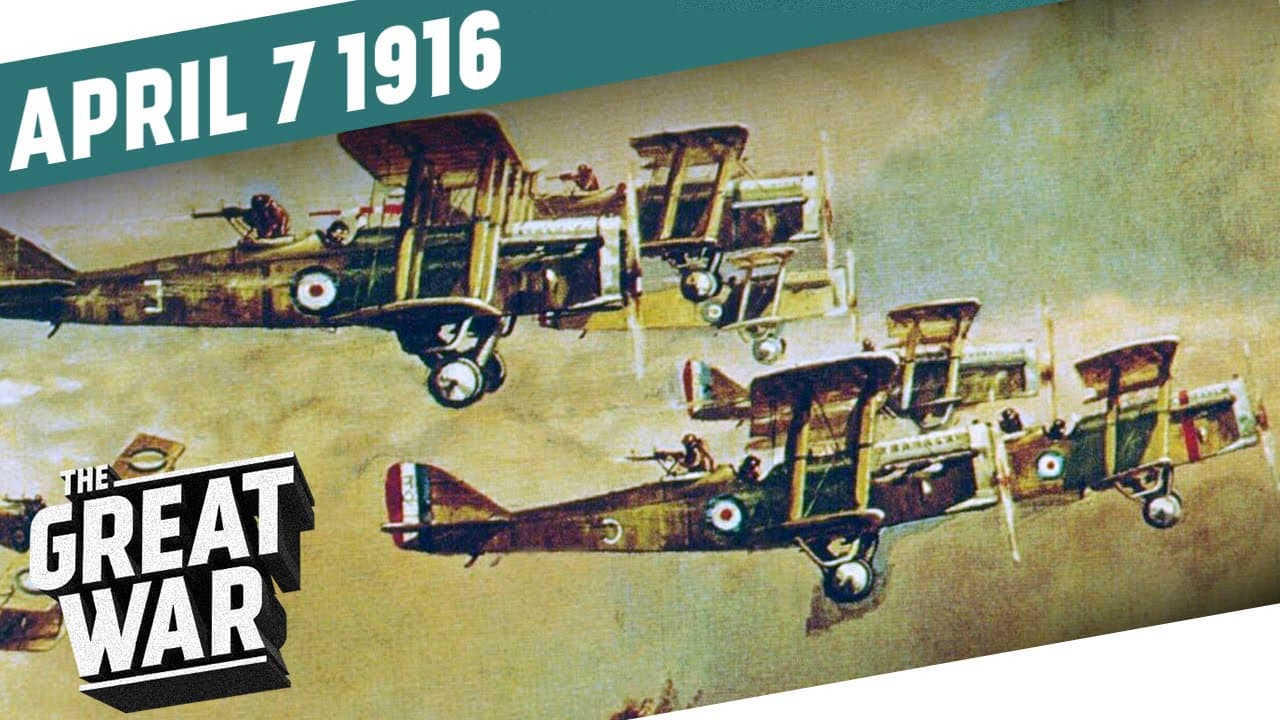
German zeppelins raid Britain, causing civilian casualties.
Transcript
It’s now springtime in 1916 and away from the battlefields of Europe people looked to the skies to see the sun shining brightly above, and this week, if you were in England, you also saw something else, for this week the skies were alive with German zeppelins. I’m Indy Neidell; welcome to the Great War. Last week the French and the Germans kept duk... Read More
Key Insights
- The week of March 31 to April 5, 1916, saw intense German zeppelin raids over Britain's eastern and northeastern coast, resulting in nearly 100 civilian deaths and over 200 injuries.
- The primary aim of the German raids was to locate the main British battleship fleet, but they were unsuccessful in this mission.
- A significant aerial battle occurred over Ancona between Austrian and Italian planes, with the Austrians losing three planes and the Italians suffering severe damage to two.
- Bulgarian and Austrian planes bombed Salonika, causing extensive damage to French and Australian camps, which led to anti-German sentiment in Greece.
- Greece faced severe economic challenges due to mobilization, leading to inflation and food shortages, particularly affecting the availability of fish.
- British and Indian troops under Charles Townshend were under siege at Kut, enduring starvation as relief efforts struggled against Ottoman resistance and flooding from the Tigris River.
- Notable executions included Yusuf al-Hani in Beirut for seeking French support for an independent Lebanon and Gabrielle Petit in Belgium for aiding Belgian army recruits.
- At Verdun, German forces experienced exhaustion and morale issues, with some soldiers refusing to fight, although they made gains at Haucourt and Bethincourt.
Install to Summarize YouTube Videos and Get Transcripts
Explore YouTube Video Summarizer or Get YouTube Transcript Extractor
Questions & Answers
Q: What was the main objective of the German zeppelin raids over Britain?
The primary objective of the German zeppelin raids over Britain was to locate the main British battleship fleet. The German admiralty hoped to pinpoint the fleet's location to launch a coordinated attack using submarines. However, the zeppelins returned without achieving this goal, continuing the German navy's efforts to find the fleet's base.
Q: How did the aerial battle over Ancona unfold?
The aerial battle over Ancona involved more than 20 planes from Austria and Italy. The Austrians lost three planes, while the Italians suffered severe damage to two of their aircraft. This battle was part of the ongoing conflict on the Italian Front, highlighting the increasing role of air combat in World War I and the significant losses incurred by both sides.
Q: What economic challenges did Greece face during this period?
Greece faced severe economic challenges due to its mobilization efforts during World War I. The country's budget expenditures were twice its revenue, leading to rampant inflation and widespread poverty. The mobilization also impacted food supplies, as many fishermen were enlisted, making fish too expensive for many families. The economic strain pushed Greece towards potential bankruptcy and increased public discontent.
Q: What was the situation for British and Indian troops at Kut?
British and Indian troops under Charles Townshend were besieged at Kut since December 1915, suffering from starvation and dwindling supplies. Relief efforts led by General George Gorringe faced significant challenges, including Ottoman resistance and flooding from the Tigris River. Despite making some territorial gains, the relief force struggled to reach Kut, leaving the besieged troops in a dire humanitarian crisis.
Q: Who were Yusuf al-Hani and Gabrielle Petit, and why were they executed?
Yusuf al-Hani was a Mennonite Christian in Beirut who sought French support for an independent Lebanon. He was executed for discussing the idea of inviting French protection. Gabrielle Petit was executed in German-occupied Belgium for distributing the underground newspaper Libre Belgique and aiding Belgian army recruits. These executions were part of broader wartime repressions against perceived collaborators and resistors.
Q: What were the conditions like for German soldiers at Verdun?
German soldiers at Verdun experienced severe exhaustion and morale issues due to the intense and prolonged fighting. Commanding officers suffered heart attacks, and medical staff were concerned about the troops' well-being. Some soldiers refused to fight, and many surrendered. The German command's practice of keeping divisions in the line and replenishing losses led to a depletion of experienced soldiers, with young recruits struggling to meet the battle's demands.
Q: What were the outcomes of the Russian advances in Anatolia?
The Russian forces made significant advances in Anatolia, crossing the Upper Chorok River and taking fortified Ottoman positions. They pushed the Turks across the Kara Dere River, advancing towards Trabzon. Additionally, a Russian naval operation landed 5,000 Cossack infantry to support the advance. These moves demonstrated Russia's strategic efforts to gain control over key territories in the region during World War I.
Q: How did the public in Greece react to the bombing of Salonika?
The bombing of Salonika by Bulgarian and Austrian planes caused significant damage and resulted in anti-German sentiment throughout Greece. The attack led to anti-neutrality editorials in the press, and large crowds chanted against the Germans at the victims' funerals. The bombing exacerbated public discontent with Greece's precarious economic and political situation, prompting considerations of martial law.
Summary & Key Takeaways
-
In early April 1916, German zeppelins conducted a series of raids over Britain's eastern and northeastern coasts, causing significant civilian casualties. The raids aimed to locate the British battleship fleet but failed. Meanwhile, aerial battles and bombings occurred in other regions, intensifying the war in the air.
-
Greece faced severe economic difficulties due to prolonged mobilization, leading to inflation and food shortages. In Mesopotamia, British and Indian troops at Kut suffered from starvation as relief efforts struggled against Ottoman resistance and natural obstacles, highlighting the dire humanitarian situation.
-
Notable executions during this period included Yusuf al-Hani in Beirut for seeking French support for Lebanon's independence and Gabrielle Petit in Belgium for assisting Belgian army recruits. At Verdun, German forces experienced exhaustion, but managed to make territorial gains despite morale issues.
Read in Other Languages (beta)
Share This Summary 📚
Summarize YouTube Videos and Get Video Transcripts with 1-Click
Try YouTube Summary with ChatGPT & Claude or YouTube Transcript Generator
Explore More Summaries from The Great War 📚


Summarize YouTube Videos and Get Video Transcripts with 1-Click
Try YouTube Summary with ChatGPT & Claude or YouTube Transcript Generator