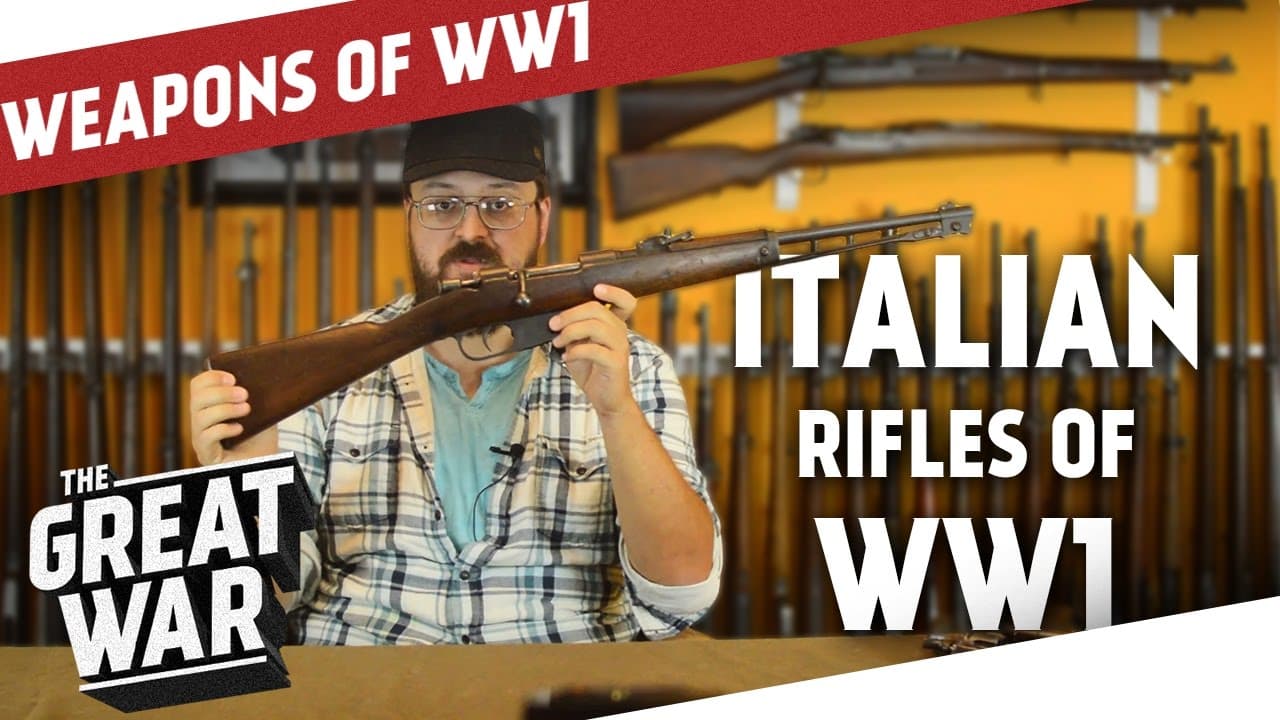
Italian Rifles of World War 1 featuring Othais from C&RSENAL I THE GREAT WAR - Special
TL;DR
Exploration of Italian rifles used in World War I.
Transcript
hi I'm Indie nidel and this is a great War special episode about Italian weapons of the first world war now it's not me who's going to be doing most of the talking about these Italian weapons and it's not Ernie my Ernie mug it's going to be our our good friend over in the United States of America OAS OAS can you say hi and say who you are and what ... Read More
Key Insights
- The Carcano 1891 was the primary rifle for Italy during WWI, known for its simplicity and light weight.
- The Carcano's bolt action design was derived from the German G 88, featuring unique safety mechanisms.
- Despite being rough and not the most favored, the Carcano was reliable and functioned well in combat.
- The Carcano was well-suited for mountain warfare due to its lightness and flat-shooting 6.5 cartridge.
- Italy's use of carbines, like the Moschetto, highlighted their focus on mobility and versatility in warfare.
- The Vitali rifle, an older model, was adapted with a new magazine for use due to manufacturing limitations.
- Italy's limited manufacturing capabilities led to innovative adaptations of existing rifle designs.
- The use of carbines for special troops demonstrated Italy's strategic focus on mobile and versatile forces.
Install to Summarize YouTube Videos and Get Transcripts
Explore YouTube Video Summarizer or Get YouTube Transcript Extractor
Questions & Answers
Q: What was the primary rifle used by Italy during World War I?
The primary rifle used by Italy during World War I was the Carcano 1891. It was known for its simplicity, lightweight design, and bolt action mechanism. Despite its rough handling, it was a reliable weapon that served the Italian forces well, especially in mountainous terrains.
Q: How did the Carcano 1891 perform in mountain warfare?
The Carcano 1891 performed well in mountain warfare due to its lightweight design and the flat-shooting 6.5 cartridge. The rifle's range settings allowed it to be effective in the mountainous Italian front, providing soldiers with a reliable and accurate weapon for long-distance engagements across valleys.
Q: What challenges did Italy face in manufacturing rifles during WWI?
Italy faced significant challenges in manufacturing enough rifles to meet wartime demands. This limitation led to the adaptation of older rifle models like the Vitali, which were modified to fit new magazines. Despite these challenges, Italy's resourcefulness allowed them to maintain a supply of functional weapons for their troops.
Q: What was unique about the safety mechanism of the Carcano 1891?
The Carcano 1891 featured a unique flag-style safety mechanism that disengaged the spring tension on the firing pin. Although it was not the most secure safety feature, as it allowed the trigger to be pulled with enough force to override the sear, it was a distinctive aspect of the rifle's design.
Q: Why were carbines like the Moschetto important for Italy during WWI?
Carbines like the Moschetto were important for Italy during WWI because they provided a lightweight, versatile weapon for special troops. These carbines were particularly useful for mobile units such as bicycle and cavalry troops, allowing them to maneuver easily while still being armed effectively.
Q: How did Italy adapt older rifles for use during the war?
Italy adapted older rifles like the Vitali by modifying them to accept the newer Carcano magazines. This involved drilling out the barrels to fit the 6.5 cartridges and adapting the magazine to hold six rounds. These modifications allowed Italy to utilize existing resources efficiently during the war.
Q: What was the role of the C&RSENAL channel in the episode?
The C&RSENAL channel, represented by Othais, played a crucial role in the episode by providing detailed insights into the design, functionality, and historical context of Italian rifles used in WWI. The channel's expertise in historical firearms added depth to the exploration of these weapons.
Q: What was the significance of Italy's focus on mobile troops during WWI?
Italy's focus on mobile troops during WWI was significant because it demonstrated a strategic emphasis on flexibility and rapid movement in warfare. By equipping troops with lightweight carbines and emphasizing mobility, Italy aimed to outmaneuver enemy forces and adapt quickly to changing battlefield conditions.
Summary & Key Takeaways
-
The episode explores Italian rifles used in WWI, focusing on the Carcano 1891 and its variants. Othais from C&RSENAL provides detailed insights into the design and functionality of these weapons, highlighting their strengths and weaknesses in combat.
-
The Carcano 1891, known for its simplicity and reliability, was Italy's primary rifle during the war. Despite its rough handling, it was effective in mountain warfare due to its lightweight design and flat-shooting cartridge.
-
Italy's manufacturing limitations led to the adaptation of older rifles like the Vitali. The use of carbines such as the Moschetto for special troops emphasized Italy's strategic focus on mobility and versatility in military operations.
Read in Other Languages (beta)
Share This Summary 📚
Summarize YouTube Videos and Get Video Transcripts with 1-Click
Try YouTube Summary with ChatGPT & Claude or YouTube Transcript Generator
Explore More Summaries from The Great War 📚




Summarize YouTube Videos and Get Video Transcripts with 1-Click
Try YouTube Summary with ChatGPT & Claude or YouTube Transcript Generator