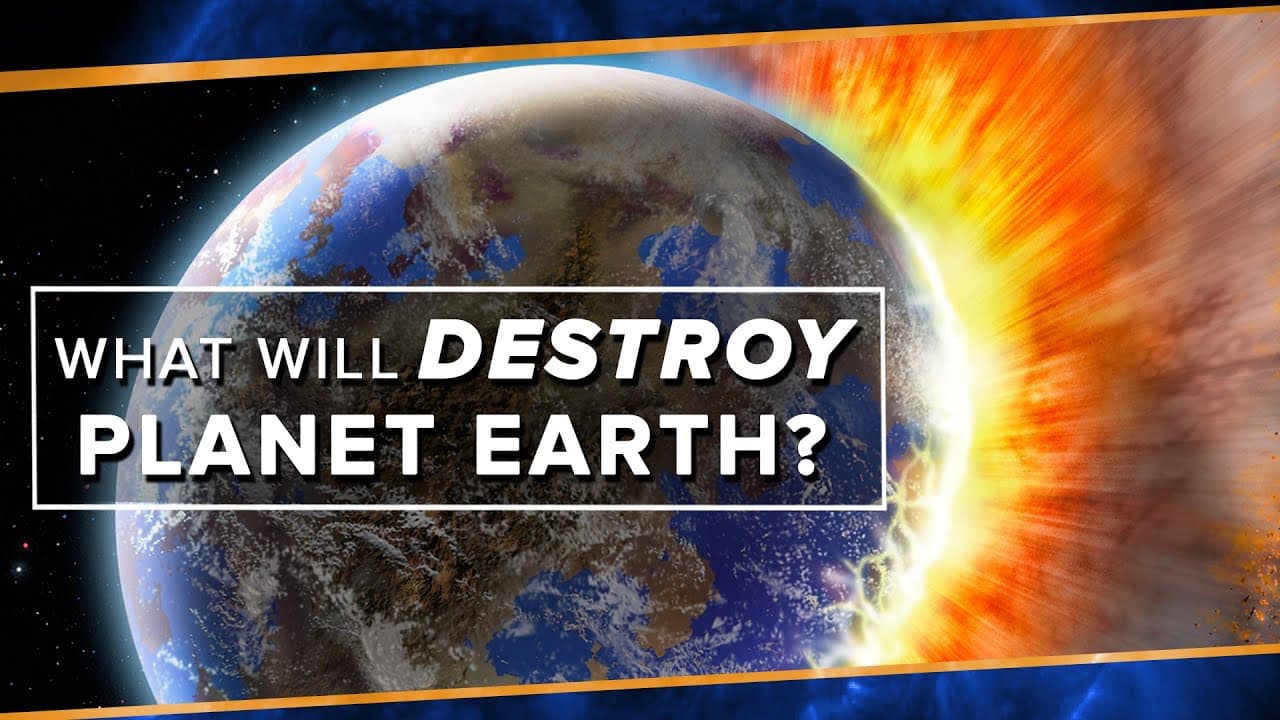
What Will Destroy Planet Earth?
TL;DR
Explores possible scenarios for Earth's destruction, including nukes and cosmic events.
Transcript
Lots of unpleasant things from nuclear war to asteroid impacts could destroy life on Earth. But what about Earth itself? Will anything ever destroy this planet? [MUSIC PLAYING] The physics of breaking something, including planets, is pretty straightforward-- just add enough energy to the individual chunks to overcome the attractive forces gluing th... Read More
Key Insights
- The energy required to destroy Earth is equivalent to the solar energy it receives over 40 million years, making it highly improbable with current technology.
- Nuclear weapons, even the most powerful ones, are insufficient to destroy Earth, requiring over one quadrillion Tsar-Bombs.
- Asteroids, including the largest known ones, lack the speed and mass to carry the necessary energy to destroy Earth.
- A collision with Mars is a theoretical possibility, but simulations show it's highly unlikely within the next few billion years.
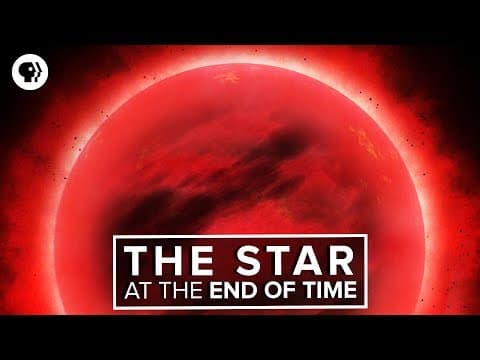
- The Sun's transformation into a red giant could eventually engulf Earth, but solar mass loss might alter Earth's orbit.
- The Big Rip scenario suggests the universe's expansion could eventually tear apart all matter, but it's speculative and uncertain.
- Earth's destruction by cosmic events is more feasible over billions of years than by human actions or current celestial threats.
- Theoretical scenarios like the Big Rip and solar engulfment highlight the vast timescales and uncertainties in cosmic events.
Install to Summarize YouTube Videos and Get Transcripts
Explore YouTube Video Summarizer or Get YouTube Transcript Extractor
Questions & Answers
Q: Can nuclear weapons destroy Earth?
Nuclear weapons, even the most powerful ones like the Tsar-Bomb, cannot destroy Earth. To achieve such destruction would require over one quadrillion Tsar-Bombs, which is beyond the realm of possibility given the available uranium and the logistical challenges involved in manufacturing such a vast number of bombs.
Q: How likely is an asteroid to destroy Earth?
While asteroids can cause significant damage, none have the speed or mass necessary to destroy Earth. The largest known asteroids, like 4-Vesta, lack the energy required for such destruction. Even the dinosaur-killing asteroid was only a fraction of the energy needed to obliterate the planet.
Q: Could Earth collide with another planet?
A collision with a planet like Mars is theoretically possible but highly unlikely. Simulations show that such an event might occur in about 1% of scenarios over billions of years. However, the gravitational interactions required for such a collision are complex and uncertain.
Q: Will the Sun eventually destroy Earth?
As the Sun becomes a red giant, it could potentially engulf Earth. However, the Sun's mass loss during this phase might cause Earth's orbit to expand, potentially saving it from engulfment. Current simulations suggest Earth will likely end up inside the Sun, leading to its vaporization.
Q: What is the Big Rip scenario?
The Big Rip is a theoretical scenario where the universe's expansion accelerates to the point where it tears apart galaxies, stars, planets, and eventually atoms. This would occur over a period of 100 billion to a few trillion years. However, it's speculative and not universally accepted among physicists.
Q: How does dark energy affect the universe's expansion?
Dark energy is thought to drive the accelerated expansion of the universe. It's an unidentified material that causes space to stretch, affecting galaxies' distances. While its exact nature is unknown, it plays a crucial role in cosmic expansion theories, including the potential for a Big Rip.
Q: What are the challenges in predicting cosmic events?
Predicting cosmic events involves vast timescales and complex gravitational interactions, making it inherently uncertain. Factors like the butterfly effect and limited observational data add to the unpredictability. Simulations provide insights but are subject to revisions as new data and theories emerge.
Q: Why is Earth's destruction more likely from cosmic events?
Cosmic events operate on timescales and energies far beyond human capabilities. The immense forces involved in events like solar expansion or universal expansion make them more plausible threats to Earth's existence than human actions or asteroid impacts, which lack the necessary energy to destroy the planet.
Summary & Key Takeaways
-
The video discusses various hypothetical scenarios for Earth's destruction, including nuclear warfare, asteroid impacts, and cosmic events. It concludes that while life on Earth is vulnerable, the planet itself is unlikely to be destroyed by human actions or known celestial threats.
-
Nuclear weapons, despite their destructive power, are insufficient to obliterate Earth, requiring an impractical number of detonations. Similarly, asteroids lack the necessary speed and mass to deliver the energy needed for planetary destruction.
-
Cosmic scenarios like the Sun's red giant phase and the Big Rip present potential threats to Earth's existence. However, these events are speculative and uncertain, emphasizing the vast timescales involved in cosmic evolution.
Read in Other Languages (beta)
Share This Summary 📚
Summarize YouTube Videos and Get Video Transcripts with 1-Click
Try YouTube Summary with ChatGPT & Claude or YouTube Transcript Generator
Explore More Summaries from PBS Space Time 📚
Summarize YouTube Videos and Get Video Transcripts with 1-Click
Try YouTube Summary with ChatGPT & Claude or YouTube Transcript Generator