What China’s Falling Population Means for Its Future
TL;DR
China's population is shrinking, posing economic challenges and casting doubt on its ability to surpass the US as the world's largest economy.
Transcript
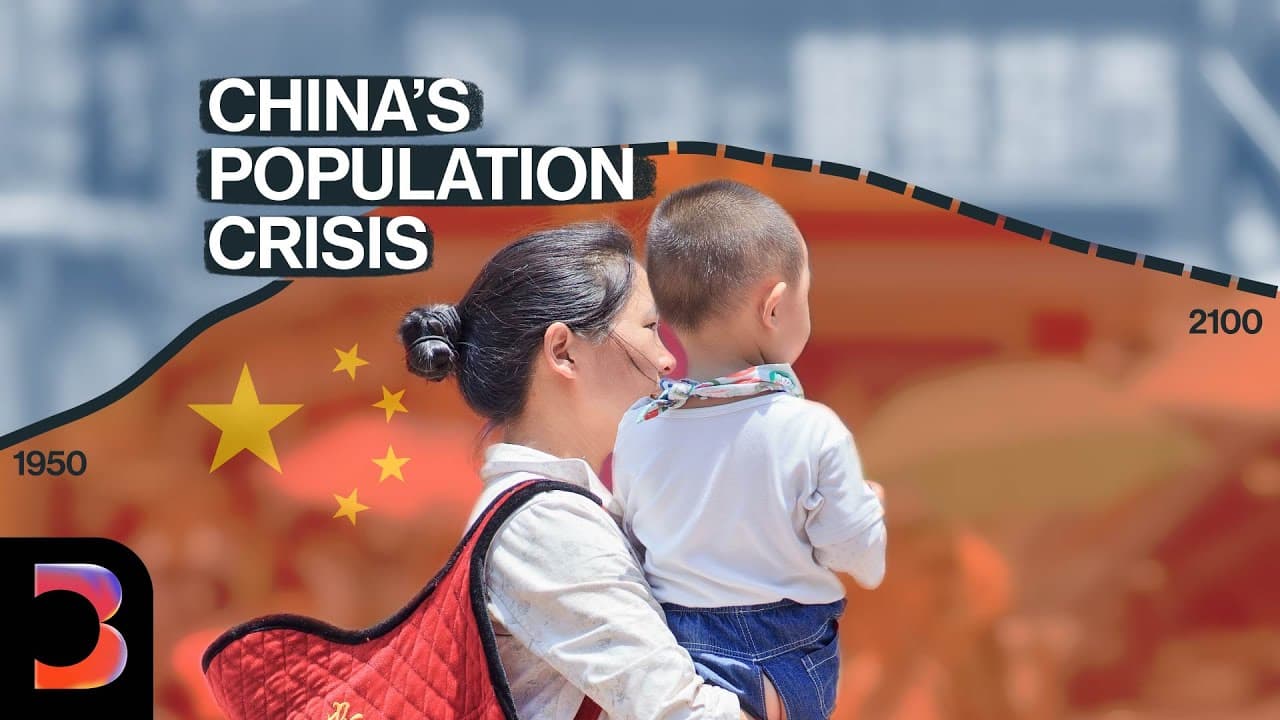
China is home to 1.4 billion people. That means about 1 out of every 5 people around the world lives in China. But the country is facing a population crisis. The Chinese population shrinking for the first time since the Great Famine in 1961. China's population could shrink by 48% between now and the end of the century. China's population decline ha... Read More
Key Insights
- 😀 China is facing a population crisis as its population is shrinking for the first time since the 1961 Great Famine.
- 🥺 The declining population could lead to economic stagnation and hinder China's chances of becoming the world's largest economy.
- ☠️ China's fertility rate has dropped below the replacement level, particularly in urban areas, posing challenges in sustaining economic growth.
- 🥺 The government's past population control measures, such as the one-child policy, have led to a gender imbalance and societal issues.
- ✋ The cost of raising children in China is high, with expenses such as childcare and housing placing a burden on families.
- 🕵️♀️ The Chinese government is male-dominated and has been criticized for not adequately addressing the social issues related to declining population and women's rights.
- 🤨 To mitigate the economic impact of the population decline, the government can raise the retirement age, promote urbanization, invest in vocational education, automation, and technology.
Install to Summarize YouTube Videos and Get Transcripts
Explore YouTube Video Summarizer or Get YouTube Transcript Extractor
Questions & Answers
Q: How has China's population been affected in recent years?
China's population has been shrinking, with predictions suggesting a potential decline of 48% by the end of the century. This decline started faster than expected and has significant implications for economic growth.
Q: What are the implications of China's declining population?
The shrinking labor force raises concerns about sustaining economic growth, both domestically and globally. With fewer people working and supporting more retirees, there is less demand and output, potentially leading to economic stagnation.
Q: How has China attempted to control population growth in the past?
China introduced a one-child policy in 1980 to control population growth due to resource shortages. The policy led to forced abortions, sterilizations, and a preference for male children, resulting in a significant gender imbalance.
Q: How is the Chinese government responding to the population crisis?
The government has reversed its one-child policy and even introduced a three-child policy to boost birth rates. However, these efforts have shown little impact on reversing the declining fertility rate.
Key Insights:
- China is facing a population crisis as its population is shrinking for the first time since the 1961 Great Famine.
- The declining population could lead to economic stagnation and hinder China's chances of becoming the world's largest economy.
- China's fertility rate has dropped below the replacement level, particularly in urban areas, posing challenges in sustaining economic growth.
- The government's past population control measures, such as the one-child policy, have led to a gender imbalance and societal issues.
- The cost of raising children in China is high, with expenses such as childcare and housing placing a burden on families.
- The Chinese government is male-dominated and has been criticized for not adequately addressing the social issues related to declining population and women's rights.
- To mitigate the economic impact of the population decline, the government can raise the retirement age, promote urbanization, invest in vocational education, automation, and technology.
- China's population decline is part of a global trend, but the country has experienced a much faster slowdown compared to others at a similar stage.
Summary & Key Takeaways
-
China is experiencing a population crisis, with its population shrinking for the first time since the 1961 Great Famine.
-
The country's declining population may lead to economic stagnation and hinder its chances of surpassing the US as the world's largest economy.
-
China's fertility rate has dropped below the replacement level, particularly in urban areas such as Shanghai, leading to a shrinking labor force and less demand.
Read in Other Languages (beta)
Share This Summary 📚
Summarize YouTube Videos and Get Video Transcripts with 1-Click
Try YouTube Summary with ChatGPT & Claude or YouTube Transcript Generator
Explore More Summaries from Bloomberg Originals 📚






Summarize YouTube Videos and Get Video Transcripts with 1-Click
Try YouTube Summary with ChatGPT & Claude or YouTube Transcript Generator