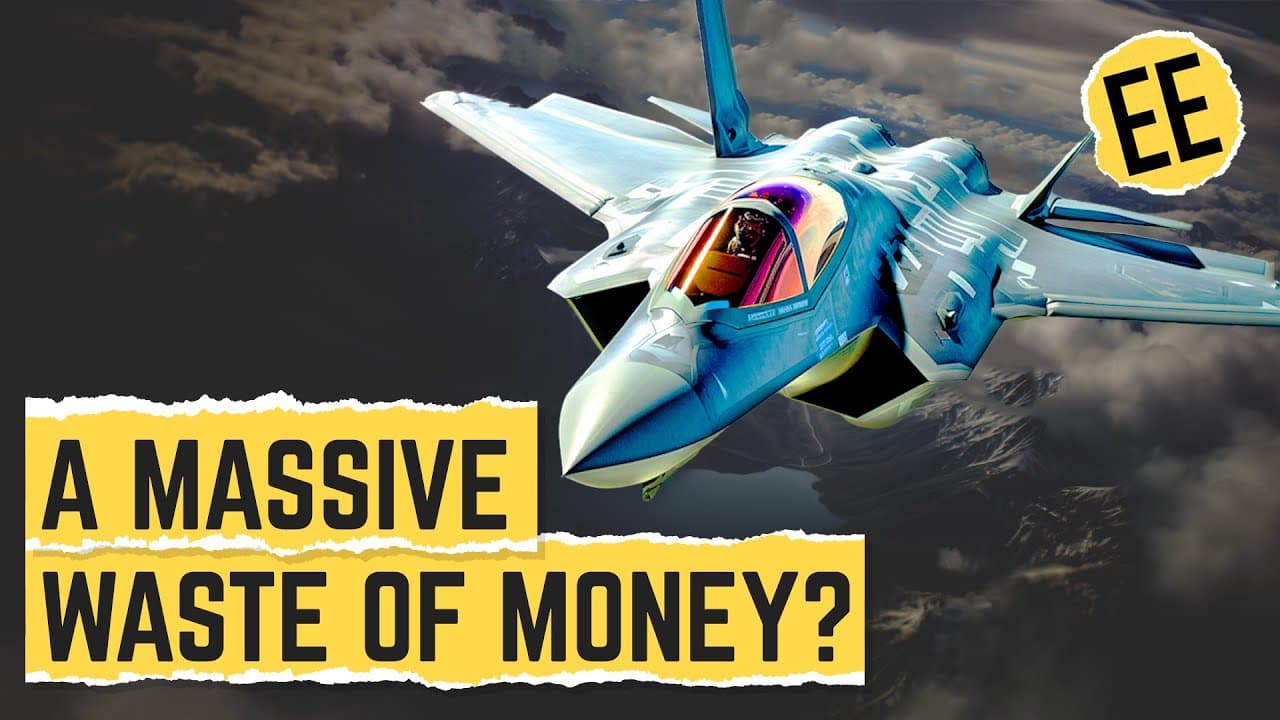
The Game Theory of Military Spending | Economics Explained
TL;DR
Military spending is rationalized through game theory despite its apparent wastefulness.
Transcript
in 2022 Global military spending topped 2.2 trillion US dollars more than the total economic output of all but the largest seven countries in the world spending by almost all major economies has jumped recently due to the invasion of Ukraine tensions on the South China Sea and uncertainty over long-standing military alliances this represents a sign... Read More
Key Insights
- Global military spending reached $2.2 trillion in 2022, highlighting the significant allocation of resources towards defense amid geopolitical tensions.
- The opportunity cost of military spending is stark when compared to the $330 billion needed to eradicate world hunger over a decade.
- Game theory explains the seemingly irrational military spending as a strategic necessity for national defense and geopolitical positioning.
- Military spending, while costly, contributes to economic stimulus through salaries and the development of technologies with civilian applications.
- Technologies like GPS and the internet, originally developed for military purposes, have added significant value to the global economy.
- The prisoner's dilemma illustrates the suboptimal outcomes of military spending, where countries act in self-interest, leading to higher collective costs.
- Alliances like NATO influence military spending decisions, as countries rely on collective defense, potentially reducing individual spending.
- The U.S. bears a significant burden in global defense spending, defending allies and securing international trade, influenced by game theory dynamics.
Install to Summarize YouTube Videos and Get Transcripts
Explore YouTube Video Summarizer or Get YouTube Transcript Extractor
Questions & Answers
Q: Why has global military spending increased recently?
Global military spending has increased due to geopolitical tensions, such as the invasion of Ukraine and uncertainties in military alliances. These factors have prompted countries to allocate more resources to defense to ensure national security and maintain strategic positions in the global landscape.
Q: How does game theory explain military spending?
Game theory explains military spending by illustrating how countries, acting in their self-interest, end up in suboptimal situations. The prisoner's dilemma highlights how nations, fearing exploitation or attack, invest in defense despite the collective benefit of reduced spending, leading to higher global military expenditures.
Q: What are some positive economic impacts of military spending?
Military spending contributes positively to the economy by providing salaries to defense personnel, acting as a government stimulus. It also funds technological advancements, such as GPS and the internet, which have significant civilian applications, enhancing productivity and adding value to the global economy.
Q: How does military spending affect global alliances?
Military spending affects global alliances by influencing how countries allocate resources for defense. Nations in alliances like NATO may spend less individually, relying on collective defense. However, this can lead to imbalances, with countries like the U.S. shouldering a disproportionate share of global defense responsibilities.
Q: What role does the U.S. play in global military spending?
The U.S. plays a pivotal role in global military spending, often outspending other nations to maintain its strategic and economic interests worldwide. It defends not only itself but also its allies, ensuring global trade security. This extensive spending is rationalized through game theory, despite its apparent inefficiencies.
Q: How do technological advancements from military spending benefit civilians?
Technological advancements from military spending, such as GPS and the internet, have significant civilian benefits. These technologies improve navigation, communication, and productivity, saving trillions of dollars by preventing economic wastage and enhancing global connectivity, thus offsetting some of the costs associated with defense expenditures.
Q: What is the prisoner's dilemma in the context of military spending?
In the context of military spending, the prisoner's dilemma illustrates how countries, acting in self-interest, end up in a suboptimal situation. Nations invest heavily in defense to avoid vulnerability, leading to higher collective costs, despite the potential global benefit of reduced military expenditures and increased resource allocation to other areas.
Q: How does military spending influence global trade security?
Military spending influences global trade security by ensuring safe passage for international shipping. The U.S. and its allies protect trade routes, deterring potential threats. This security fosters international trade, benefiting the global economy, although it requires significant resources and strategic military investments by participating countries.
Summary & Key Takeaways
-
Global military spending has surged to $2.2 trillion, driven by geopolitical tensions and alliances, posing questions about resource allocation priorities.
-
Game theory provides a framework for understanding military spending as a rational strategy, despite its apparent inefficiencies and opportunity costs.
-
Military spending, while costly, supports economic activities through salaries and technological advancements, although it also contributes to global tensions.
Read in Other Languages (beta)
Share This Summary 📚
Summarize YouTube Videos and Get Video Transcripts with 1-Click
Try YouTube Summary with ChatGPT & Claude or YouTube Transcript Generator
Explore More Summaries from Economics Explained 📚

Summarize YouTube Videos and Get Video Transcripts with 1-Click
Try YouTube Summary with ChatGPT & Claude or YouTube Transcript Generator