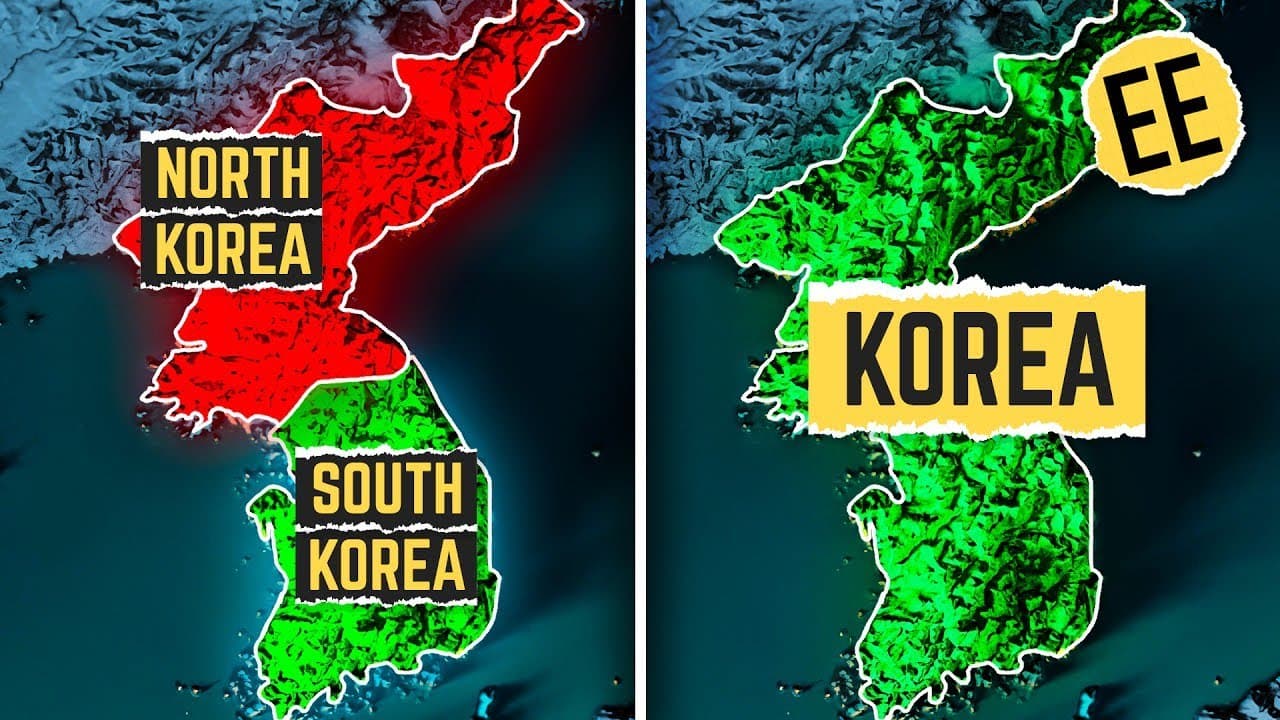
Reuniting North and South Korea Would Be Almost Impossible
TL;DR
Reuniting North and South Korea poses significant economic and geopolitical challenges.
Transcript
One of the biggest global ambitions of policy makers, economists and armchair generals around the world is the peaceful and sustainable reunification of North and South Korea. There are of course a lot of steps between the current situation on the Korean Peninsula and reunification, but if this could be achieved it would lift tens of millions of pe... Read More
Key Insights
- Reunification of North and South Korea is a complex process involving economic, geopolitical, and social challenges that differ significantly from the German reunification model.
- The economic disparity between North and South Korea is profound, with the North lacking formal education and skills needed for a modern economy.
- The potential cost of reunification could reach trillions of dollars, with significant economic risks for South Korea if not managed effectively.
- The militarized border and geopolitical tensions with China pose significant logistical and diplomatic hurdles to reunification.
- South Korea's advanced economy, centered on high-tech industries, contrasts sharply with North Korea's outdated industrial base.
- Reunification could offer economic opportunities, such as access to North Korea's natural resources, but these are offset by the massive initial investment required.
- The demographic differences, with South Korea's aging population and North Korea's younger populace, present both opportunities and challenges for integration.
- Economic integration would require addressing significant educational and skill gaps, potentially taking decades to achieve parity between the two populations.
Install to Summarize YouTube Videos and Get Transcripts
Explore YouTube Video Summarizer or Get YouTube Transcript Extractor
Questions & Answers
Q: What are the main economic challenges of Korean reunification?
The main economic challenges include the significant disparity in education and skills between the North and South, the massive cost of integrating two vastly different economies, and the potential strain on South Korea's economy. Additionally, the need for foreign investment and the impact on global trade dynamics pose further challenges.
Q: How does the situation in Korea compare to the reunification of East and West Germany?
While there are similarities, such as the division during the Cold War and reliance on larger backers, the economic and geopolitical contexts are vastly different. North Korea's economy is far less developed than East Germany's was, and the geopolitical tensions with China add a layer of complexity not present in the German reunification.
Q: What geopolitical factors complicate Korean reunification?
Geopolitical factors include the heavily militarized border, China's interest in maintaining North Korea as a buffer state, and the potential for conflict if the North's government resists reunification. These factors create significant diplomatic and logistical challenges.
Q: What potential benefits could arise from Korean reunification?
Potential benefits include access to North Korea's natural resources, a younger workforce that could alleviate South Korea's aging population issues, and the potential for improved living standards in the North. However, these benefits are contingent on successful integration and significant initial investment.
Q: How might South Korea's economy be impacted by reunification?
South Korea's economy could face significant strain due to the costs of integration, including infrastructure development and education. However, successful reunification could also lead to economic growth if managed effectively, leveraging North Korea's resources and workforce.
Q: What role does education play in the reunification process?
Education is crucial for integration, as North Korea's population lacks the skills and knowledge required for a modern economy. Addressing this gap will be essential for economic parity and successful integration, potentially taking decades to achieve.
Q: What are the logistical challenges of Korean reunification?
Logistical challenges include de-mining the heavily militarized border, integrating infrastructure, and developing a cohesive economic and social strategy. These challenges require significant planning and resources to overcome.
Q: How could reunification affect international relations in the region?
Reunification could shift the geopolitical balance in the region, potentially straining relations with China and affecting trade dynamics. It could also lead to changes in military alliances and regional security arrangements, influencing global geopolitical strategies.
Summary & Key Takeaways
-
Reuniting North and South Korea is fraught with challenges, including economic disparities, geopolitical tensions, and logistical hurdles. The economic gap between the two countries is substantial, requiring significant investment and planning to bridge.
-
The potential cost of Korean reunification could be in the trillions, with risks of economic strain on South Korea if not carefully managed. The militarized border and China's geopolitical interests further complicate the process.
-
Despite challenges, reunification could offer economic opportunities, such as access to North Korea's resources and a younger workforce. However, educational and skill gaps must be addressed to ensure successful integration.
Read in Other Languages (beta)
Share This Summary 📚
Summarize YouTube Videos and Get Video Transcripts with 1-Click
Try YouTube Summary with ChatGPT & Claude or YouTube Transcript Generator
Explore More Summaries from Economics Explained 📚





Summarize YouTube Videos and Get Video Transcripts with 1-Click
Try YouTube Summary with ChatGPT & Claude or YouTube Transcript Generator