How Economic Mistakes Led to Global Tragedies
TL;DR
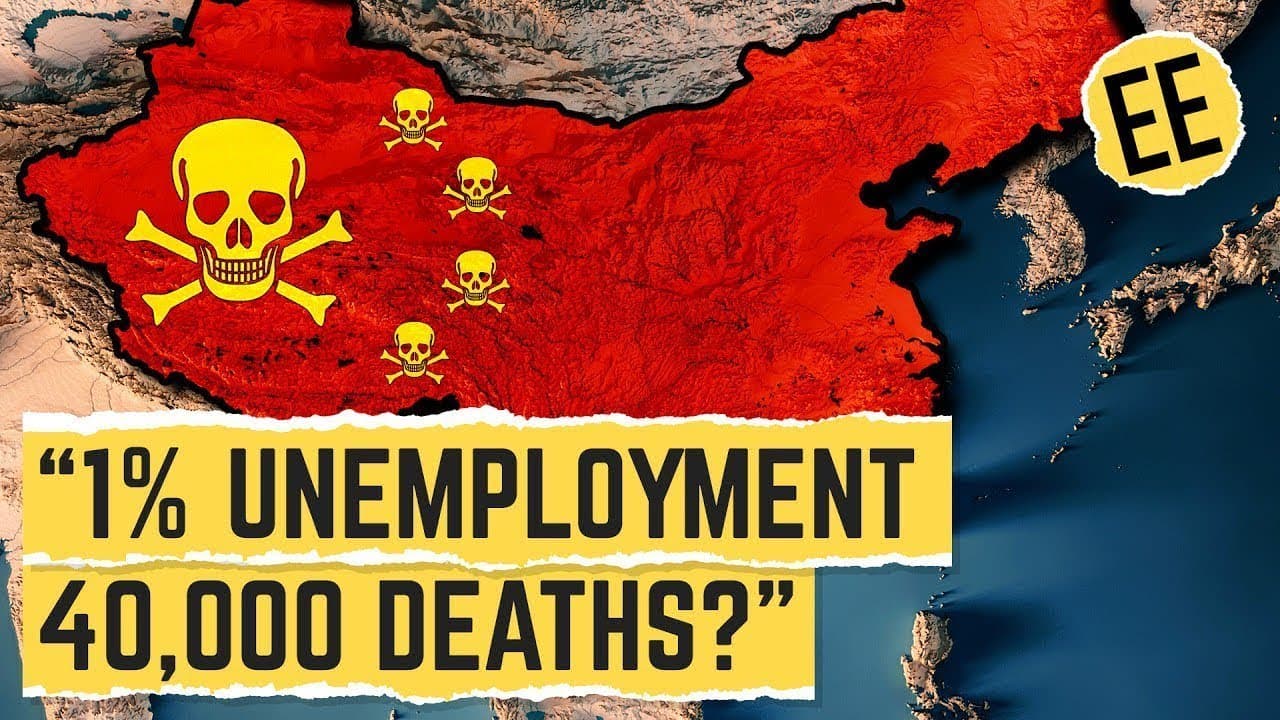
Economic policies can have severe unintended consequences, leading to significant human suffering and loss of life. For example, misguided economic decisions, such as China's emphasis on backyard furnaces, contributed to the Great Chinese Famine. The complexity of economics requires careful consideration of both measurable outcomes and human well-being to avoid repeating historical mistakes.
Transcript
Economics is sometimes called the dismal science, and if that sounds like a strange nickname, consider this. In 1976 a group of Finnish economists set out to study the net impact that smoking would have on the national economy. Over 27 years they tracked individuals, some of whom smoked and some of whom didn't, and recorded how much of a contributi... Read More
Key Insights
- Economics is often called the dismal science due to its focus on resource allocation and trade-offs.
- A Finnish study found smokers contributed more economically by dying earlier, highlighting the complexity of economic evaluations.
- China's Great Leap Forward, emphasizing steel production over agriculture, led to a devastating famine.
- Economic decisions can have profound human impacts, often overlooked when focusing solely on measurable outcomes.
- Globalization has lifted millions out of poverty but also widened inequality within countries.
- Economics must balance data-driven approaches with philosophical considerations for human welfare.
- Microeconomic experiments often face challenges due to human unpredictability and irrationality.
- Economic policies can be weaponized, using trade restrictions and sanctions to influence global politics.
Install to Summarize YouTube Videos and Get Transcripts
Explore YouTube Video Summarizer or Get YouTube Transcript Extractor
Questions & Answers
Q: How did economic policies contribute to the Great Chinese Famine?
Economic policies during China's Great Leap Forward prioritized steel production over agriculture, leading to a significant diversion of resources. Farmers were encouraged to operate backyard furnaces, cutting down forests for fuel instead of growing crops. This resulted in soil erosion and reduced agricultural output, contributing to a famine that claimed millions of lives, illustrating the severe consequences of misguided economic decisions.
Q: What are the unintended consequences of globalization?
Globalization has led to economic growth and poverty reduction in many countries, but it also increased inequality within nations. While some benefit from global trade and investment, others face job displacement and wage stagnation. These disparities highlight the need for policies that address the broader societal impacts of globalization, balancing economic benefits with social equity and human welfare.
Q: Why is a purely data-driven approach to economics problematic?
A purely data-driven approach to economics focuses on measurable outcomes like GDP growth and wealth accumulation, potentially overlooking intangible factors such as human happiness and fulfillment. This can result in policies that are economically efficient but socially detrimental. Balancing quantitative analysis with qualitative insights is essential to address the complex interplay between economic growth and human well-being.
Q: How can economic policies inadvertently harm human welfare?
Economic policies can inadvertently harm human welfare when they prioritize measurable outcomes over human needs. For instance, policies that focus solely on economic growth may neglect issues like income inequality and access to essential services, leading to social unrest and decreased quality of life. Effective policy-making requires a holistic approach that considers both economic efficiency and human welfare.
Q: What role does philosophy play in economic decision-making?
Philosophy plays a critical role in economic decision-making by providing a framework for considering ethical and human-centered aspects of policies. While data-driven approaches emphasize efficiency and measurable outcomes, philosophical considerations help ensure that policies align with societal values and address broader human needs, such as equity, justice, and well-being, fostering a more inclusive and sustainable economic system.
Q: How does the concept of trade-offs impact economic policy?
Trade-offs are central to economic policy, as resources are limited and decisions often involve sacrificing one goal for another. For example, increasing industrial output may reduce environmental quality. Policymakers must weigh these trade-offs, considering both short-term gains and long-term consequences to ensure that economic decisions enhance overall societal welfare without causing unintended harm.
Q: Why is it challenging to conduct macroeconomic experiments?
Macroeconomic experiments are challenging due to the complexity and scale of economies, which involve numerous variables and interactions that are difficult to control. Unlike controlled laboratory experiments, economies are influenced by unpredictable human behavior, political factors, and global events, making it hard to isolate specific causes and effects. Consequently, macroeconomic insights often rely on historical analysis and theoretical models.
Q: What is the impact of economic inequality on life expectancy?
Economic inequality can significantly impact life expectancy, as disparities in income and access to resources affect health outcomes. For instance, in the USA, the life expectancy gap between university graduates and those without a degree has widened, reflecting differences in healthcare access, lifestyle, and stress levels. Addressing inequality is crucial for improving public health and ensuring equitable life opportunities for all individuals.
Summary & Key Takeaways
-
Economic policies have historically led to severe consequences, such as famines and economic collapses, due to unintended effects. For instance, China's focus on steel production during the Great Leap Forward diverted resources from agriculture, causing mass starvation. Such examples highlight the need for careful consideration of both economic benefits and human well-being in policy-making.
-
Globalization has significantly impacted the global economy, providing opportunities for many countries to develop and reduce poverty. However, it has also increased inequality within nations, as certain groups benefit more than others. This disparity underscores the importance of considering both measurable economic outcomes and intangible human welfare in economic policies.
-
The debate over the role of economics involves balancing data-driven approaches with philosophical considerations. While a focus on measurable outcomes can guide policy-making, it may overlook important human factors like happiness and fulfillment. A comprehensive approach to economics requires integrating both quantitative analysis and qualitative insights to address complex global challenges effectively.
Read in Other Languages (beta)
Share This Summary 📚
Summarize YouTube Videos and Get Video Transcripts with 1-Click
Try YouTube Summary with ChatGPT & Claude or YouTube Transcript Generator
Explore More Summaries from Economics Explained 📚



Summarize YouTube Videos and Get Video Transcripts with 1-Click
Try YouTube Summary with ChatGPT & Claude or YouTube Transcript Generator