How Did Greek Drama Originate in Athens?
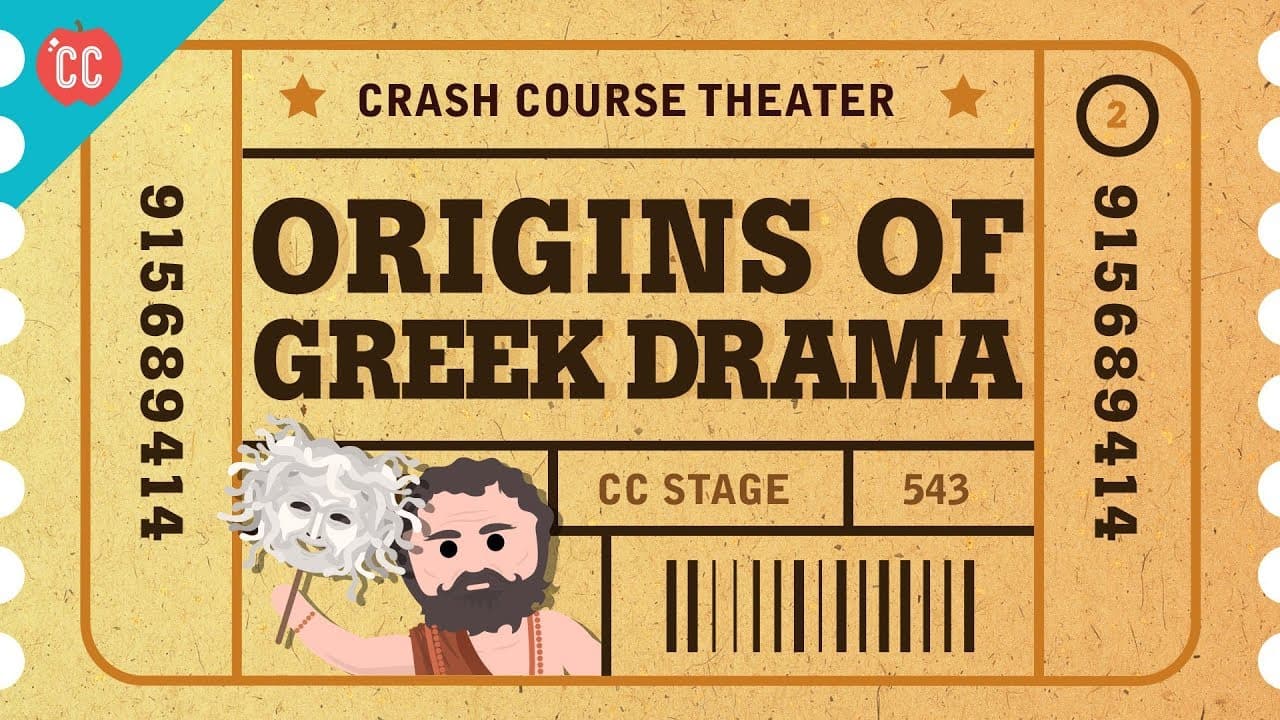
TL;DR
Greek drama originated from religious rituals dedicated to Dionysus in 6th century BCE Athens. Thespis, credited as the first actor, introduced individual character portrayal, evolving dithyrambs into theater. The City Dionysia festival institutionalized theater, featuring competitions and performances that questioned societal values, fostering civic engagement.
Transcript
Hey there. I'm Mike Rugnetta, this is Crash Course Theater, and today we're traveling to ancient Greece to uncover the origins of Western drama. Right, Dionysus? He's... He's still hung over. My dude, this is your episode. You gotta get up! If we believe the ritualism theory from last episode, then eons of religious or quasi-religious rituals event... Read More
Key Insights
- Greek drama originated from religious rituals for Dionysus in 6th century BCE.
- Thespis is credited as the first actor, stepping out from the chorus to portray individual characters.
- The City Dionysia festival in Athens institutionalized theater with competitions and performances.
- Tragedy derives from Greek words for 'goat' and 'song', possibly linked to animal sacrifices.
- Athens' theater competitions involved tetralogies: three linked tragedies and a satyr play.
- Athenian theater was a civic duty, questioning values and structures of the state.
- Aristotle's concept of catharsis suggests tragedy purges emotions of pity and fear.
- Theater structure included the Theatron, Orchestra, Skene, and Deus Ex Machina for divine interventions.
Install to Summarize YouTube Videos and Get Transcripts
Explore YouTube Video Summarizer or Get YouTube Transcript Extractor
Questions & Answers
Q: How did Greek drama originate?
Greek drama originated from religious rituals dedicated to Dionysus in 6th century BCE Athens. These rituals evolved into theater when Thespis, the first actor, stepped out from the chorus to portray individual characters. This transformation marked the beginning of Greek tragedy and the institutionalization of theater in Athens.
Q: Who was Thespis and what was his role in Greek drama?
Thespis is credited as the first actor in Greek drama. He revolutionized the dithyramb chorus by stepping out to portray individual characters, effectively transforming religious rituals into theatrical performances. Thespis's innovation laid the foundation for Greek tragedy and the evolution of Western theater.
Q: What was the City Dionysia festival?
The City Dionysia was a prominent festival in Athens that institutionalized theater as a civic event. Established in the 530s BCE, it featured theater competitions with tetralogies, including three linked tragedies and a satyr play. The festival celebrated Dionysus and reinforced Athens' cultural and political unity through theater.
Q: What is the significance of tragedy in Greek drama?
Tragedy in Greek drama is significant for its exploration of human values, conflicts, and societal structures. It derives from Greek words for 'goat' and 'song', possibly linked to ritual sacrifices. Tragedy served as a civic activity in Athens, encouraging citizens to reflect on personal and civic responsibilities through dramatic narratives.
Q: What is Aristotle's concept of catharsis in tragedy?
Aristotle's concept of catharsis in tragedy refers to the purgation of emotions like pity and fear. He believed that experiencing these emotions through theater allowed audiences to release them, promoting emotional balance and civic productivity. This theory highlights tragedy's role in both personal and societal well-being.
Q: How was the Athenian theater structured?
The Athenian theater was an outdoor amphitheater with several key components. The Theatron was the seating area, the Orchestra was the performance space, and the Skene served as a dressing area. The theater also featured the Deus Ex Machina, a mechanism for divine interventions in plays, enhancing the dramatic experience.
Q: What was the role of the chorus in Greek drama?
The chorus in Greek drama provided commentary, background, and reflections on the play's themes. Initially central to performances, the chorus evolved to support individual actors like Thespis. Choruses often sang and danced, contributing to the dramatic atmosphere and reinforcing the narrative's emotional and thematic elements.
Q: Why are Greek tragedies still relevant today?
Greek tragedies remain relevant today due to their exploration of universal human themes such as conflict, morality, and identity. Despite limited surviving works, playwrights like Aeschylus, Sophocles, and Euripides have influenced contemporary drama by providing templates for storytelling, character development, and thematic exploration in modern theater.
Summary & Key Takeaways
-
Greek drama began with rituals for Dionysus in the 6th century BCE. Thespis, the first actor, transformed dithyrambs into theater by portraying characters. The City Dionysia festival institutionalized theater in Athens, featuring competitions and performances that explored societal values and civic duty.
-
Theater in Athens involved tetralogies, with three linked tragedies and a satyr play. Tragedy, from the Greek words for 'goat' and 'song', may link to animal sacrifices. Athenian theater was a civic activity, questioning state values and encouraging civic engagement.
-
Aristotle's catharsis theory suggests tragedy purges emotions like pity and fear. The theater's structure included the Theatron, Orchestra, Skene, and Deus Ex Machina for divine interventions. Despite limited surviving plays, Greek drama's impact endures in contemporary theater.
Read in Other Languages (beta)
Share This Summary 📚
Summarize YouTube Videos and Get Video Transcripts with 1-Click
Try YouTube Summary with ChatGPT & Claude or YouTube Transcript Generator
Explore More Summaries from CrashCourse 📚




Summarize YouTube Videos and Get Video Transcripts with 1-Click
Try YouTube Summary with ChatGPT & Claude or YouTube Transcript Generator