What Are the Rules of War? Just War Theory
TL;DR
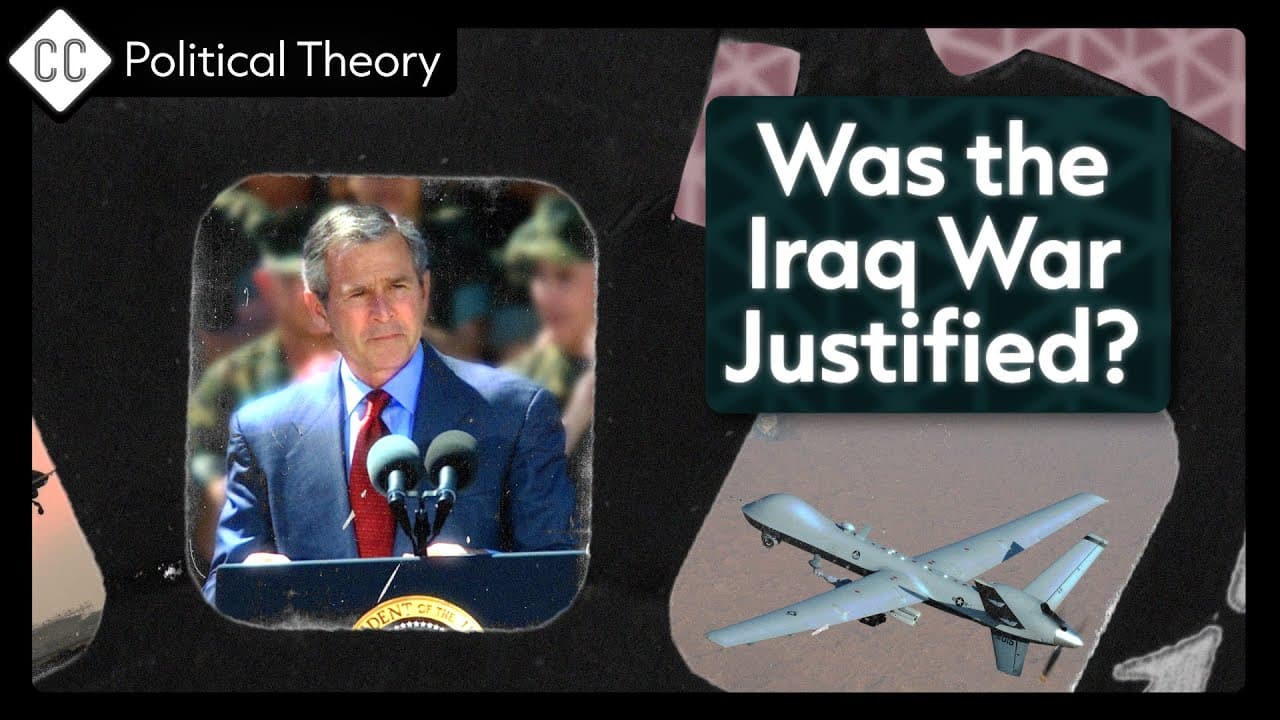
Exploration of Just War Theory through the lens of the Iraq War.
Transcript
When the United States invaded Iraq in March 2003, I was an eighth-grader, more concerned with starring in my middle school musical than foreign relations. But there was something that stood out to me about that time. In the year leading up to the invasion, President George W. Bush and members of his administration seemed to be making a case to ... Read More
Key Insights
- Just War Theory is an ethical framework that evaluates when it's acceptable to go to war and how wars should be conducted.
- The theory is divided into two main categories: jus ad bellum (right to go to war) and jus in bello (right conduct in war).
- Jus ad bellum requires six criteria to be met, including just cause, right intention, legitimate authority, likelihood of success, proportionality, and last resort.
- The Iraq War is used as a case study to explore the application of Just War Theory, with debates over the legitimacy of the U.S.'s justifications.
- Jus in bello focuses on ethical conduct during war, emphasizing legitimate targets, proportional damage, and necessity of actions.
- The Iraq War's justification is contested, with many arguing it failed to meet Just War criteria, particularly regarding weapons of mass destruction.
- Technological advancements, like drones and AI, complicate the application of Just War Theory in modern conflicts.
- Just War Theory is not a simple checklist but a tool for questioning and evaluating decisions about war and peace.
Install to Summarize YouTube Videos and Get Transcripts
Explore YouTube Video Summarizer or Get YouTube Transcript Extractor
Questions & Answers
Q: What is Just War Theory?
Just War Theory is an ethical framework used to evaluate the conditions under which it is acceptable to go to war and the ethical conduct within war. It is divided into two main categories: jus ad bellum, which addresses the right to go to war, and jus in bello, which focuses on right conduct during war.
Q: What are the main criteria of jus ad bellum?
Jus ad bellum requires six criteria to be met for a war to be considered just: just cause, right intention, legitimate authority, likelihood of success, proportionality, and last resort. Each criterion addresses different aspects of the ethical justification for initiating a war.
Q: How does the Iraq War relate to Just War Theory?
The Iraq War is used as a case study to explore the application of Just War Theory. The U.S. government's justifications for the war, particularly regarding weapons of mass destruction and the intention to depose Saddam Hussein, are analyzed against the theory's criteria, highlighting debates over the war's legitimacy.
Q: What is the doctrine of double effect in jus in bello?
The doctrine of double effect in jus in bello allows for serious harm as a side effect of an attempt to do good. For example, targeting military facilities is considered morally acceptable even if civilian casualties are likely, as long as civilians are not intentionally targeted and the primary aim is legitimate.
Q: What are the challenges of applying Just War Theory to modern conflicts?
Modern conflicts present challenges to Just War Theory due to technological advancements like drones and AI, which complicate traditional ethical considerations. These technologies allow for remote targeting and decision-making, raising questions about proportionality, necessity, and the ethical implications of autonomous systems in warfare.
Q: Why is the legitimacy of a nation important in Just War Theory?
Legitimacy of a nation is crucial in Just War Theory because only a legitimate authority can declare war. This raises questions about what constitutes a nation, especially in conflicts where the legitimacy of the authority is disputed, such as in cases of civil wars or contested territories.
Q: What is jus post bellum?
Jus post bellum, or justice after war, is a recent addition to Just War Theory that addresses the ethical considerations following a conflict. It focuses on accountability for actions during the war, establishing rules of peace, and ensuring that the outcomes of the war contribute to a just and lasting peace.
Q: How does Just War Theory address the issue of proportionality?
Proportionality in Just War Theory requires that the harm caused by war must be proportionate to the good achieved. This involves imagining two possible futures—one with the war and one without—and determining if the peace achieved by the war outweighs the harm caused, which is a complex and morally ambiguous assessment.
Summary & Key Takeaways
-
Just War Theory provides a framework for determining the ethics of war, focusing on when it's justified to go to war and how wars should be conducted. The Iraq War serves as a case study, highlighting debates over the U.S.'s justifications and the challenges of meeting the theory's criteria.
-
Jus ad bellum requires six criteria to be met, including just cause, right intention, and legitimate authority. The Iraq War's justification is contested, with many arguing it failed to meet these criteria, particularly regarding the presence of weapons of mass destruction.
-
Jus in bello emphasizes ethical conduct during war, focusing on legitimate targets, proportional damage, and necessity of actions. Technological advancements, like drones and AI, further complicate the application of Just War Theory in modern conflicts, challenging traditional ethical considerations.
Read in Other Languages (beta)
Share This Summary 📚
Summarize YouTube Videos and Get Video Transcripts with 1-Click
Try YouTube Summary with ChatGPT & Claude or YouTube Transcript Generator
Explore More Summaries from CrashCourse 📚




Summarize YouTube Videos and Get Video Transcripts with 1-Click
Try YouTube Summary with ChatGPT & Claude or YouTube Transcript Generator