Lindsey Graham: Trump Has High Energy and Bad Ideas
TL;DR
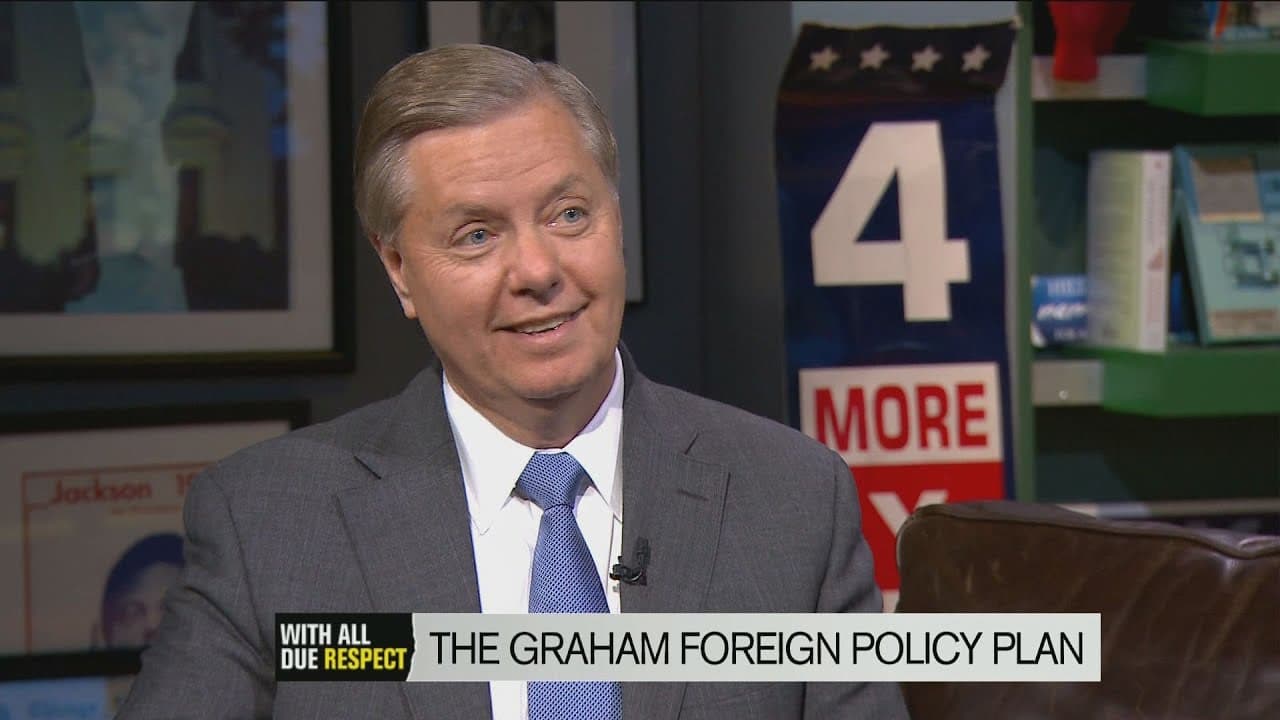
Lindsey Graham advocates for U.S. troops in Syria against ISIS.
Transcript
Republican presidential candidate Lindsey Graham has been calling for American troops to be put on the ground in Syria for months he's planning to introduce a resolution to authorize military force against Isis in the next few weeks Senator joins us now here in New York Senator thank you for coming in thank you for having me talk you can't give awa... Read More
Key Insights
- Lindsey Graham proposes deploying U.S. troops to Syria, emphasizing a coalition with regional allies to dismantle ISIS and reclaim territories like Raqqa and Mosul.
- He argues that ISIS poses a greater threat than Al-Qaeda, necessitating a new military authorization similar to post-9/11 measures.
- Graham criticizes cooperation with Russia if it means keeping Assad in power, advocating for a strategy that removes Assad to ensure regional stability.
- He suggests that defeating ISIS requires both military action and long-term investment in the region's socio-economic development to counter radical ideologies.
- Graham calls for a temporary pause in accepting Syrian refugees post-Paris attacks, stressing the importance of thorough vetting processes.
- He opposes religious tests for refugees, advocating instead for safe havens in Syria to prevent displacement.
- Graham believes the Paris attacks will shift voter preference towards experienced candidates in the presidential race.
- He criticizes Donald Trump for lacking understanding in foreign policy, asserting that experience and knowledge are crucial for leadership.
Install to Summarize YouTube Videos and Get Transcripts
Explore YouTube Video Summarizer or Get YouTube Transcript Extractor
Questions & Answers
Q: Why does Lindsey Graham propose deploying U.S. troops to Syria?
Lindsey Graham proposes deploying U.S. troops to Syria to work alongside regional allies in dismantling ISIS. He believes that reclaiming territories like Raqqa and Mosul is crucial to destroying the caliphate and preventing ISIS from posing a greater threat than Al-Qaeda. Graham argues that a coalition approach, with significant regional involvement, is necessary to address the unique challenges posed by ISIS.
Q: What is Graham's stance on cooperation with Russia regarding Syria?
Graham opposes cooperation with Russia if it means keeping Assad in power, as he believes this would undermine regional stability. He argues that the removal of Assad is essential for Syria's future and that regional allies are willing to contribute significantly to the fight against ISIS if Assad's removal is part of the strategy. Graham sees Russia's involvement as potentially detrimental to U.S. and regional interests.
Q: How does Graham view the threat of ISIS compared to Al-Qaeda?
Graham views ISIS as a more significant threat than Al-Qaeda due to its control over large territories and its existential threat to regional governments. He believes that ISIS's ability to hold territory makes it a different and more dangerous adversary, necessitating a new military authorization similar to the post-9/11 measures taken against Al-Qaeda. Graham emphasizes the need for a comprehensive strategy to dismantle ISIS and prevent its spread.
Q: What is Graham's position on Syrian refugees post-Paris attacks?
Post-Paris attacks, Graham calls for a temporary pause in accepting Syrian refugees to ensure thorough vetting processes are in place. While acknowledging the humanitarian crisis, he stresses the importance of preventing terrorists from infiltrating refugee flows. Graham opposes religious tests for refugees and advocates for creating safe havens within Syria to address the root causes of displacement and reduce the need for refugees to seek asylum elsewhere.
Q: How does Graham propose to address the root causes of terrorism?
Graham proposes addressing the root causes of terrorism through a combination of military action and long-term socio-economic investment in the region. He emphasizes the importance of building schools and infrastructure to offer hope to young people, countering the appeal of radical ideologies. Graham believes that investing in the region's development is crucial for defeating radical Islam and ensuring long-term stability and peace.
Q: What impact does Graham believe the Paris attacks will have on the presidential race?
Graham believes the Paris attacks will shift voter preference towards candidates with experience in foreign policy and national security. He argues that the attacks highlight the need for knowledgeable leadership, suggesting that candidates like himself, with extensive experience in military and foreign affairs, will become more appealing to voters seeking stability and effective strategies against terrorism.
Q: What is Graham's critique of Donald Trump's foreign policy approach?
Graham criticizes Donald Trump for lacking understanding and insight into foreign policy, despite having high energy. He argues that Trump's ideas are flawed and that effective leadership requires both energy and a deep understanding of complex international issues. Graham positions himself as a candidate with the necessary experience and knowledge to handle national security challenges effectively.
Q: What is Graham's vision for the future of Syria post-ISIS?
Graham envisions a future for Syria where Assad is removed from power, allowing the Syrian people to choose their leader without external influence from Iran or Russia. He advocates for a regional and Western coalition to dismantle ISIS and subsequently address the political future of Syria. Graham believes that neutralizing Iranian influence and preventing Russian dominance are essential for achieving lasting peace and stability in the region.
Summary & Key Takeaways
-
Lindsey Graham advocates for a coalition of U.S. and regional forces to dismantle ISIS, arguing that ISIS is a greater threat than Al-Qaeda due to its territorial control. He emphasizes the need for a new military authorization to address this threat effectively.
-
Graham criticizes the idea of cooperating with Russia if it means keeping Assad in power, as he believes this would destabilize the region further. He suggests that regional allies are willing to contribute significantly if the U.S. leads the effort to remove ISIS and Assad.
-
Graham calls for a temporary pause in accepting Syrian refugees following the Paris attacks to ensure better vetting. He opposes religious tests for refugees and suggests creating safe havens in Syria to address the root cause of displacement.
Read in Other Languages (beta)
Share This Summary 📚
Summarize YouTube Videos and Get Video Transcripts with 1-Click
Try YouTube Summary with ChatGPT & Claude or YouTube Transcript Generator
Explore More Summaries from Bloomberg Originals 📚






Summarize YouTube Videos and Get Video Transcripts with 1-Click
Try YouTube Summary with ChatGPT & Claude or YouTube Transcript Generator