When Infrastructure Gets Hacked
TL;DR
Cyberattacks on infrastructure highlight vulnerabilities and the need for cybersecurity.
Transcript
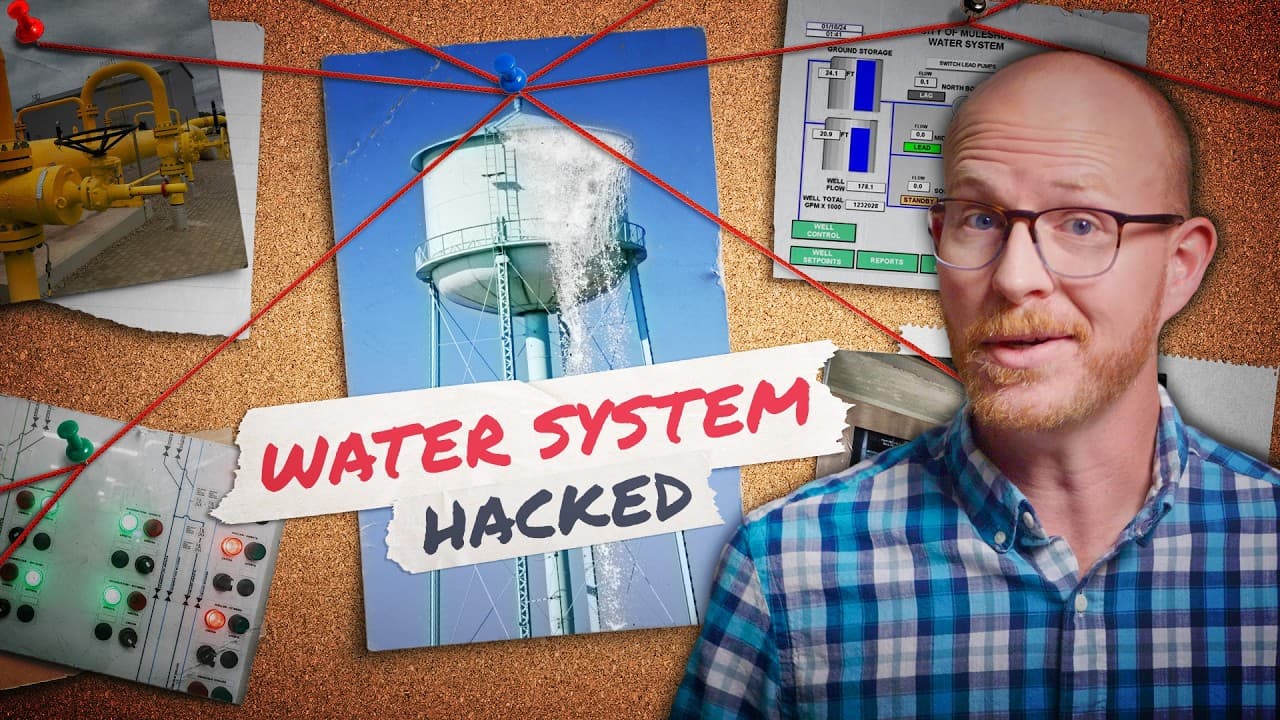
This is a water tower, or as the pros would say, an elevated storage tank. Pretty common here in the US, especially in flatter areas where there’s no nearby hillside to build a ground-level tank. I have a whole video about how these work. In the most basic sense, a water tower is a buffer between the ever-changing demands for fresh water in a d... Read More
Key Insights
- Water towers serve as a buffer between fluctuating water demands and constant pump operations, but hacking can disrupt this balance.
- A hacking group linked to the Russian military attacked Muleshoe's water system, causing an overflow but no damage.
- SCADA systems are crucial in automating and managing infrastructure but are vulnerable to cyberattacks if not properly secured.
- The Colonial Pipeline ransomware attack caused widespread fuel shortages, highlighting the impact of cyber threats on critical infrastructure.
- Stuxnet, a military-grade cyber weapon, targeted Iran's nuclear facilities, demonstrating the potential for cyberattacks to cause physical damage.
- Remote access to critical systems poses significant risks, yet many systems remain connected for convenience.
- Cybersecurity is essential across all levels of infrastructure, from small water systems to major pipelines, to prevent disruptions.
- Media coverage of infrastructure issues varies based on political bias, emphasizing the importance of diverse news sources for balanced information.
Install to Summarize YouTube Videos and Get Transcripts
Explore YouTube Video Summarizer or Get YouTube Transcript Extractor
Questions & Answers
Q: What was the main issue in the Muleshoe water tower incident?
The Muleshoe water tower incident was caused by a cyberattack where hackers manipulated the SCADA system controlling the water pumps. This led to an overflow of the water tower as the pump was set to remain on even after the tank was full. The attack was linked to a Russian military hacking group, but fortunately, it resulted in no significant damage.
Q: How do SCADA systems contribute to infrastructure management?
SCADA systems, or Supervisory Control and Data Acquisition systems, are essential for managing infrastructure by automating and controlling various processes. They use sensors and actuators to monitor and adjust equipment like pumps and valves, ensuring efficient operation. However, their connectivity can make them vulnerable to cyberattacks if not properly secured, as they are often networked for remote access.
Q: What was the impact of the Colonial Pipeline cyberattack?
The Colonial Pipeline cyberattack involved ransomware that targeted the company's billing systems, leading to a shutdown of the pipeline. This caused widespread fuel shortages and panic buying across the eastern United States. The attack highlighted the vulnerabilities in critical infrastructure and the significant disruptions that can occur from cyber threats, even when control systems are not directly compromised.
Q: What is Stuxnet and its significance in cybersecurity?
Stuxnet is a sophisticated cyber weapon believed to have been developed by the US and Israel to target Iran's nuclear facilities. It specifically attacked SCADA systems to cause physical damage to centrifuges used for uranium enrichment. Stuxnet demonstrated the potential for cyberattacks to cause real-world damage and underscored the importance of securing industrial control systems against such threats.
Q: Why is remote access to critical systems a concern?
Remote access to critical systems is a concern because it exposes these systems to potential cyber threats from anywhere in the world. While remote access offers convenience and operational efficiency, it also opens the door for hackers to exploit vulnerabilities. This is why many critical systems are air-gapped, although this method is not foolproof against all types of attacks, as demonstrated by incidents like the Stuxnet worm.
Q: How does media coverage of infrastructure issues vary?
Media coverage of infrastructure issues often varies based on political bias. For example, left-leaning outlets may focus on the social impact and urgency of a crisis, while right-leaning outlets might emphasize technical details and logistics. This variation highlights the importance of consuming news from diverse sources to gain a comprehensive understanding of such issues.
Q: What role does cybersecurity play in infrastructure management?
Cybersecurity plays a critical role in infrastructure management by protecting systems from unauthorized access and potential attacks. As infrastructure becomes increasingly digitized, the risk of cyber threats grows, making it essential for operators to implement robust security measures. This includes securing SCADA systems, training employees on cybersecurity best practices, and ensuring systems are not easily accessible to hackers.
Q: What lessons can be learned from past infrastructure cyberattacks?
Past infrastructure cyberattacks teach us the importance of securing digital systems against unauthorized access. Incidents like the Muleshoe water tower overflow and the Colonial Pipeline ransomware attack demonstrate how easily vulnerabilities can be exploited, leading to significant disruptions. These events underscore the need for comprehensive cybersecurity strategies, regular system audits, and employee training to protect critical infrastructure from future threats.
Summary & Key Takeaways
-
The video discusses the vulnerability of infrastructure systems like water and energy to cyberattacks, using recent examples to illustrate the potential consequences of poor cybersecurity practices.
-
It highlights the role of SCADA systems in managing infrastructure and how their connectivity can be a double-edged sword, offering efficiency but also exposing systems to cyber threats.
-
The importance of cybersecurity is emphasized, with historical examples like Stuxnet and the Colonial Pipeline attack demonstrating the real-world impact of digital threats on critical infrastructure.
Read in Other Languages (beta)
Share This Summary 📚
Summarize YouTube Videos and Get Video Transcripts with 1-Click
Try YouTube Summary with ChatGPT & Claude or YouTube Transcript Generator
Explore More Summaries from Practical Engineering 📚


Summarize YouTube Videos and Get Video Transcripts with 1-Click
Try YouTube Summary with ChatGPT & Claude or YouTube Transcript Generator