Banana Wars: When US Marines Fight For Big Fruit (Documentary)
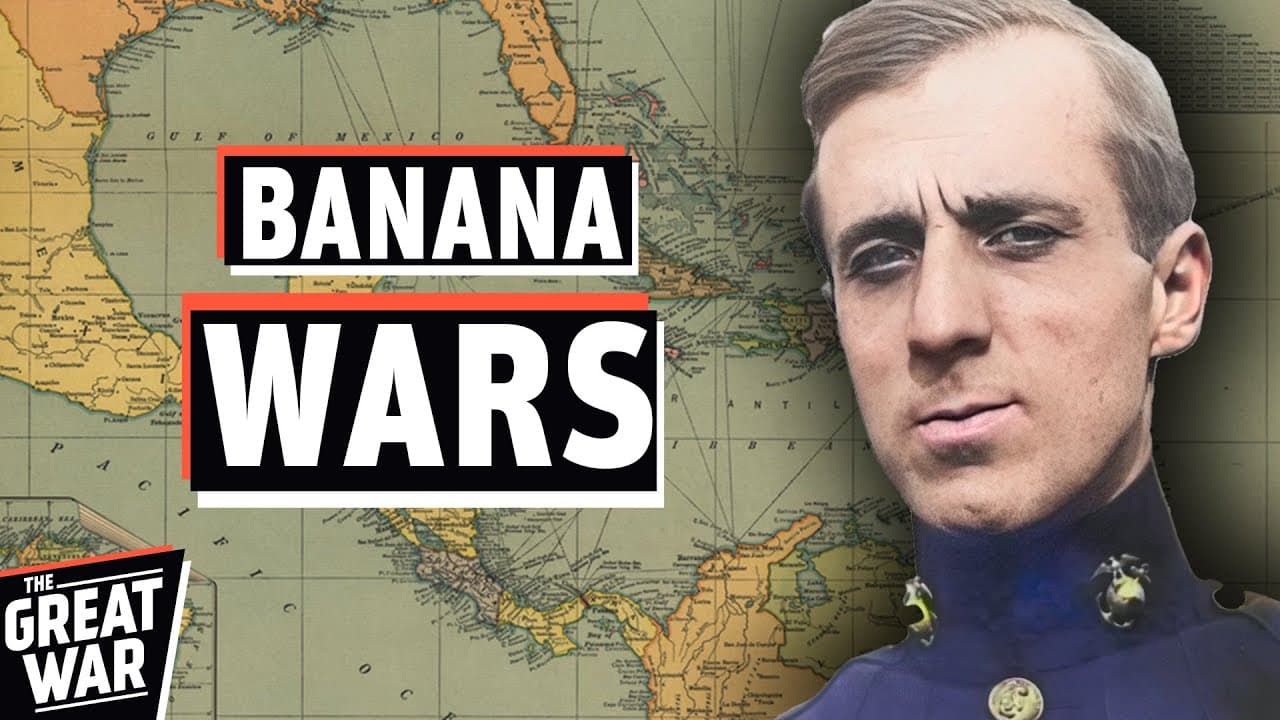
TL;DR
US interventions in Central America were influenced by geopolitical and business interests.
Transcript
hi I'm Jesse Alexander and welcome to the Great War in the early 1920s Central America was experiencing political instability which dated back to the 19th century there had been several attempts to stabilize the volatile republics in the region by creating a Central American Federation but these had failed border clashes Civil Wars and coups were c... Read More
Key Insights
- The US had a significant influence in Central America due to strategic interests like the Panama Canal and business interests, particularly in bananas.
- The United Fruit Company, known for its aggressive tactics, played a major role in the economic landscape of Central America, owning vast lands and influencing local politics.
- US interventions often involved military actions, such as the deployment of Marines to protect American interests and influence political outcomes in countries like Nicaragua and Honduras.
- Political instability in Central America often stemmed from border disputes, coups, and civil wars, which were sometimes exacerbated by foreign interventions.
- The Coto War between Costa Rica and Panama exemplified how minor territorial disputes could escalate into significant conflicts with international implications.
- US interventions were sometimes justified under the Monroe Doctrine, aiming to keep European powers out of the region and maintain American dominance.
- Figures like Smedley Butler became disillusioned with the US's role in Central America, viewing it as serving capitalist interests rather than humanitarian goals.
- The legacy of US interventions in Central America includes long-lasting political and economic impacts, with debates about the true motives behind these actions continuing to this day.
Install to Summarize YouTube Videos and Get Transcripts
Explore YouTube Video Summarizer or Get YouTube Transcript Extractor
Questions & Answers
Q: What were the main reasons for US involvement in Central America?
The US was primarily involved in Central America due to strategic interests, such as the construction and control of the Panama Canal, and economic interests, particularly in the banana industry. The Monroe Doctrine also played a role in justifying interventions to keep European powers out of the region.
Q: How did the United Fruit Company influence Central American politics?
The United Fruit Company wielded significant influence in Central America through aggressive business tactics, such as acquiring vast amounts of land and establishing control over local economies. The company's interests often aligned with US geopolitical goals, leading to interventions that furthered its dominance in the region.
Q: What was the significance of the Coto War?
The Coto War between Costa Rica and Panama was significant because it demonstrated how minor territorial disputes could escalate into larger conflicts, drawing in international powers like the US. The war also highlighted the challenges of border disputes in the region and the influence of foreign interests, such as the United Fruit Company.
Q: Why did Smedley Butler become disillusioned with US interventions?
Smedley Butler became disillusioned with US interventions in Central America after realizing that they primarily served capitalist interests rather than humanitarian or democratic goals. He viewed his military actions as benefiting big business and Wall Street, rather than the people of the region.
Q: How did US interventions impact Central American countries?
US interventions in Central America had long-lasting impacts, including political instability, economic dependency, and social issues. These interventions often involved military actions to influence political outcomes, leading to accusations of election rigging and undermining local sovereignty.
Q: What role did the Monroe Doctrine play in US interventions?
The Monroe Doctrine played a role in justifying US interventions in Central America by emphasizing the need to keep European powers out of the region. This policy allowed the US to maintain dominance and protect its strategic and economic interests, often at the expense of local autonomy.
Q: What were the outcomes of the Panama Canal construction for US foreign policy?
The construction of the Panama Canal significantly enhanced US strategic and military capabilities by providing a crucial maritime route between the Atlantic and Pacific Oceans. It also solidified US influence in Central America and demonstrated its willingness to intervene militarily and politically to protect its interests.
Q: How did the US justify its military actions in Central America?
The US often justified its military actions in Central America by citing the need to protect American citizens and business interests, maintain regional stability, and prevent European intervention under the Monroe Doctrine. These justifications were sometimes seen as cover for advancing economic and strategic goals.
Summary & Key Takeaways
-
In the early 20th century, the US was heavily involved in Central America, driven by strategic and economic interests, particularly in the banana industry. The United Fruit Company became a powerful entity, influencing local politics and economies.
-
US military interventions, often under the guise of protecting American interests, played a crucial role in shaping the political landscape of Central American countries, leading to long-term consequences for the region.
-
The Coto War between Costa Rica and Panama highlighted the complexities of territorial disputes and the influence of foreign powers, with the US playing a pivotal role in the resolution of these conflicts.
Read in Other Languages (beta)
Share This Summary 📚
Summarize YouTube Videos and Get Video Transcripts with 1-Click
Try YouTube Summary with ChatGPT & Claude or YouTube Transcript Generator
Explore More Summaries from The Great War 📚
Summarize YouTube Videos and Get Video Transcripts with 1-Click
Try YouTube Summary with ChatGPT & Claude or YouTube Transcript Generator