HEAVY CONSTRUCTION of a Sewage Pump Station - Ep 4
TL;DR
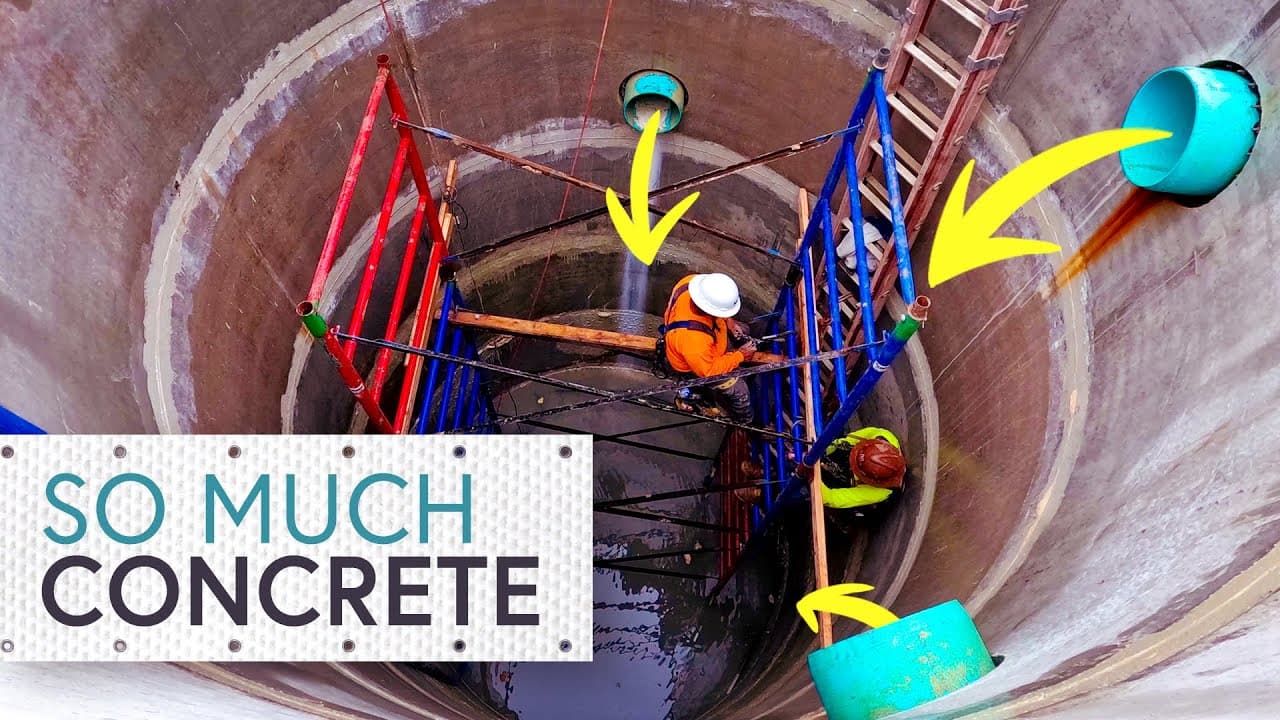
Documenting the construction of a new sewage lift station.
Transcript
Sewage is always better when it’s out of sight and out of mind, and the only reason it stays that way is wastewater infrastructure. We’re in the middle of construction for a new sewage lift station just outside San Antonio, Texas. I’m filming the entire process and sharing it with you, because it’s not always easy to understand how projects like... Read More
Key Insights
- The construction of a new sewage lift station near San Antonio, Texas, is crucial for maintaining wastewater infrastructure and allowing maintenance on existing stations without service disruption.
- A massive valve is installed to redirect wastewater flows, requiring careful excavation, shoring, and bypass pumping to ensure continuous service during construction.
- The construction process involves precise steps, including cutting concrete, excavating, shoring trenches, and redirecting sewage flows using bypass pumps to ensure uninterrupted service.
- Backfilling and compaction are critical stages in construction, using select materials like crushed rock to create stable subgrades for supporting structures and preventing settling over time.
- Quality control tests on concrete ensure it meets engineering specifications, with checks on slump, air content, and strength to prevent future structural issues.
- Protective measures, such as epoxy liners, are applied to manholes and wet wells to prevent corrosion from hydrogen sulfide gas, ensuring long-term durability of the structures.
- The project involves detailed planning and execution, with multiple construction elements including electrical connections, concrete slabs, and protective shelters for equipment.
- This pilot series aims to showcase the complexities of construction projects, engaging viewers with educational content free from dramatization, and highlights the potential for independent creators on platforms like Nebula.
Install to Summarize YouTube Videos and Get Transcripts
Explore YouTube Video Summarizer or Get YouTube Transcript Extractor
Questions & Answers
Q: What is the purpose of the new sewage lift station?
The new sewage lift station is being constructed to enhance the wastewater infrastructure near San Antonio, Texas. It will allow the existing lift station to be taken offline for maintenance without disrupting service. The new station will manage wastewater flows more efficiently, ensuring continuous and reliable service for the area.
Q: How is the massive valve installed during construction?
The massive valve installation involves cutting concrete, excavating the site, and shoring trenches to prevent soil collapse. A bypass pump is used to redirect sewage flows temporarily, allowing the valve to be installed without interrupting service. The valve is then connected to existing pipes using a mechanical joint, ensuring a watertight seal.
Q: What materials are used for backfilling and compaction?
Backfilling involves using select materials like crushed rock, which interlocks and compacts into a stable subgrade. This material supports the weight of structures and prevents settling over time. Areas not supporting structures can be backfilled with native clay, while select fill is used under concrete slabs to ensure stability.
Q: Why are quality control tests important for concrete?
Quality control tests on concrete are crucial to ensure it meets the specifications required by engineers. Tests like slump, air content, and strength checks prevent issues like improper flow, brittleness, or surface defects. These tests ensure the concrete's durability and structural integrity, preventing costly repairs or replacements in the future.
Q: What protective measures are applied to manholes and wet wells?
Manholes and wet wells are coated with a spray-on epoxy liner to protect against hydrogen sulfide gas, which is corrosive to steel and concrete. The protective coating ensures the long-term durability of these structures, preventing damage from the harsh environment within the wastewater system.
Q: How does the series aim to educate viewers about construction?
The series aims to educate viewers by providing detailed, step-by-step documentation of the construction process, highlighting the complexities and hard work involved. It avoids dramatization, focusing instead on the educational aspect of construction projects and encouraging support for independent creators who produce informative content.
Q: What role do platforms like Nebula play for independent creators?
Platforms like Nebula empower independent creators by providing a space to produce and share educational content without the constraints of traditional media. They allow creators to focus on quality and informative content, free from the need for drama or sensationalism, and offer viewers ad-free access to a wide range of original series and specials.
Q: What challenges were faced during the production of this series?
The production of this series faced challenges such as acquiring new camera gear, obtaining a drone license, and managing large volumes of 4K footage. Legal and insurance considerations for filming on construction sites were also addressed. The series required collaboration with various professionals for editing, graphics, and music composition to ensure high-quality production.
Summary & Key Takeaways
-
This episode documents the construction of a new sewage lift station near San Antonio, Texas, focusing on the installation of a massive valve to redirect wastewater and the complex steps involved in ensuring continuous service during construction.
-
The construction process involves precise excavation, shoring trenches, and using bypass pumps to redirect sewage flows. The importance of quality control in concrete work is emphasized, with tests ensuring structural integrity.
-
Protective measures, such as epoxy liners, are applied to prevent corrosion, and the series highlights the educational potential of showcasing construction projects without dramatization, encouraging support for independent creators on platforms like Nebula.
Read in Other Languages (beta)
Share This Summary 📚
Summarize YouTube Videos and Get Video Transcripts with 1-Click
Try YouTube Summary with ChatGPT & Claude or YouTube Transcript Generator
Explore More Summaries from Practical Engineering 📚

Summarize YouTube Videos and Get Video Transcripts with 1-Click
Try YouTube Summary with ChatGPT & Claude or YouTube Transcript Generator