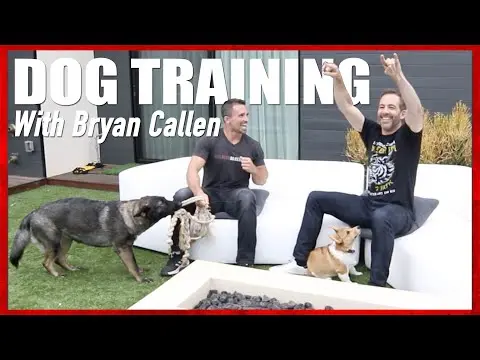
How to get more FOCUS from your dog. Episode 9

TL;DR
Learn how to enhance your dog's focus using marker training.
Transcript
one of the first things you want to do with any dog that you're working with it doesn't matter if you're working with basic obedience pet training or you're doing competitive obedience search-and-rescue protection dog training you always want to start with engagement the way that we teach this is we say the marker then we deliver the reward and whe... Read More
Key Insights
- Engagement is crucial in dog training, whether for basic obedience or advanced skills like protection or search-and-rescue.
- Marker training uses specific sounds to communicate with dogs, helping them understand when they perform correctly.
- The continuation marker indicates correctness and that the reward will be delivered to the dog.
- The terminal marker signals the end of an exercise, allowing the dog to come and receive the reward.
- Consistency in using markers helps dogs become conditioned to anticipate rewards, improving training effectiveness.
- Switching hands while delivering rewards prevents dogs from focusing on one hand, enhancing their engagement.
- Testing a dog's conditioning involves observing changes in behavior when a marker is used without an immediate reward.
- Using terminal markers in early training can increase motivation and speed by rewarding quick responses.
Install to Summarize YouTube Videos and Get Transcripts
Explore YouTube Video Summarizer or Get YouTube Transcript Extractor
Questions & Answers
Q: What is the purpose of engagement training?
Engagement training aims to capture and maintain a dog's attention during training sessions. This foundational step is crucial for ensuring that the dog focuses on the trainer and the task at hand, which is essential for effective learning and obedience, regardless of the specific training goal.
Q: How do continuation and terminal markers differ?
Continuation markers indicate that the dog has performed a behavior correctly and that a reward will be brought to them, often used for maintaining positions. Terminal markers, on the other hand, signal the end of an exercise, allowing the dog to move and receive a reward, enhancing motivation and speed.
Q: Why is it important to switch hands when delivering rewards?
Switching hands when delivering rewards prevents dogs from fixating on one hand, which can distract them from focusing on the trainer's face. This practice helps maintain a dog's engagement and ensures they are responding to verbal cues rather than just following the hand that usually delivers treats.
Q: How can you test if a dog is conditioned to a marker sound?
To test if a dog is conditioned to a marker sound, observe the dog's behavior after using the marker without immediately providing a reward. Signs of conditioning include changes like mouth opening, salivation, paw movement, or lip licking, indicating the dog anticipates a reward upon hearing the marker.
Q: What are the benefits of using terminal markers early in training?
Using terminal markers early in training can increase a dog's motivation and speed by rewarding quick responses. This approach helps dogs learn that faster performance leads to quicker rewards, enhancing their enthusiasm and engagement in training sessions, ultimately improving overall training outcomes.
Q: Why is it crucial to have a pause between the marker sound and movement?
Having a pause between the marker sound and movement ensures that the dog associates the sound with the specific behavior being rewarded. This separation helps reinforce the connection between the marker and the behavior, preventing confusion and enhancing the dog's understanding of what actions are being rewarded.
Q: What is the significance of conditioning dogs to look at the trainer's face?
Conditioning dogs to look at the trainer's face rather than their hands enhances engagement and communication. It ensures that the dog is focusing on the trainer's cues and commands instead of being distracted by the presence of treats, leading to more effective and reliable training outcomes.
Q: How does motivation affect a dog's speed in training?
Motivation significantly affects a dog's speed in training; a highly motivated dog will perform tasks more quickly and eagerly. Motivation can be driven by positive reinforcement, such as rewards for quick responses, encouraging the dog to engage actively and perform tasks with enthusiasm and speed.
Summary & Key Takeaways
-
Engagement training is essential for any dog training program, focusing on getting the dog's attention and maintaining it through rewards.
-
Marker training involves using continuation and terminal markers to signal correct behavior and reward anticipation.
-
By conditioning dogs to respond to markers, trainers can enhance communication, motivation, and speed in performing tasks.
Read in Other Languages (beta)
Share This Summary 📚
Summarize YouTube Videos and Get Video Transcripts with 1-Click
Try YouTube Summary with ChatGPT & Claude or YouTube Transcript Generator
Explore More Summaries from Nate Schoemer 📚





Summarize YouTube Videos and Get Video Transcripts with 1-Click
Try YouTube Summary with ChatGPT & Claude or YouTube Transcript Generator