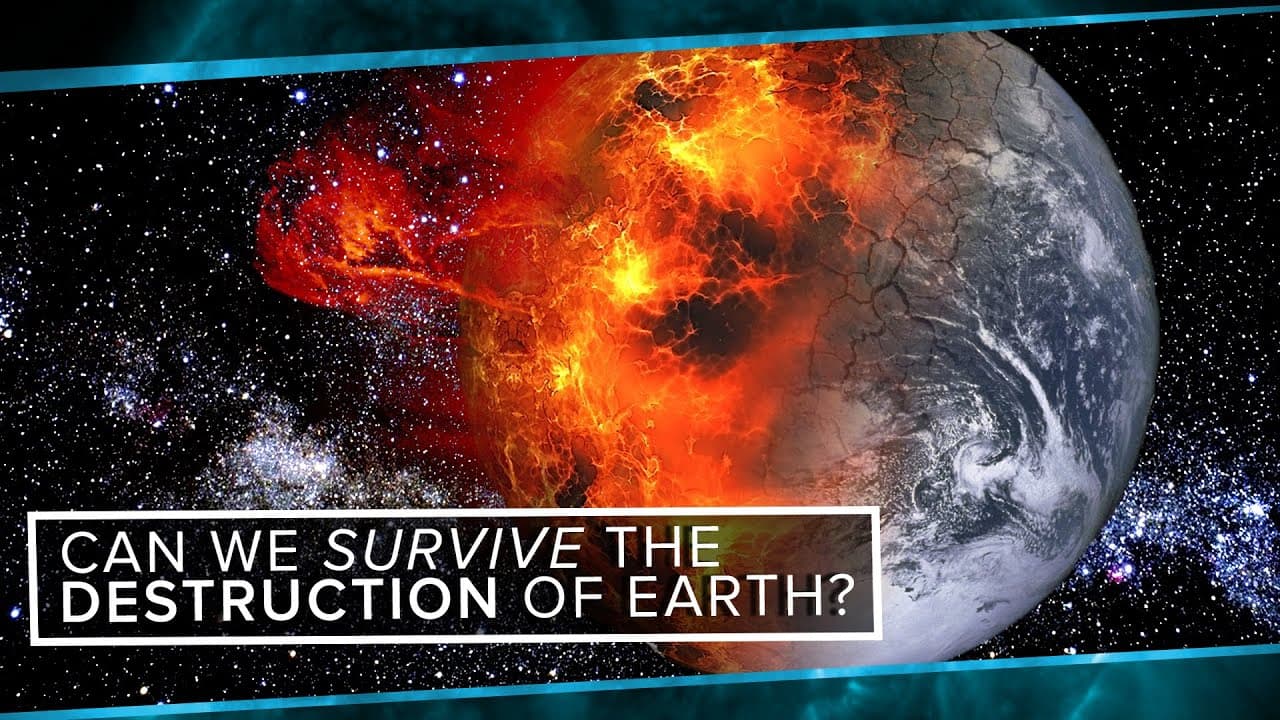
Can We Survive the Destruction of the Earth? ft. Neal Stephenson
TL;DR
Neal Stephenson discusses survival strategies for global catastrophes.
Transcript
[MUSIC PLAYING] Doomsday scenarios are a lot of fun in science fiction, not so much in reality, which is tough because global catastrophes happen. We don't know what or when the next will be. So how do we survive the next end of the world? Most of life on Earth is wiped out on a pretty regular basis. You probably already know about the Cretaceous-P... Read More
Key Insights
- Doomsday scenarios in science fiction highlight real global threats, emphasizing the need for preparedness against unknown future catastrophes.
- Historically, Earth has experienced at least five mass extinctions, with causes ranging from asteroid impacts to volcanic eruptions and supernovae.
- Neal Stephenson's book 'Seveneves' explores humanity's response to a catastrophic moon explosion, offering insights into real-world disaster preparedness.
- Asteroids pose a significant threat, but international efforts have identified 90% of large near-Earth objects, reducing immediate risk.
- Volcanic eruptions, such as the potential threat from Yellowstone, could have devastating effects but are currently monitored and not considered extinction-level threats.
- Long-term survival may require humanity to become interplanetary, with colonies on Mars, the Moon, or in space arks as insurance against global annihilation.
- Exploding stars, supernovae, and gamma ray bursts pose existential threats that require underground or interstellar solutions for human survival.
- The challenge of interstellar travel raises questions about its feasibility and necessity for ensuring the survival of future human generations.
Install to Summarize YouTube Videos and Get Transcripts
Explore YouTube Video Summarizer or Get YouTube Transcript Extractor
Questions & Answers
Q: What are some historical examples of mass extinctions on Earth?
Earth has experienced at least five major mass extinctions over the past 500 million years. The Cretaceous-Paleogene event, caused by an asteroid impact, is perhaps the most famous, leading to the extinction of the dinosaurs. Other events may have been triggered by massive volcanic eruptions, evolutionary leaps, or nearby supernovae.
Q: How does Neal Stephenson's book 'Seveneves' relate to real-world survival strategies?
'Seveneves' explores a fictional scenario where the moon explodes, threatening human survival. The book highlights the importance of preparedness and the potential for space-based solutions, such as space arks, to ensure long-term human survival. It serves as a metaphor for real-world disaster preparedness and the need for innovative survival strategies.
Q: What are the main threats to life on Earth discussed in the content?
The content identifies several major threats to life on Earth, including asteroid impacts, volcanic eruptions, and exploding stars such as supernovae and gamma ray bursts. Each of these threats requires different approaches to ensure human survival, ranging from monitoring and preparedness to establishing off-planet colonies.
Q: Why is it important to consider interplanetary colonization for human survival?
Interplanetary colonization is considered crucial for human survival because it provides a safeguard against global annihilation events that could occur on Earth. By establishing colonies on Mars, the Moon, or in space arks, humanity can ensure its survival even if a catastrophic event makes Earth uninhabitable.
Q: What role does lead time play in preparing for global catastrophes?
Lead time is critical in preparing for global catastrophes, as it determines the amount of time available to implement survival strategies. Some threats, like asteroid impacts, may provide little warning, necessitating rapid response capabilities. Others, like volcanic eruptions, may offer more lead time, allowing for more comprehensive preparedness measures.
Q: How do exploding stars pose a threat to human survival?
Exploding stars, such as supernovae and gamma ray bursts, pose a threat because they can emit high-energy radiation capable of destroying Earth's ozone layer and causing severe climate changes. These events can occur with little warning, making them particularly dangerous and necessitating underground or interstellar solutions for survival.
Q: What are some proposed solutions for ensuring long-term human survival?
Proposed solutions for ensuring long-term human survival include building underground arks or cities to protect against radiation, establishing off-planet colonies, and developing technologies for interstellar travel. These strategies aim to diversify humanity's presence and reduce the risk of extinction from Earth-bound or cosmic threats.
Q: What challenges are associated with interstellar travel for human survival?
Interstellar travel presents significant challenges, including the vast distances involved, the need for advanced propulsion technologies, and the ability to sustain human life for extended periods in space. Despite these challenges, interstellar travel is considered a potential solution for ensuring human survival against cosmic threats like supernovae and gamma ray bursts.
Summary & Key Takeaways
-
The discussion centers on the inevitability of global catastrophes and the importance of preparedness, with insights from Neal Stephenson's book 'Seveneves.' The book explores fictional scenarios that parallel real-world threats, emphasizing the need for proactive measures.
-
Asteroid impacts, volcanic eruptions, and exploding stars are identified as significant threats to life on Earth. While current monitoring efforts have mitigated some risks, the unpredictability of these events necessitates diversified survival strategies.
-
Long-term human survival may depend on establishing off-planet colonies and developing technologies for interstellar travel. Neal Stephenson and other futurists advocate for spreading humanity across multiple locations to ensure resilience against extinction-level events.
Read in Other Languages (beta)
Share This Summary 📚
Summarize YouTube Videos and Get Video Transcripts with 1-Click
Try YouTube Summary with ChatGPT & Claude or YouTube Transcript Generator
Explore More Summaries from PBS Space Time 📚



Summarize YouTube Videos and Get Video Transcripts with 1-Click
Try YouTube Summary with ChatGPT & Claude or YouTube Transcript Generator