What Is the Hidden Node Problem in Wi-Fi?
TL;DR
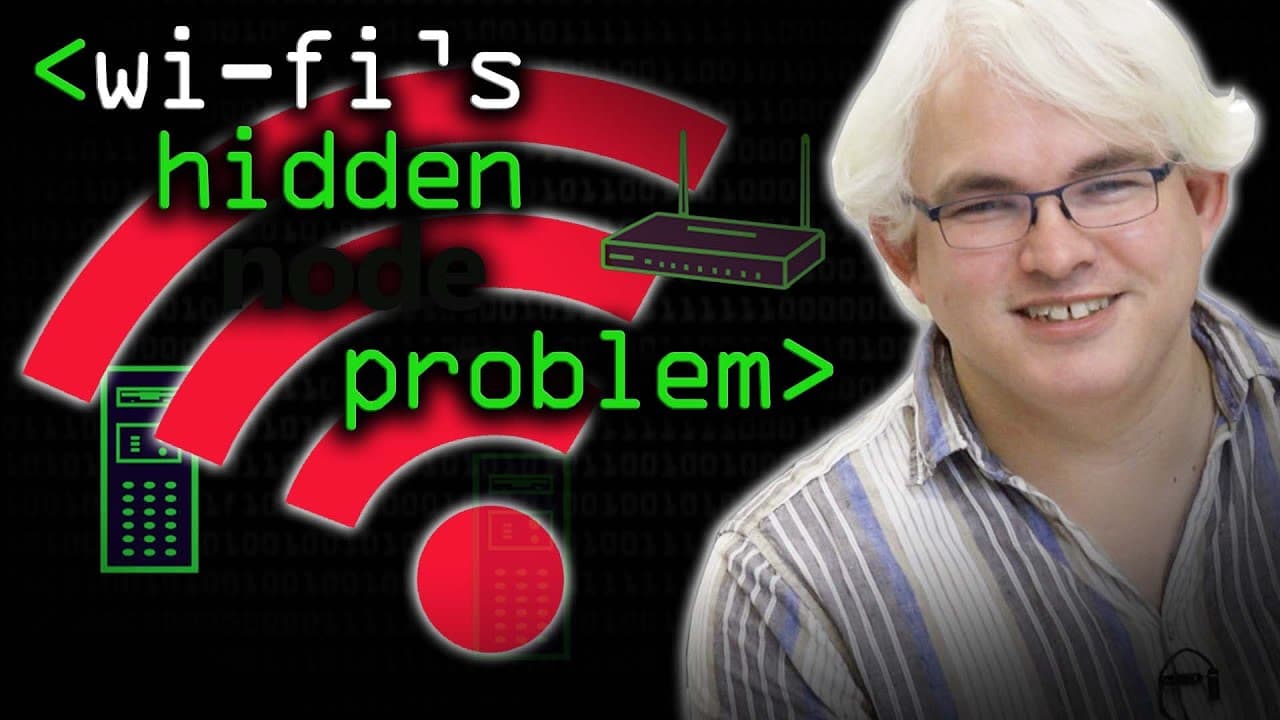
The hidden node problem occurs in Wi-Fi networks when devices out of range of each other transmit simultaneously, causing data interference. This issue is addressed through carrier sense multiple access with collision avoidance, which enables devices to reserve the radio space before transmitting, thus minimising the probability of collisions.
Transcript
so i thought one thing that'd be interesting to talk about is wi-fi's hidden node problem and this applies to any sort of wireless networks but it's a it's an interesting thing that appears when you start using wireless networks to communicate so let's start with a little diagram and we'll build this up as we're going typical wireless network we ha... Read More
Key Insights
- 📶 Wi-Fi networks may experience signal interference and corrupted data when multiple devices transmit simultaneously, a problem known as the hidden node problem.
- 💥 Carrier sense multiple access with collision avoidance is a technique used to address the hidden node problem in Wi-Fi networks.
- 😥 In this approach, devices reserve the radio space by sending a request to send (RTS) message and receiving a clear to send (CTS) message from the access point.
- 🖐️ The range of Wi-Fi signals plays a crucial role in determining which devices can detect ongoing transmissions and avoid simultaneous transmission.
- 💥 Collision avoidance in Wi-Fi networks prevents collisions by coordinating transmission times, reducing the chance of interference and data corruption.
- 💥 Ethernet networks use collision detection to handle collisions, but this approach is not feasible in Wi-Fi networks due to the inability to detect collisions from out-of-range devices.
- 👻 Reserving the radio space through RTS and CTS messages allows devices to coordinate their transmissions and ensure successful data transmission.
Install to Summarize YouTube Videos and Get Transcripts
Explore YouTube Video Summarizer or Get YouTube Transcript Extractor
Questions & Answers
Q: What is the hidden node problem in Wi-Fi networks?
The hidden node problem occurs when devices in a Wi-Fi network are out of range of each other but can transmit to the same access point. This can result in signal interference and corrupted data.
Q: How does carrier sense multiple access with collision avoidance solve the hidden node problem?
With collision avoidance, devices send a short "request to send" (RTS) message to reserve the radio space. The access point responds with a "clear to send" (CTS) message, informing other devices to wait before transmitting. This coordination prevents collisions and ensures successful data transmission.
Q: Why is the range of Wi-Fi signals relevant to the hidden node problem?
The range determines which devices can hear each other's transmissions. If a device is out of range, it cannot sense ongoing transmissions and may attempt to transmit simultaneously with another device, leading to interference and data corruption.
Q: How does collision avoidance differ from collision detection in Ethernet networks?
In Ethernet networks, collision detection detects collisions and attempts to recover from them. However, Wi-Fi networks cannot detect collisions from out-of-range devices. Therefore, Wi-Fi uses collision avoidance to prevent collisions from occurring in the first place.
Summary & Key Takeaways
-
Wi-Fi networks use the same frequency to transmit and receive signals, which can lead to interference when multiple devices try to transmit simultaneously.
-
The range of Wi-Fi signals may cause a hidden node problem, where devices that are out of range of each other may transmit at the same time, leading to corrupted data.
-
Carrier sense multiple access with collision avoidance is a solution that allows devices to reserve the radio space before transmitting, avoiding collisions and ensuring successful data transmission.
Read in Other Languages (beta)
Share This Summary 📚
Summarize YouTube Videos and Get Video Transcripts with 1-Click
Try YouTube Summary with ChatGPT & Claude or YouTube Transcript Generator
Explore More Summaries from Computerphile 📚





Summarize YouTube Videos and Get Video Transcripts with 1-Click
Try YouTube Summary with ChatGPT & Claude or YouTube Transcript Generator