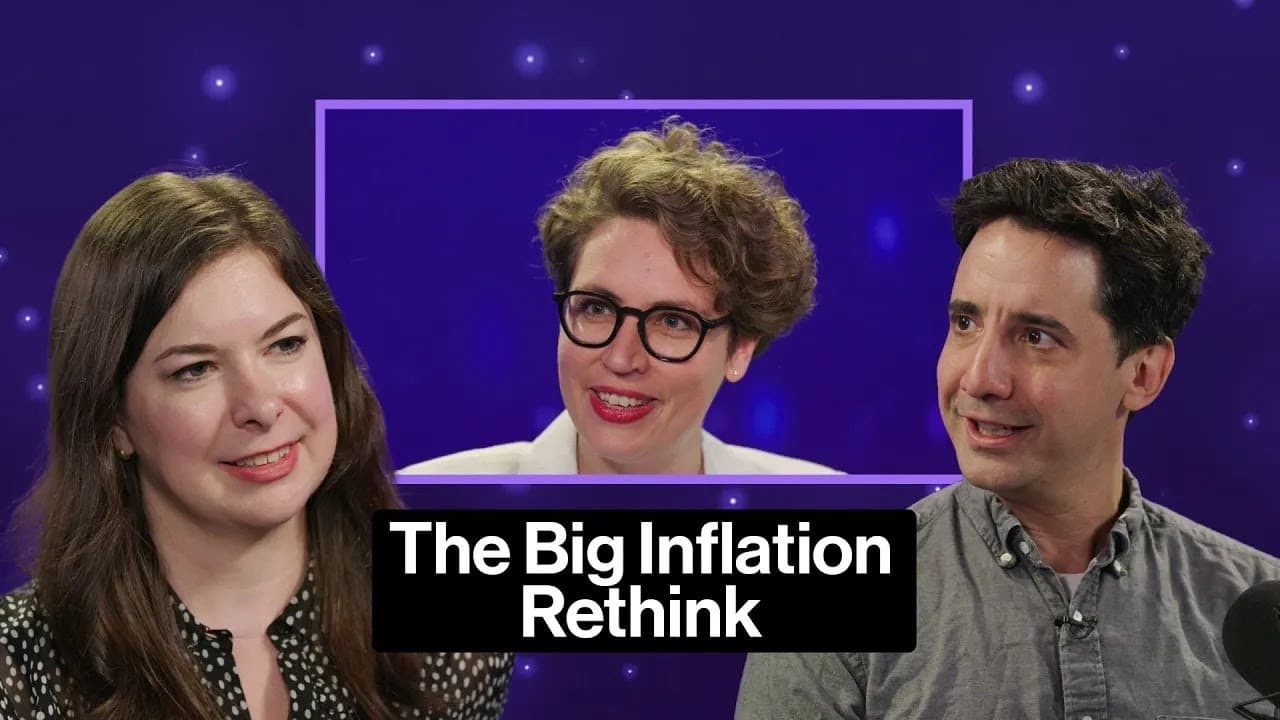
Isabella Weber on the Big Inflation Rethink | Odd Lots
TL;DR
Isabella Weber discusses the impact and implications of sellers' inflation.
Transcript
thank you hello and welcome to another episode of the odd Lots podcast I'm Tracy Alloway and I'm Joe weisenthal Joe do you remember the episode we did I think it was just a couple months ago with the core boost strategist Samuel Rines about companies are telling us the real reason they're raising prices yeah there was great episode that sort of hel... Read More
Key Insights
- Sellers' inflation refers to companies using emergencies as opportunities to raise prices, differing from traditional inflation theories centered on money supply and wages.
- The concept of sellers' inflation has gained traction, with discussions on its implications for economic policy and the need for new stabilization tools.
- Traditional inflation-fighting tools, like interest rate hikes, may not effectively address sellers' inflation, as they target demand rather than corporate pricing strategies.
- Isabella Weber suggests that emergency measures, like windfall taxes and price controls, could mitigate the amplification of initial cost shocks in sellers' inflation.
- The discussion highlights the need for economic disaster preparedness, including strategic reserves and international coordination, to buffer against future shocks.
- China's approach to inflation, with strategic reserves and controlled imports, contrasts with Western experiences, indicating potential alternative strategies for price stabilization.
- The role of investor expectations in driving corporate pricing decisions suggests a complex interplay between market forces and inflation dynamics.
- The conversation reflects a broader shift towards considering more interventionist economic policies in response to overlapping global emergencies.
Install to Summarize YouTube Videos and Get Transcripts
Explore YouTube Video Summarizer or Get YouTube Transcript Extractor
Questions & Answers
Q: What is sellers' inflation?
Sellers' inflation is a phenomenon where companies take advantage of emergencies, such as bottlenecks or cost shocks, to raise prices. This differs from traditional inflation theories that focus on factors like money supply or wage growth. Instead, it highlights how corporate pricing strategies can drive inflation.
Q: How does sellers' inflation differ from traditional inflation?
Traditional inflation is often attributed to factors like increased money supply or rising wages. In contrast, sellers' inflation involves companies using emergencies to justify price increases, often leading to higher profit margins. This suggests a need for different policy responses beyond interest rate hikes.
Q: What measures does Isabella Weber suggest to combat sellers' inflation?
Isabella Weber suggests implementing windfall taxes and emergency price controls to mitigate the effects of sellers' inflation. These measures aim to reduce the incentive for companies to prioritize price over volume strategies, which can amplify initial cost shocks and lead to broader inflationary pressures.
Q: How does China's approach to inflation differ from Western countries?
China employs strategic reserves and controlled imports to buffer against international price shocks, maintaining stable domestic prices. This contrasts with Western experiences, where global price changes more directly impact domestic markets. China's approach suggests alternative strategies for price stabilization.
Q: What role do investor expectations play in sellers' inflation?
Investor expectations significantly influence corporate pricing decisions. Companies are often pressured to raise prices to maintain or increase profit margins, aligning with investor demands. This dynamic complicates the inflation landscape, as it intertwines market forces with corporate strategies.
Q: Why might traditional inflation-fighting tools be ineffective against sellers' inflation?
Traditional tools, like interest rate hikes, target demand by making borrowing more expensive. However, sellers' inflation is driven by corporate pricing strategies rather than demand. Thus, these tools may not effectively address the root causes of price increases in a sellers' inflation scenario.
Q: What is the significance of economic disaster preparedness in combating inflation?
Economic disaster preparedness involves creating strategic reserves and international coordination to buffer against shocks. This approach can prevent initial cost shocks from propagating and amplifying into broader inflationary pressures, providing a more targeted response to emergencies.
Q: How might a shift towards interventionist economic policies address sellers' inflation?
Interventionist policies, such as price controls and windfall taxes, can directly address corporate pricing strategies that drive sellers' inflation. By targeting these strategies, governments can mitigate inflationary pressures and stabilize prices, reflecting a broader shift in economic policy thinking.
Summary & Key Takeaways
-
Isabella Weber discusses the concept of sellers' inflation, where companies use emergencies as opportunities to raise prices, and its implications for economic policy. She argues that traditional inflation-fighting tools may not be effective and suggests alternative measures like windfall taxes.
-
The conversation highlights the need for economic disaster preparedness and considers China's approach to inflation, which involves strategic reserves and controlled imports, as a potential model for price stabilization in Western economies.
-
Investor expectations play a significant role in corporate pricing decisions, complicating the inflation landscape. The discussion reflects a shift towards more interventionist economic policies in response to global emergencies.
Read in Other Languages (beta)
Share This Summary 📚
Summarize YouTube Videos and Get Video Transcripts with 1-Click
Try YouTube Summary with ChatGPT & Claude or YouTube Transcript Generator
Explore More Summaries from Bloomberg Originals 📚



Summarize YouTube Videos and Get Video Transcripts with 1-Click
Try YouTube Summary with ChatGPT & Claude or YouTube Transcript Generator