What Happened in the Two Russian Revolutions of 1917?
TL;DR
The two Russian revolutions of 1917 led to the end of the Romanov dynasty and the rise of the Bolsheviks. The February Revolution established a Provisional Government, but widespread discontent and food shortages paved the way for the October Revolution, in which the Bolsheviks seized power and ended Russia's participation in World War I through the Treaty of Brest-Litovsk.
Transcript
Early 1917 – the Russian Empire was in chaos. The Tsar’s political opponents launched a revolution in Petrograd, and the 300-year Romanov dynasty came to an end. Some Russians were optimistic, and looked forward to the country’s first-ever elections, and perhaps even peace. But for others, like Bolshevik leader Vladimir Lenin, the year of revol... Read More
Key Insights
- The February Revolution of 1917 ended the Romanov dynasty, leading to the formation of a Provisional Government, which struggled to maintain control.
- The Provisional Government faced challenges from the Petrograd Soviet, a socialist council with significant influence over the military and infrastructure.
- Economic hardship and food shortages exacerbated political unrest, culminating in mass demonstrations and strikes in Petrograd.
- The Bolsheviks, led by Lenin, capitalized on the Provisional Government's weaknesses, advocating for a second revolution to seize power.
- The July Days of 1917 saw failed Bolshevik attempts at revolution, resulting in a crackdown by the Provisional Government and temporary suppression of Bolshevik activities.
- The Kornilov Affair in September 1917 exposed the fragility of the Provisional Government and increased support for the Bolsheviks among workers and soldiers.
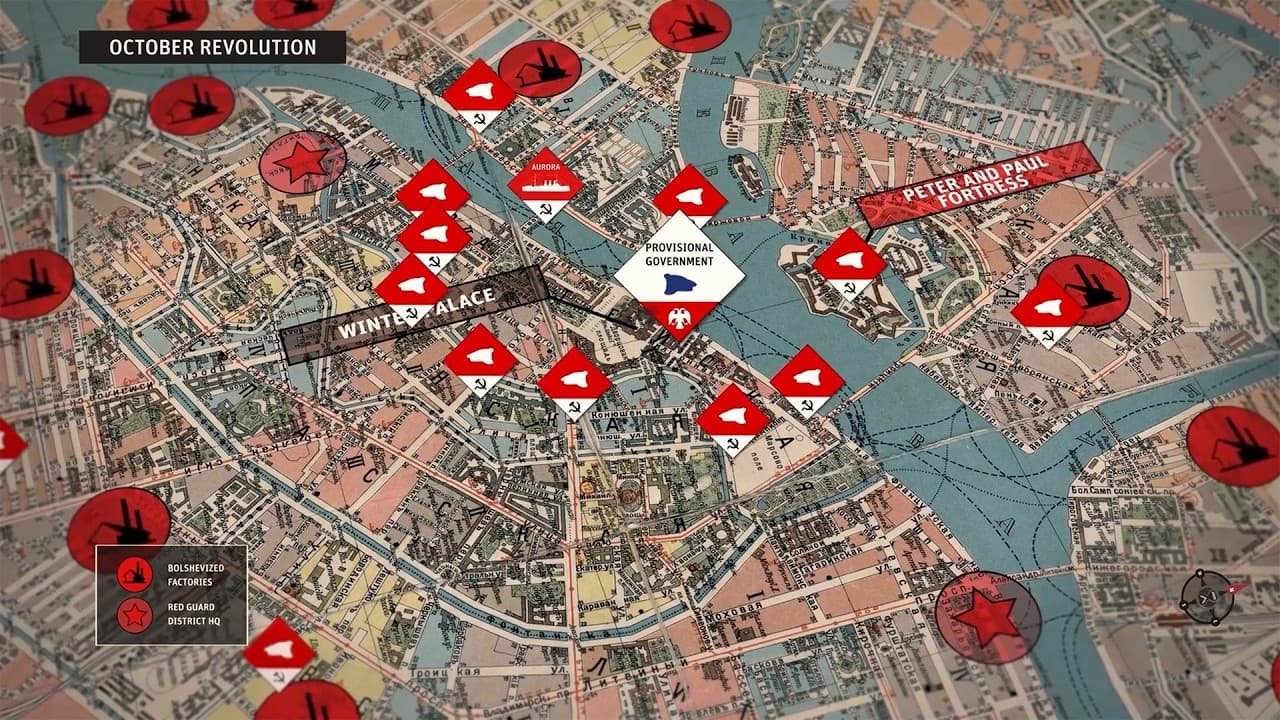
- The October Revolution, led by the Bolsheviks, successfully overthrew the Provisional Government, marking the beginning of Bolshevik rule.
- The Treaty of Brest-Litovsk in 1918 ended Russia's involvement in World War I but resulted in significant territorial losses, fueling internal dissent.
Install to Summarize YouTube Videos and Get Transcripts
Explore YouTube Video Summarizer or Get YouTube Transcript Extractor
Questions & Answers
Q: What triggered the February Revolution of 1917?
The February Revolution of 1917 was triggered by widespread discontent with the Tsarist regime, exacerbated by economic hardship, food shortages, and military defeats in World War I. The immediate catalyst was a series of strikes and demonstrations in Petrograd, where workers and soldiers protested against the government's inability to address these issues effectively.
Q: How did the Provisional Government attempt to maintain control?
The Provisional Government attempted to maintain control by forming a coalition with various political factions, including moderate socialists. However, it struggled to assert authority due to its inability to address economic issues, implement land reforms, and manage military affairs effectively. Its power was further undermined by the Petrograd Soviet, which held significant influence over the military and infrastructure.
Q: What role did the Petrograd Soviet play in 1917?
The Petrograd Soviet, a council of workers' and soldiers' deputies, played a crucial role in 1917 by exerting significant influence over the military and infrastructure in Petrograd. It acted as a parallel power to the Provisional Government, often undermining its authority. The Soviet's radical members, including Bolsheviks, pushed for socialist policies and were instrumental in organizing demonstrations and strikes.
Q: Why did the Bolsheviks gain support after the Kornilov Affair?
The Bolsheviks gained support after the Kornilov Affair because the incident exposed the Provisional Government's vulnerability and inability to maintain order. General Kornilov's attempted coup was thwarted largely due to the efforts of workers and soldiers, many of whom were influenced by Bolshevik propaganda. The government's reliance on Bolshevik support to quell the coup increased the party's credibility and popularity among the masses.
Q: What was the significance of the October Revolution?
The October Revolution was significant because it marked the Bolshevik seizure of power from the Provisional Government, leading to the establishment of a socialist state under Lenin's leadership. This event set the stage for the creation of the Soviet Union and fundamentally altered the political landscape of Russia, paving the way for the Russian Civil War and the eventual establishment of a communist regime.
Q: How did the Treaty of Brest-Litovsk affect Russia?
The Treaty of Brest-Litovsk had a profound impact on Russia as it ended the country's involvement in World War I but resulted in significant territorial losses. Russia ceded vast areas, including Ukraine, Poland, and the Baltic states, to the Central Powers. This controversial treaty fueled internal dissent and contributed to the outbreak of the Russian Civil War, as many groups opposed the Bolsheviks' concessions.
Q: What challenges did the Bolsheviks face after seizing power?
After seizing power, the Bolsheviks faced numerous challenges, including internal opposition from various political factions, economic instability, and food shortages. The need to consolidate power and implement socialist policies while managing a war-torn economy was daunting. Additionally, the Bolsheviks had to address the threat of counter-revolutionary forces and navigate the complex international landscape following the Treaty of Brest-Litovsk.
Q: How did the Russian Revolutions of 1917 influence global history?
The Russian Revolutions of 1917 had a profound influence on global history by leading to the establishment of the Soviet Union, a major political and ideological force in the 20th century. The rise of communism in Russia inspired similar movements worldwide, contributing to the spread of socialist ideologies. The revolutions also set the stage for the Cold War, as the Soviet Union emerged as a rival superpower to the United States and its allies.
Summary & Key Takeaways
-
In early 1917, Russia was in chaos as the Romanov dynasty fell, and a Provisional Government was established amidst political and social turmoil. The Provisional Government faced significant challenges, including food shortages and opposition from the Petrograd Soviet, a socialist council with considerable influence.
-
The Bolsheviks, led by Lenin, sought to capitalize on the Provisional Government's weaknesses, advocating for a second revolution. Despite initial setbacks, such as the failed July Days uprising, the Bolsheviks gained support following the Kornilov Affair, which exposed the government's fragility.
-
The October Revolution marked the Bolshevik seizure of power, leading to the establishment of a single-party state. The subsequent Treaty of Brest-Litovsk ended Russia's involvement in World War I but resulted in territorial losses, setting the stage for internal conflict and the Russian Civil War.
Read in Other Languages (beta)
Share This Summary 📚
Summarize YouTube Videos and Get Video Transcripts with 1-Click
Try YouTube Summary with ChatGPT & Claude or YouTube Transcript Generator
Explore More Summaries from The Great War 📚
Summarize YouTube Videos and Get Video Transcripts with 1-Click
Try YouTube Summary with ChatGPT & Claude or YouTube Transcript Generator