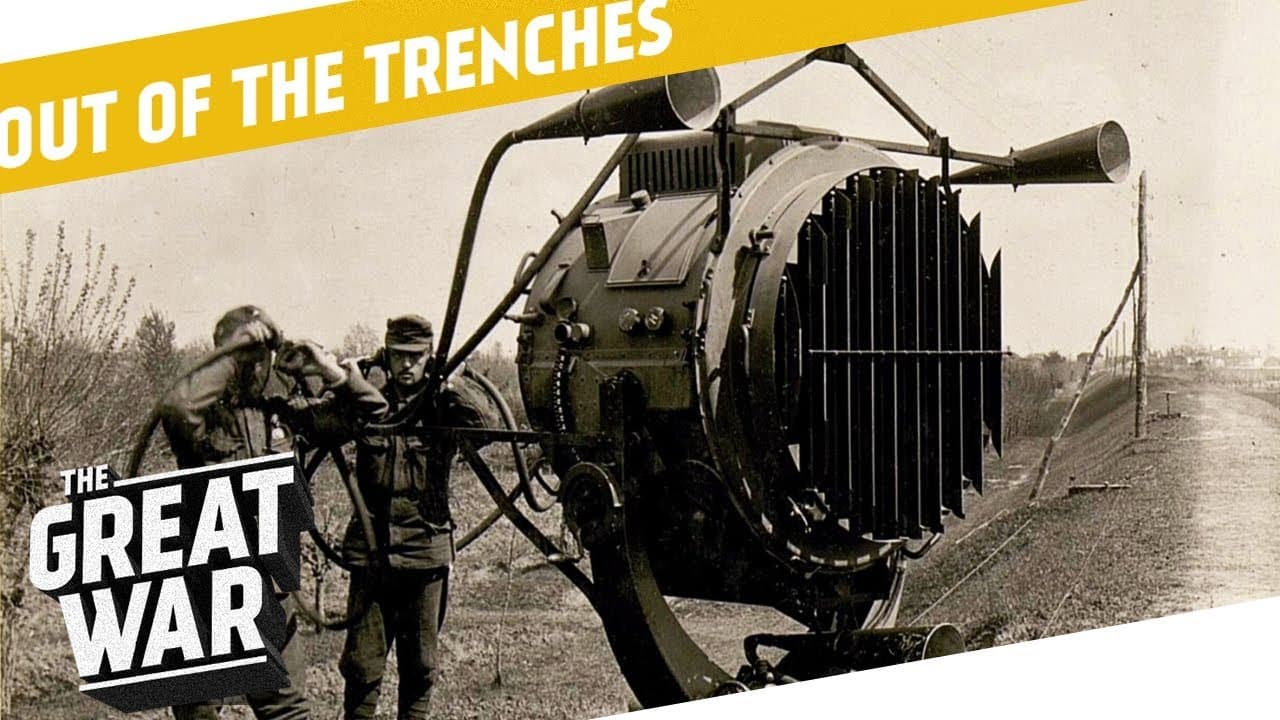
Electricity - Wright Brothers - Hip Firing MGs I OUT OF THE TRENCHES
TL;DR
WWI accelerated electrical and aviation advancements, impacting warfare strategies.
Transcript
I'm Italian spider-man and this is out of the trenches where I stand here in the Dolomites mountains on my balcony geesa geesa and answer all your questions about the First World War Matus cola writes hi indy as an electro technical engineer i'm interested in electricity okay i would like to ask how it was produced and used on different fronts or t... Read More
Key Insights
- Electricity played a critical role in WWI, with innovations like radios and searchlights enhancing communication and visibility on the battlefield.
- Although electricity was pivotal for naval operations, its use in frontline trenches was limited due to logistical challenges and the risk of exposure.
- The Great War spurred rapid advancements in electrical engineering, leading to post-war civilian applications of wartime technologies.
- The Wright brothers' patent disputes, known as the 'patent wars,' significantly hindered the development of US military aircraft during WWI.
- Steel arrows, or 'flesh shots,' were used by French and German aviators, causing severe injuries but were eventually deemed too barbaric.
- The concept of firing machine guns from soldiers' shoulders was explored but was impractical with heavier models like the German MG08.
- The US government intervened in the Wright brothers' patent disputes to ensure the availability of aircraft for military use during WWI.
- Despite the Wright brothers' contributions to aviation, their legal battles delayed technological progress, forcing reliance on European aircraft.
Install to Summarize YouTube Videos and Get Transcripts
Explore YouTube Video Summarizer or Get YouTube Transcript Extractor
Questions & Answers
Q: How was electricity used in World War I?
Electricity was crucial in WWI, powering technologies like radios for communication, searchlights for visibility, and various naval operations. However, its use in frontline trenches was limited due to logistical challenges, such as transporting wet cell batteries and the risk of artillery destroying electrical cables.
Q: What were the 'patent wars' involving the Wright brothers?
The 'patent wars' were legal disputes initiated by the Wright brothers, who sought to protect their aviation innovations, particularly the controlled turn mechanism. These disputes hindered US military aircraft development during WWI, prompting government intervention to ensure aircraft production for the war effort.
Q: What were 'flesh shots' used in WWI?
'Flesh shots' were steel arrows dropped from aircraft by French and German aviators during WWI. These arrows caused severe injuries, piercing soldiers from head to toe. Despite their effectiveness, they were deemed barbaric and were not widely used later in the war due to their inaccuracy.
Q: Why was firing machine guns from soldiers' shoulders impractical?
Firing machine guns from soldiers' shoulders was explored but proved impractical, especially with heavier models like the German MG08, which weighed about 60 pounds. Lighter guns, such as the Lewis gun, were more feasible but still inaccurate, making this tactic more of an emergency solution.
Q: How did the Wright brothers' patents impact US aviation during WWI?
The Wright brothers' patents, particularly on the controlled turn mechanism, led to legal battles that delayed US military aircraft development. The US government intervened to resolve these disputes, ensuring the production of aircraft for the war, as US pilots relied on French and British machines.
Q: What role did the US government play in the Wright brothers' patent disputes?
The US government intervened in the Wright brothers' patent disputes to end the legal stalemate that was hindering aircraft production. This intervention was crucial as the US entered WWI, ensuring that the military had access to the necessary aviation technology for the war effort.
Q: How did WWI influence post-war electrical engineering advancements?
WWI accelerated electrical engineering advancements, with wartime innovations such as radios and searchlights finding civilian applications post-war. The demand for improved communication and visibility during the war spurred technological progress, leading to widespread adoption of these technologies in peacetime.
Q: What were the challenges of using electricity on the WWI frontlines?
Using electricity on WWI frontlines faced challenges like transporting heavy wet cell batteries and the risk of artillery destroying electrical cables. Additionally, the need to maintain night vision limited the use of artificial light, making electricity less practical in frontline trenches compared to naval operations.
Summary & Key Takeaways
-
During WWI, electricity was utilized in various military applications, including radios, searchlights, and naval operations, though its use in trenches was limited due to logistical challenges. The war accelerated technological advancements in electrical engineering, influencing post-war civilian applications.
-
The Wright brothers' patent disputes, referred to as the 'patent wars,' significantly impacted the development of US military aircraft during WWI. The US government eventually intervened to resolve these disputes, allowing for the production of aircraft necessary for wartime efforts.
-
Steel arrows, known as 'flesh shots,' were used by aviators during the early years of WWI, causing severe injuries. The practice of firing machine guns from soldiers' shoulders was explored but proved impractical with heavier models, highlighting the challenges of adapting technology for warfare.
Read in Other Languages (beta)
Share This Summary 📚
Summarize YouTube Videos and Get Video Transcripts with 1-Click
Try YouTube Summary with ChatGPT & Claude or YouTube Transcript Generator
Explore More Summaries from The Great War 📚


Summarize YouTube Videos and Get Video Transcripts with 1-Click
Try YouTube Summary with ChatGPT & Claude or YouTube Transcript Generator