Science vs. Pseudoscience - Siska De Baerdemaeker
TL;DR
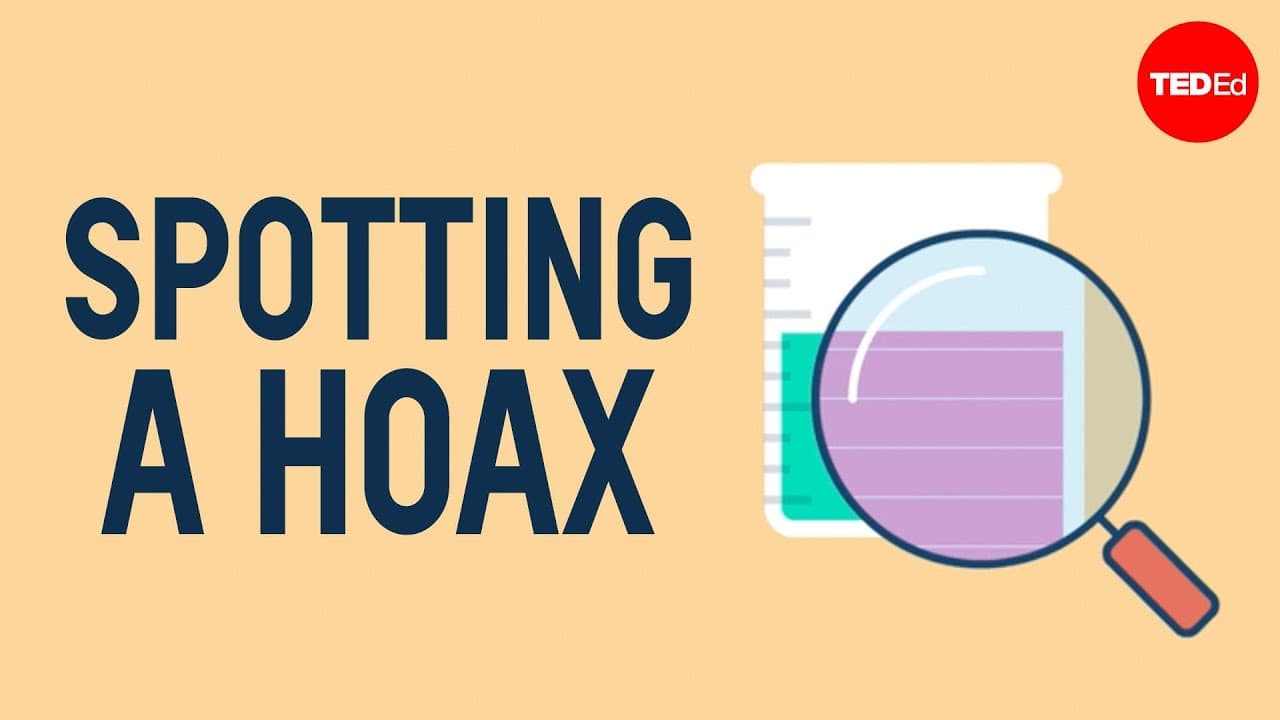
Homeopathy is a pseudoscience that fails to have any therapeutic effect, and distinguishing between science and pseudoscience can be challenging due to the demarcation problem.
Transcript
In the late 1700s, a German doctor named Samuel Hahnemann began publishing articles about a new treatment approach he called homeopathy. Hahnemann’s theory had two central hypotheses. First, the treatment for an ailment should be a dose of something that might cause that ailment. And second, diluted medicines are more powerful than concentrated one... Read More
Key Insights
- 😷 Homeopathy is a popular pseudoscientific medical practice without proven therapeutic efficacy, despite its historical prevalence.
- 🔬 Distinguishing between science and pseudoscience is challenging due to the demarcation problem, where defining science and determining falsifiability are complex tasks.
- 👶 Pseudoscientific fields often resist transformative criticism and modify theories to evade contradiction, while science encourages openness to new observations and rejecting disproven theories.
- 💁 Scientific consistency is established through a network of shared information, while pseudoscience often disregards or denies such data.
- 🔨 The scientific method is a reliable tool to analyze empirical evidence, but it doesn't encompass all aspects of the human condition.
- 🔬 Differentiating between belief systems and science is crucial to prevent manipulation and hinder genuine scientific progress.
- 🤔 Critical thinking and questioning new claims are essential to determine if a theory can be tested and aligns with our current scientific understanding.
Install to Summarize YouTube Videos and Get Transcripts
Explore YouTube Video Summarizer or Get YouTube Transcript Extractor
Questions & Answers
Q: What is homeopathy, and why has it been practiced for centuries?
Homeopathy is a medical practice that involves using highly diluted substances to treat ailments. Despite numerous studies showing its lack of therapeutic effect, its popularity could be attributed to historical traditions and the placebo effect.
Q: How do pseudoscientific fields avoid being disproven?
Pseudoscientists often modify their theories to explain away contradictory results and resist transformative criticism. They don't engage in meaningful peer review or address their internal biases.
Q: Can falsification alone determine if a theory is scientific or not?
Falsification, proposed by philosopher Karl Popper, suggests that a scientific theory must be provable wrong. While this criterion is useful, untestable theories in the past led to scientific breakthroughs when knowledge and technology advanced.
Q: How does pseudoscience differ from science in terms of consistency?
Science relies on a shared pool of information developed through ongoing research across disciplines, promoting consistency. Pseudoscience often denies or ignores this shared data, contradicting well-established scientific knowledge.
Key Insights:
- Homeopathy is a popular pseudoscientific medical practice without proven therapeutic efficacy, despite its historical prevalence.
- Distinguishing between science and pseudoscience is challenging due to the demarcation problem, where defining science and determining falsifiability are complex tasks.
- Pseudoscientific fields often resist transformative criticism and modify theories to evade contradiction, while science encourages openness to new observations and rejecting disproven theories.
- Scientific consistency is established through a network of shared information, while pseudoscience often disregards or denies such data.
- The scientific method is a reliable tool to analyze empirical evidence, but it doesn't encompass all aspects of the human condition.
- Differentiating between belief systems and science is crucial to prevent manipulation and hinder genuine scientific progress.
- Critical thinking and questioning new claims are essential to determine if a theory can be tested and aligns with our current scientific understanding.
- Being scientific goes beyond mere appearance, and it involves rigorous examination of claims, openness to criticism, and consistency with existing knowledge.
Summary & Key Takeaways
-
Homeopathy, a medical practice based on diluted medicines, has been widely practiced for centuries but lacks scientific evidence of its effectiveness.
-
Pseudoscience is a collection of theories and assumptions disguised as scientific but lacking empirical evidence.
-
Differentiating between science and pseudoscience is challenging due to the demarcation problem, as defining science and determining falsifiability are complex tasks.
Read in Other Languages (beta)
Share This Summary 📚
Summarize YouTube Videos and Get Video Transcripts with 1-Click
Try YouTube Summary with ChatGPT & Claude or YouTube Transcript Generator
Explore More Summaries from TED-Ed 📚
Summarize YouTube Videos and Get Video Transcripts with 1-Click
Try YouTube Summary with ChatGPT & Claude or YouTube Transcript Generator