Can Military Disobey Unlawful Orders?
TL;DR
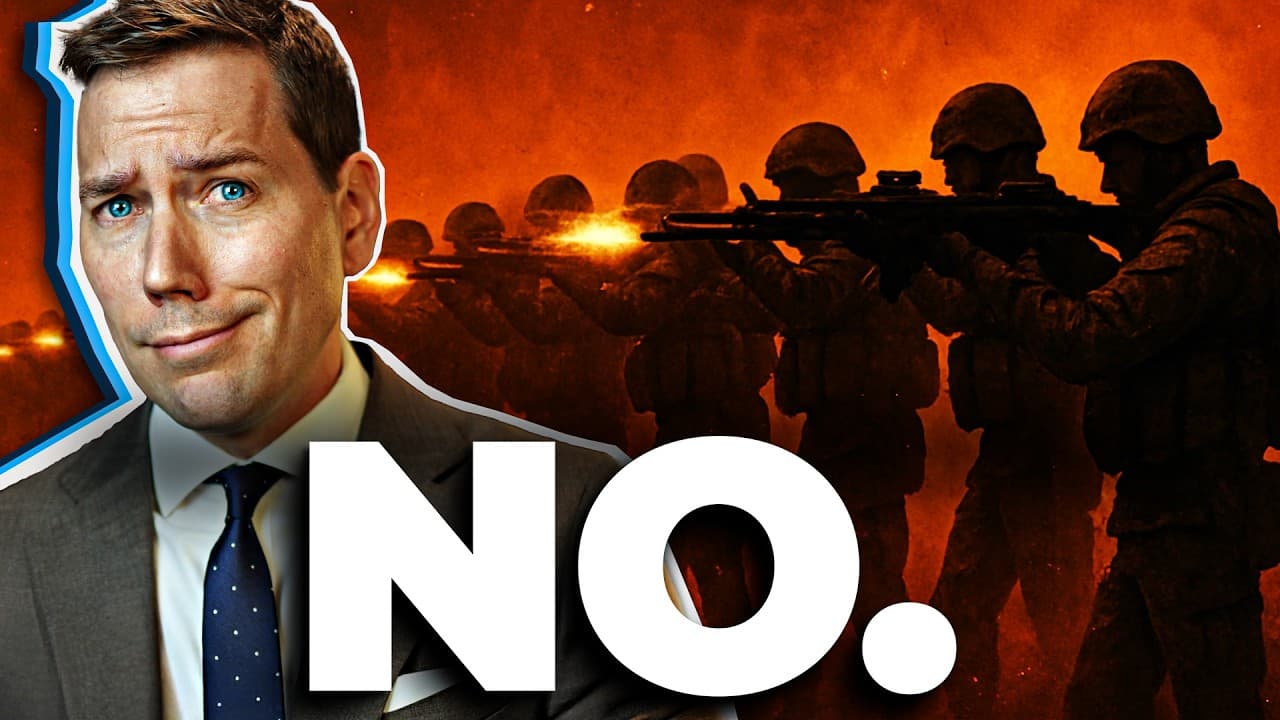
Military personnel are bound by an oath to follow lawful orders, but they face severe consequences for disobeying orders unless those orders are patently illegal. The Uniform Code of Military Justice outlines that orders presumed lawful must be obeyed, and disobedience is punishable unless the order is manifestly unlawful, like committing a crime.
Transcript
The planned invasion of Greenland is off. Probably maybe I don't know. We still have the plans just in case. All my testimony is is that the Pentagon has plans for any number of contines and several thousand soldiers with the California National Guard deployed to Los Angeles. Devon's already covered the legal questions about the deployments themsel... Read More
Key Insights
- Military personnel swear an oath to obey lawful orders, which has legal implications.
- The Uniform Code of Military Justice (UCMJ) governs military conduct, including obedience to orders.
- Articles 90 and 91 of the UCMJ outline punishments for disobeying lawful commands.
- Orders are presumed lawful; disobedience is risky unless orders are patently illegal.
- The legality of an order is determined by a military judge, not by the individual soldier.
- Obeying unlawful orders can lead to criminal responsibility, as seen in historical cases like the My Lai Massacre.
- The Nuremberg Principle states following orders is not a defense for war crimes if moral choice was possible.
- Unlawful command influence can affect military trials, potentially leading to case dismissals.
Install to Summarize YouTube Videos and Get Transcripts
Explore YouTube Video Summarizer or Get YouTube Transcript Extractor
Questions & Answers
Q: How does the UCMJ define lawful orders?
The Uniform Code of Military Justice (UCMJ) presumes orders from superiors to be lawful unless they are patently illegal. Lawfulness is determined by military judges, not individual soldiers. Disobedience of lawful orders can lead to severe penalties, while following patently illegal orders can result in criminal responsibility.
Q: What are the consequences of disobeying military orders?
Disobeying military orders can result in severe penalties under the UCMJ, including confinement and punitive discharge. Articles 90 and 91 specify punishments for willfully disobeying lawful commands. However, if an order is patently illegal, disobedience may be justified, though this is determined by military judges.
Q: What constitutes a patently illegal order?
A patently illegal order is one that commands a positive act constituting a crime, so manifestly beyond the legal power or discretion of the commander that no rational doubt of its unlawfulness exists. Examples include orders to commit genocide or crimes against humanity, which are inherently unlawful.
Q: Can following orders be a defense in war crimes?
Following orders is not a defense for war crimes if a moral choice was possible, as per the Nuremberg Principle. International law, including the Rome Statute, states that orders to commit genocide or crimes against humanity are manifestly unlawful, and following such orders does not relieve one of criminal responsibility.
Q: What is the role of unlawful command influence in military justice?
Unlawful command influence occurs when a military commander improperly influences a court-martial, affecting its fairness. It is considered the 'mortal enemy' of military justice, and even its appearance can lead to trial dismissals or limited sentencing options, ensuring the integrity of military trials.
Q: How does the My Lai Massacre relate to military obedience?
The My Lai Massacre highlights the consequences of following patently illegal orders. Lieutenant William Calley was convicted for murder despite claiming he followed orders, as the court found the orders to massacre civilians were palpably illegal. This case underscores the importance of recognizing unlawful orders in military conduct.
Q: What is the impact of the Nuremberg Principle on military orders?
The Nuremberg Principle impacts military orders by establishing that following orders is not a defense for war crimes if moral choice was possible. It emphasizes individual responsibility for actions, rejecting the defense of superior orders in cases where the orders are patently illegal, such as committing genocide.
Q: What challenges do soldiers face in determining unlawful orders?
Soldiers face challenges in determining unlawful orders due to the presumption of lawfulness and the requirement for immediate compliance. Legal determinations are made by military judges, not soldiers, creating a high risk for those who disobey orders they believe are unlawful. This complexity requires soldiers to navigate legal frameworks carefully.
Summary & Key Takeaways
-
Military members are legally required to follow lawful orders, as outlined by the Uniform Code of Military Justice. Disobedience can lead to severe penalties unless the order is patently illegal. The legality of an order is judged by military courts, not individual soldiers, making disobedience risky.
-
Historical cases like the My Lai Massacre illustrate the consequences of following patently illegal orders. The Nuremberg Principle and international laws emphasize that following orders is not a defense for war crimes if moral choice was possible.
-
Unlawful command influence is a critical aspect of military justice, where even the appearance of influence can lead to trial dismissals. Military obedience is central to its function, but soldiers must navigate complex legal frameworks to determine the lawfulness of orders.
Read in Other Languages (beta)
Share This Summary 📚
Summarize YouTube Videos and Get Video Transcripts with 1-Click
Try YouTube Summary with ChatGPT & Claude or YouTube Transcript Generator
Explore More Summaries from LegalEagle 📚




Summarize YouTube Videos and Get Video Transcripts with 1-Click
Try YouTube Summary with ChatGPT & Claude or YouTube Transcript Generator