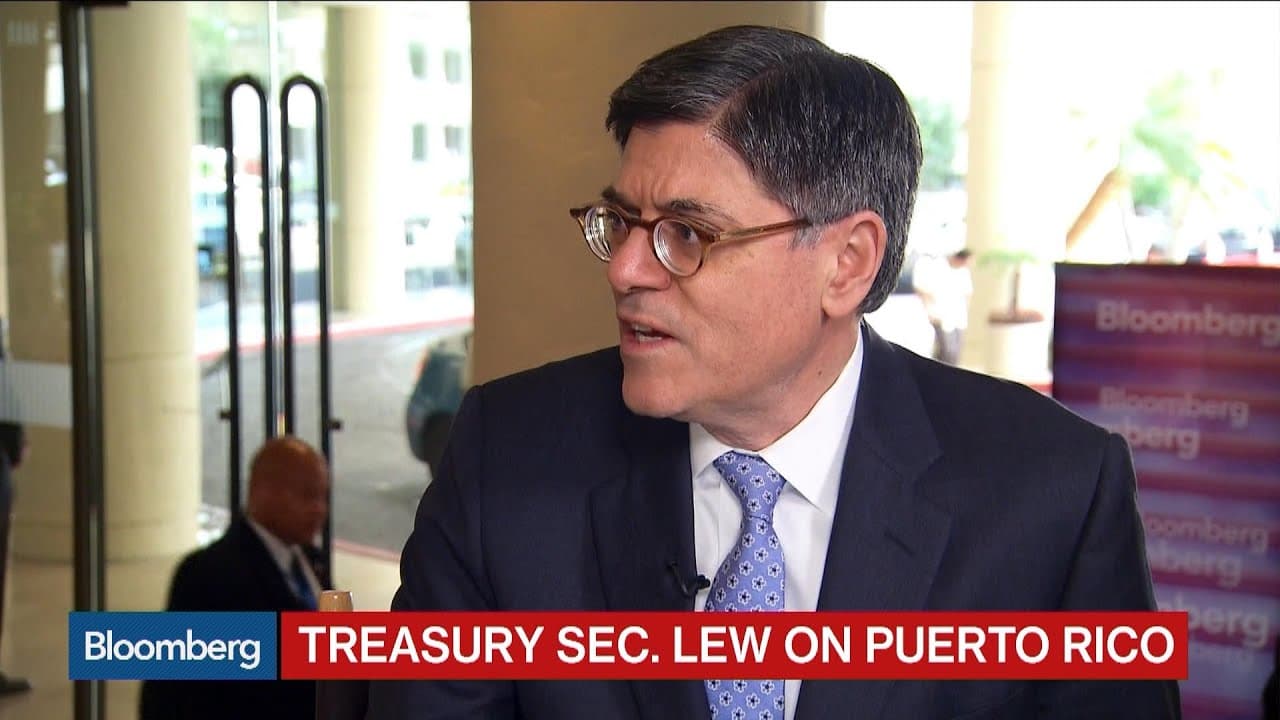
Treasury Secretary: Need for Action on Puerto Rico Crisis Is 'Urgent'
TL;DR
Puerto Rico faces an urgent economic crisis requiring immediate restructuring action.
Transcript
we have been working on a bipartisan basis uh between uh the the treasury Department and members of Congress trying to come up with technical approaches at work our standard is simple it has to work the restructuring has to be able to take effect there ought to not be the ability for holdouts to stop that from taking effect and that means it has to... Read More
Key Insights
- The U.S. Treasury and Congress are working on a bipartisan solution for Puerto Rico's debt crisis, focusing on effective restructuring mechanisms.
- Puerto Rico is experiencing severe economic distress, including hospital layoffs, school closures, and a Zika outbreak, necessitating urgent action.
- A restructuring plan must include an oversight board and a process to enforce restructuring if voluntary agreements fail.
- Fair treatment of pensions is crucial, as a shutdown of retirement income would have devastating macroeconomic effects on Puerto Rico.
- The oversight board should balance competing interests and ensure Puerto Rico's economic future is sustainable.
- Concerns about restructuring general obligation bonds include potential negative impacts on the municipal bond market.
- The Treasury's new currency monitoring report aims to ensure fair trade practices and protect American workers and businesses.
- Ongoing efforts to curb tax inversion deals emphasize the need for comprehensive tax reform to prevent companies from exploiting loopholes.
Install to Summarize YouTube Videos and Get Transcripts
Explore YouTube Video Summarizer or Get YouTube Transcript Extractor
Questions & Answers
Q: What is the current economic situation in Puerto Rico?
Puerto Rico is facing a severe economic crisis characterized by hospital layoffs, school closures, and a Zika outbreak. These issues are compounded by a significant exodus of residents, with nearly 100,000 people leaving the island last year. The crisis has created an urgent need for a comprehensive restructuring plan to stabilize the economy and prevent further decline.
Q: What are the key components of the proposed restructuring plan for Puerto Rico?
The proposed restructuring plan for Puerto Rico includes establishing an oversight board to manage the island's financial affairs and enforce restructuring if voluntary agreements fail. The plan emphasizes the importance of treating pensions fairly to avoid macroeconomic repercussions and seeks to balance the competing demands of creditors and the need for economic growth.
Q: How might the restructuring of general obligation bonds affect the municipal bond market?
The restructuring of general obligation bonds in Puerto Rico could potentially disrupt the municipal bond market by setting a precedent for altering constitutionally protected payments. However, Treasury Secretary Jack Lew argues that an uncontrolled, chaotic unwinding in Puerto Rico would be more damaging. The restructuring aims to be fair and balanced, considering the unique situation of Puerto Rico.
Q: What is the purpose of the Treasury's new currency monitoring report?
The Treasury's new currency monitoring report aims to ensure fair trade practices by monitoring currency practices of countries like China, Japan, Korea, and Taiwan. The report provides objective criteria to assess currency manipulation and aims to protect American workers and businesses by promoting high standards in international trade agreements.
Q: What is the Treasury's stance on Japan's monetary policy?
The Treasury acknowledges Japan's aggressive monetary policy but emphasizes the need for Japan to use all policy levers, including fiscal policy and structural reforms, rather than relying excessively on monetary measures. Japan's monetary policy has stayed within international agreements, refraining from competitive devaluation and exchange rate targeting.
Q: What are tax inversion deals, and what is the Treasury's approach to them?
Tax inversion deals involve companies relocating their legal headquarters overseas to avoid U.S. taxes while benefiting from the U.S. workforce, research, and infrastructure. The Treasury has taken administrative actions to curb these deals but stresses the need for comprehensive tax reform to close loopholes and prevent inversions permanently.
Q: What is the Treasury's response to the court ruling on MetLife's 'too big to fail' designation?
The Treasury plans to appeal the court ruling that overturned MetLife's 'too big to fail' designation, arguing that the decision's logic is flawed. The Treasury believes the ruling misunderstands the risk assessment process, which aims to identify companies whose failure could cause significant economic disruption, even if such failure seems unlikely.
Q: What is the Treasury's approach to designating firms as systemically important?
The Treasury takes a careful, analytically driven approach to designating firms as systemically important, with only a few non-bank financial institutions designated so far. The process is based on the merits of each case, and the Treasury emphasizes the importance of transparency and ongoing monitoring to identify potential risks that may require further action.
Summary & Key Takeaways
-
The U.S. Treasury is collaborating with Congress to address Puerto Rico's urgent debt crisis, emphasizing the need for a restructuring plan that includes an oversight board. The island faces severe economic challenges, including hospital layoffs, school closures, and a Zika outbreak, highlighting the necessity for immediate action.
-
Treasury Secretary Jack Lew stresses the importance of fair pension treatment in Puerto Rico's restructuring plan, as halting retirement income would have dire economic consequences. The oversight board should balance interests to ensure a sustainable economic future for the island.
-
Concerns about restructuring general obligation bonds include potential harm to the municipal bond market. The Treasury's currency monitoring report aims to ensure fair trade practices, while ongoing efforts to curb tax inversion deals highlight the need for comprehensive tax reform.
Read in Other Languages (beta)
Share This Summary 📚
Summarize YouTube Videos and Get Video Transcripts with 1-Click
Try YouTube Summary with ChatGPT & Claude or YouTube Transcript Generator
Explore More Summaries from Bloomberg Originals 📚





Summarize YouTube Videos and Get Video Transcripts with 1-Click
Try YouTube Summary with ChatGPT & Claude or YouTube Transcript Generator