Why The Treaty of Versailles Was Such A Shock For Germany? (Documentary)
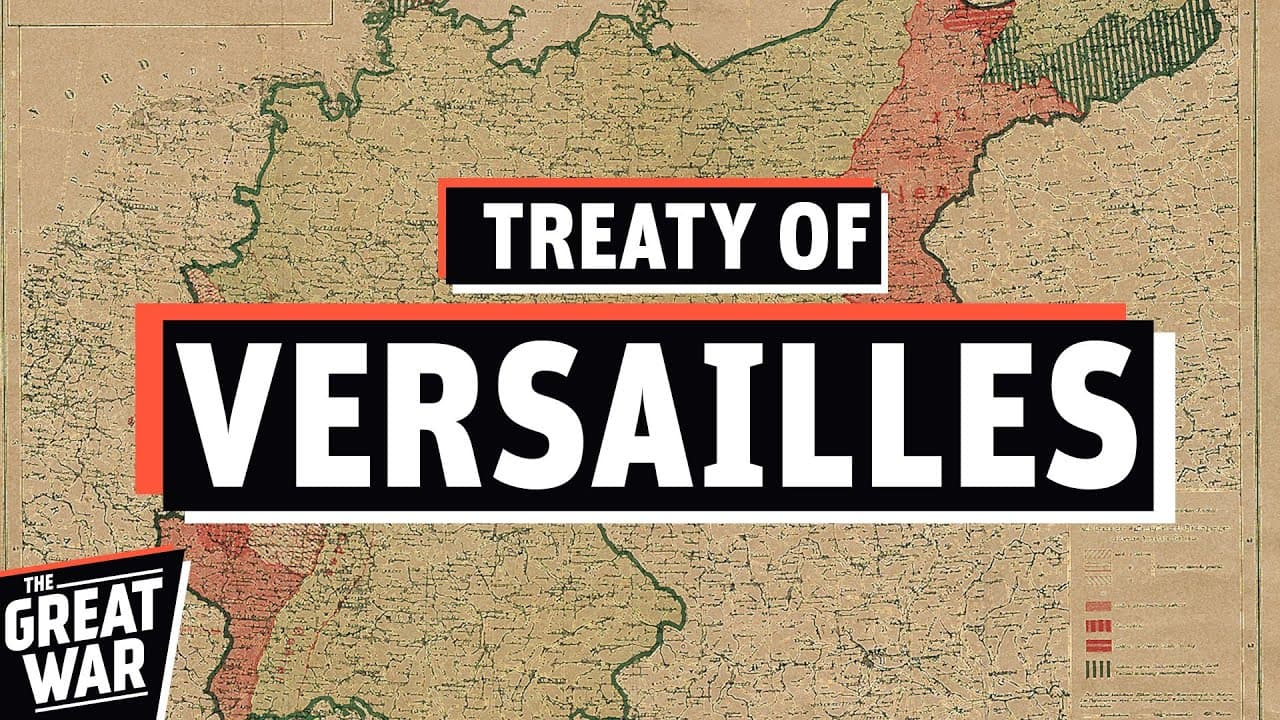
TL;DR
The Treaty of Versailles shocked Germany with harsh terms.
Transcript
This episode of the Great War is sponsored by you, our supporters on Patreon and YouTube. We could not make this show without you wonderful people. In fact, here is a dramatic recreation of what the show would look without the support you have shown since we created the Patreon page in 2015: Now just to be clear: we are regular guys working for a s... Read More
Key Insights
- The Treaty of Versailles imposed severe reparations and territorial losses on Germany, which many Germans viewed as a betrayal and a death sentence for their nation.
- The treaty was negotiated without the input of the defeated powers, leading to widespread shock and discontent among the German delegation upon learning the terms.
- The Big Four Allied leaders had differing priorities, with France focused on security, Britain on maintaining empire strength, and the US on economic recovery and the League of Nations.
- The treaty included 440 clauses, with major points involving disarmament, territorial losses, reparations, and exclusion from the League of Nations.
- The war guilt clause, Article 231, was particularly contentious, as it placed full responsibility for the war on Germany, a point heavily disputed by the German delegation.
- The treaty's signing on June 28, 1919, in the Hall of Mirrors at Versailles, was seen as a deliberate humiliation of Germany, echoing the Franco-Prussian War's end.
- Reactions to the treaty were mixed, with some viewing it as too harsh and others as too lenient, contributing to ongoing instability in Europe.
- Historians debate the treaty's role in leading to World War II, with some arguing it was the enforcement of the treaty, rather than the terms themselves, that was problematic.
Install to Summarize YouTube Videos and Get Transcripts
Explore YouTube Video Summarizer or Get YouTube Transcript Extractor
Questions & Answers
Q: Why was the Treaty of Versailles considered a shock for Germany?
The Treaty of Versailles was considered a shock for Germany because it imposed severe terms without their input. The German delegation was only informed of the terms a few weeks before signing, which included significant territorial losses, disarmament, and reparations. The war guilt clause, which placed full responsibility for the war on Germany, was particularly contentious and viewed as a betrayal of the armistice agreement.
Q: What were the main priorities of the Big Four Allied leaders during the peace negotiations?
The main priorities of the Big Four Allied leaders during the peace negotiations were varied. France prioritized security and sought to weaken Germany to prevent future invasions. Britain aimed to maintain the strength of its empire and a balance of power in Europe, avoiding a too-weak Germany that could turn Bolshevik. The United States focused on economic recovery and saw the League of Nations as a key instrument for future peace and stability.
Q: What were the key terms of the Treaty of Versailles?
The key terms of the Treaty of Versailles included Germany's exclusion from the League of Nations, territorial losses amounting to 13% of its land, significant disarmament, and reparations to compensate the Allies for war damages. The treaty also included the war guilt clause, which held Germany responsible for the war, and required the demilitarization of the Rhineland and occupation by Allied forces.
Q: How did the German delegation react to the terms of the treaty?
The German delegation reacted with shock and dismay to the terms of the treaty. They viewed it as a betrayal and a death sentence for Germany, with many seeing it as a continuation of the war by other means. The delegation was particularly outraged by the war guilt clause and the severe reparations, which they felt were unjust and would cripple the German economy. Demonstrations broke out across Germany in response to the treaty.
Q: What were the Allied reasons for imposing such harsh terms on Germany?
The Allies imposed harsh terms on Germany for several reasons. France sought security and compensation for the enormous economic destruction and loss of life it suffered during the war. Britain aimed to prevent Germany from becoming an imperial and commercial competitor again, while maintaining a balance of power in Europe. The United States, although interested in Germany's economic recovery, saw the League of Nations as a means to ensure future peace and stability.
Q: What was the significance of the signing location for the Treaty of Versailles?
The signing location for the Treaty of Versailles, in the Hall of Mirrors at the Palace of Versailles, was highly symbolic. It was the same location where the German Empire had been proclaimed in 1871 after the Franco-Prussian War. This choice was seen as a deliberate humiliation for Germany, marking the end of its imperial ambitions and the imposition of a new world order by the victorious Allies.
Q: How did the treaty affect Germany's territorial integrity and military capabilities?
The Treaty of Versailles significantly affected Germany's territorial integrity and military capabilities. Germany lost 13% of its land and 10% of its population, with key territories like Alsace-Lorraine returned to France and several provinces lost to Poland. The treaty also imposed severe military restrictions, limiting the German army to 100,000 volunteers and its navy to 15,000, while forbidding tanks, subs, aircraft, and large warships.
Q: What are some historical perspectives on the Treaty of Versailles and its impact on future conflicts?
Historical perspectives on the Treaty of Versailles vary. For decades, it was viewed as too harsh and directly leading to World War II. However, recent reassessments suggest it was the best compromise possible at the time, given the lack of unity among the Allies. Some historians argue that the treaty's enforcement, rather than its terms, was more problematic. The treaty's role in future conflicts remains debated, with some seeing it as a contributing factor to European instability.
Summary & Key Takeaways
-
The Treaty of Versailles, signed in June 1919, imposed harsh terms on Germany, including territorial losses, disarmament, and reparations, shocking the German delegation and population. The treaty was negotiated by the Allies without input from the defeated powers, leading to widespread discontent.
-
The Big Four Allied leaders had differing priorities, complicating the peace process. France focused on security, Britain on maintaining its empire, and the US on economic recovery and establishing the League of Nations. The treaty's war guilt clause placed full responsibility for the war on Germany.
-
Reactions to the treaty were mixed, with some viewing it as too harsh and others as too lenient. Historians debate its role in leading to World War II, with some arguing that the enforcement of the treaty, rather than the terms themselves, was the main issue.
Read in Other Languages (beta)
Share This Summary 📚
Summarize YouTube Videos and Get Video Transcripts with 1-Click
Try YouTube Summary with ChatGPT & Claude or YouTube Transcript Generator
Explore More Summaries from The Great War 📚

Summarize YouTube Videos and Get Video Transcripts with 1-Click
Try YouTube Summary with ChatGPT & Claude or YouTube Transcript Generator