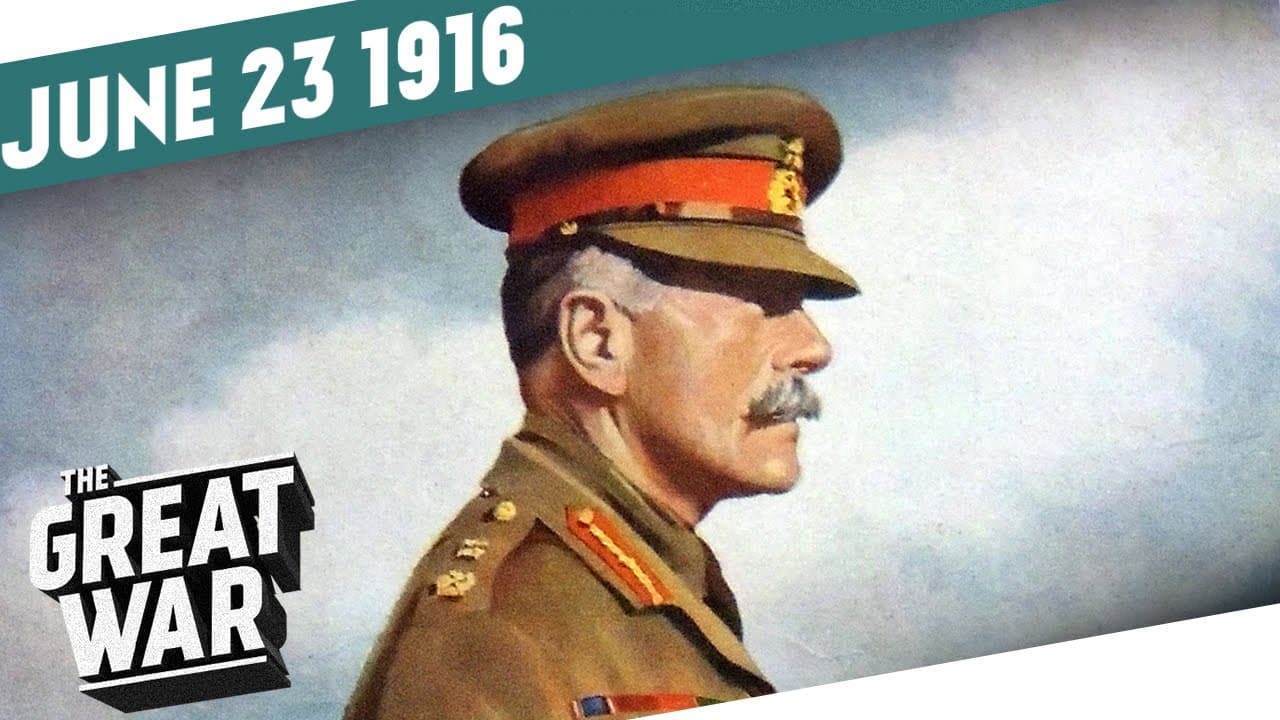
The Death of Max Immelmann - Haig's Final Offensive I THE GREAT WAR - Week 100
TL;DR
Max Immelmann dies; Haig plans major offensive.
Transcript
You may or may not know this, but the great pilots, the flying aces, were the rock stars of World War One, celebrated far and wide as heroes of their nations, and in 1916 there was perhaps none greater than Max Immelmann. Until this week 100 years ago when Max Immelmann died. I’m Indy Neidell; welcome to the Great War. Last week the Germans began a... Read More
Key Insights
- Max Immelmann, a celebrated German flying ace, was killed, marking a significant moment in aerial warfare history during World War I.
- The Brusilov Offensive by Russia was a major threat to Austria-Hungary, potentially altering the course of the war if Romania joined the Allies.
- Germany resumed its offensive at Verdun with a deadly gas attack, but strategic errors prevented a decisive breakthrough.
- British Commander Douglas Haig aimed to relieve French pressure at Verdun with the upcoming Somme Offensive, despite logistical challenges.
- The integration of airplanes into tactical planning was a significant development, with the Royal Flying Corps playing a crucial role in reconnaissance and artillery spotting.
- The German military faced setbacks on multiple fronts, including the death of key figures like Helmuth von Moltke the Younger.
- The Somme Offensive required unprecedented logistical planning, involving the movement of hundreds of thousands of men and supplies.
- The war's impact was global, as illustrated by Ernest Shackleton's surprise at the ongoing conflict upon returning from the Antarctic.
Install to Summarize YouTube Videos and Get Transcripts
Explore YouTube Video Summarizer or Get YouTube Transcript Extractor
Questions & Answers
Q: What was the significance of Max Immelmann's death?
Max Immelmann was a prominent German flying ace known for his aerial combat skills during World War I. His death marked a significant loss for Germany and highlighted the increasing importance of air warfare in the conflict. The event also demonstrated the vulnerabilities of even the most skilled pilots, impacting German morale and prompting strategic shifts in their aerial operations.
Q: How did the Brusilov Offensive impact the war?
The Brusilov Offensive, launched by Russia, was a major military campaign that posed a significant threat to Austria-Hungary. It achieved substantial territorial gains and weakened Austrian forces, creating an opportunity for the Allies to gain an advantage. If Romania had joined the war on the side of the Allies, it could have further destabilized Austria-Hungary, potentially altering the war's outcome.
Q: What challenges did the British face in planning the Somme Offensive?
The British faced numerous logistical challenges in planning the Somme Offensive, including the movement of hundreds of thousands of troops, horses, and supplies to the front lines. They had to establish infrastructure like roads and railways, maintain secrecy from German forces, and deal with continuous enemy harassment. The complexity of coordinating such a large-scale operation tested their organizational capabilities.
Q: Why did Germany's Verdun offensive fail to achieve a breakthrough?
Germany's Verdun offensive, despite utilizing deadly phosgene gas, failed due to several strategic errors. The gas was ineffective on high ground, and the Germans ceased its use prematurely, allowing French forces to regroup. Additionally, the attack was conducted on a narrow front without sufficient reserves, and mistrust of new tactics hindered their efforts. These factors, combined with strong French defenses, prevented a decisive breakthrough.
Q: What role did airplanes play in the Somme Offensive?
Airplanes played a crucial role in the Somme Offensive by providing reconnaissance and artillery spotting capabilities. The Royal Flying Corps conducted aggressive air operations to prevent German reconnaissance, allowing the Allies to gather detailed intelligence on German positions. This integration of air power into tactical planning was a significant development, enhancing the effectiveness of ground operations and contributing to the overall strategy.
Q: How did the war's global impact manifest in the narrative?
The global impact of World War I was highlighted by Ernest Shackleton's return from the Antarctic, where he was shocked to learn that the war was still ongoing. His surprise underscored the war's extensive reach and the profound changes it brought to the world. The conflict's scale and duration affected not only Europe but also individuals and nations far removed from the immediate battlefields.
Q: What were the strategic objectives of the Somme Offensive?
The strategic objectives of the Somme Offensive were to relieve French forces at Verdun by drawing German troops away and to potentially achieve a breakthrough on the Western Front. British Commander Douglas Haig aimed to weaken German defenses through a coordinated assault, though he did not expect to destroy Germany's power entirely within the year. The offensive was also intended to support the Allies and maintain pressure on the Central Powers.
Q: What was the significance of Helmuth von Moltke's death?
Helmuth von Moltke the Younger, former German Army Chief of Staff, played a significant role in the early stages of World War I. His death marked the end of an era for the German military leadership. Moltke was partly responsible for the war's outbreak, and his passing symbolized the shifting dynamics within Germany's military hierarchy as the war progressed, impacting strategic decision-making and leadership.
Summary & Key Takeaways
-
The death of Max Immelmann, a leading German flying ace, highlighted the importance of air combat in World War I, while the ongoing Brusilov Offensive threatened Austria-Hungary's stability.
-
British Commander Douglas Haig prepared for the Somme Offensive to relieve French forces at Verdun, facing challenges in logistics and coordination amid a complex trench warfare system.
-
Despite Germany's renewed offensive at Verdun with deadly gas attacks, strategic missteps and strong French defenses prevented a decisive victory, as the war continued to hang in the balance.
Read in Other Languages (beta)
Share This Summary 📚
Summarize YouTube Videos and Get Video Transcripts with 1-Click
Try YouTube Summary with ChatGPT & Claude or YouTube Transcript Generator
Explore More Summaries from The Great War 📚
Summarize YouTube Videos and Get Video Transcripts with 1-Click
Try YouTube Summary with ChatGPT & Claude or YouTube Transcript Generator