French War In Syria - British War Against The Iraqi Revolution I THE GREAT WAR 1920
TL;DR
French-Syrian War and Iraqi Revolt highlight 1920 Middle East tensions.
Transcript
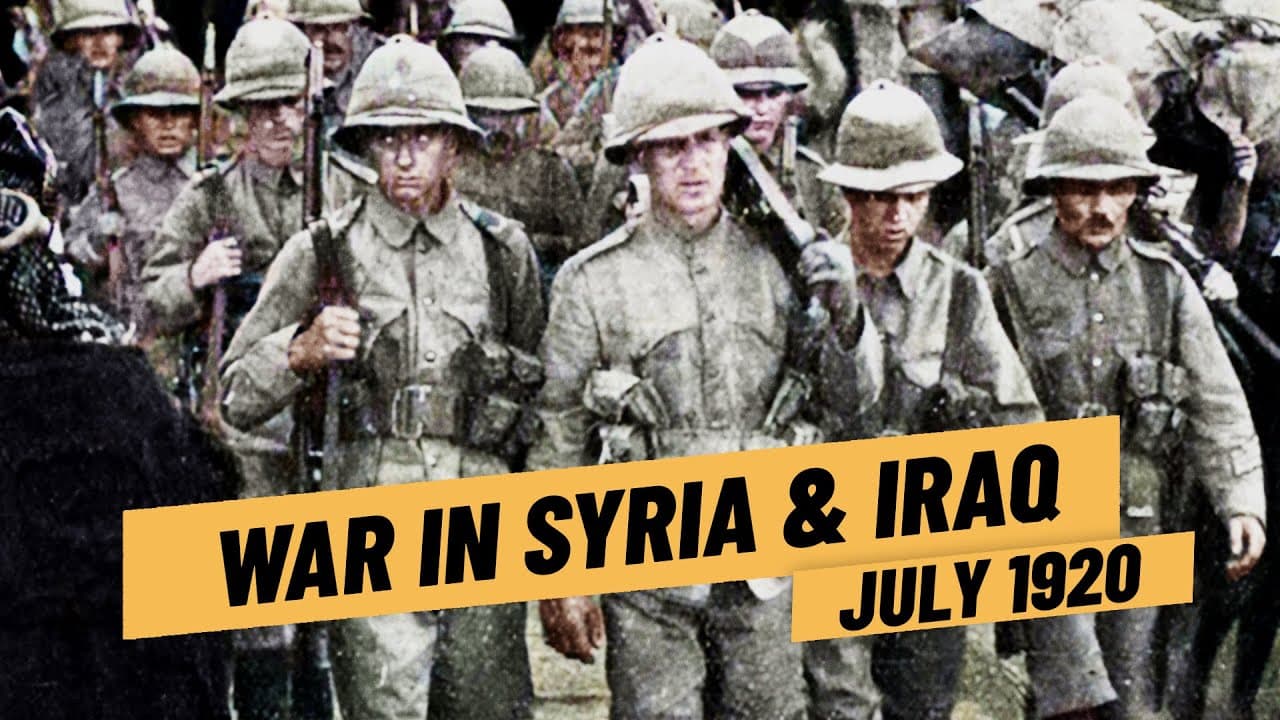
hi I'm Jesse Alexander and welcome to the Great War by the summer of 1920 both France and Britain were attempting to establish themselves as the new League of Nations mandatory Powers responsible for the oversight of Syria and Mesopotamia modern-day Iraq in theory the British and French were to oversee the gradual transition to Independence for the... Read More
Key Insights
- In 1920, France and Britain sought to establish control over Syria and Iraq under the League of Nations mandates, but faced nationalist resistance.
- Faisal, King of Syria, was pressured by nationalist forces to declare independence from French rule, leading to military conflict.
- The French military, including North African and Senegalese troops, defeated Faisal's forces at the Battle of Maysalun, consolidating control in Syria.
- The Iraqi Revolt was sparked by the arrest of a tribal leader and was fueled by opposition to British-imposed taxes and foreign rule.
- The British faced logistical challenges in Iraq due to stretched military resources and administrative confusion among different government departments.
- The Iraqi Revolt saw rare cooperation between Sunni and Shia groups against British forces, highlighting underlying nationalist sentiments.
- The British eventually quelled the Iraqi Revolt but recognized the need for political change, leading to Faisal's installment as King of Iraq in 1921.
- Both the French-Syrian War and the Iraqi Revolt underscored the complexities of post-WWI Middle Eastern politics and the struggle for independence.
Install to Summarize YouTube Videos and Get Transcripts
Explore YouTube Video Summarizer or Get YouTube Transcript Extractor
Questions & Answers
Q: What sparked the Iraqi Revolt in 1920?
The Iraqi Revolt was sparked by the arrest of a local tribal leader in June 1920, which led to a breakout by his tribe. This incident, combined with widespread dissatisfaction over British-imposed taxes and foreign rule, ignited a larger uprising across the region.
Q: How did the French-Syrian War begin?
The French-Syrian War began when Faisal, pressured by nationalist forces, declared Syrian independence from French rule. This declaration led to tensions with France, which responded with military action to assert control, culminating in the Battle of Maysalun.
Q: What role did Faisal play in the events of 1920?
Faisal was a central figure in both the Syrian and Iraqi contexts. As King of Syria, he declared independence under nationalist pressure, leading to conflict with France. After his defeat, he turned his attention to Iraq, where he was eventually installed as king under British influence.
Q: What were the outcomes of the Battle of Maysalun?
The Battle of Maysalun resulted in a decisive French victory over Syrian forces, effectively ending Syrian resistance and solidifying French control over the region. It also became a symbol of Arab resistance and heroism against European imperialism, despite the military defeat.
Q: How did the British respond to the Iraqi Revolt?
The British response to the Iraqi Revolt involved military reinforcement and strategic withdrawals to consolidate control. Despite initial setbacks, they eventually quelled the uprising but acknowledged the need for political change, leading to the appointment of Faisal as King of Iraq.
Q: What were the internal challenges faced by the British in Iraq?
The British faced significant internal challenges in Iraq, including stretched military resources, administrative confusion among government departments, and differing opinions on the degree of independence to be granted. These issues complicated their efforts to maintain control over the region.
Q: What was the significance of the Franco-Syrian War and Iraqi Revolt?
Both the Franco-Syrian War and the Iraqi Revolt highlighted the complexities of post-WWI Middle Eastern politics, the struggle for independence, and the challenges faced by colonial powers in imposing control. They underscored the rising tide of Arab nationalism and resistance to foreign rule.
Q: How did the events of 1920 affect future Middle Eastern politics?
The events of 1920, including the Franco-Syrian War and the Iraqi Revolt, laid the groundwork for future political developments in the Middle East. They highlighted nationalist aspirations and the limitations of colonial rule, eventually leading to greater autonomy and independence movements in the region.
Summary & Key Takeaways
-
In the summer of 1920, France and Britain faced significant resistance in their efforts to control Syria and Iraq under League of Nations mandates. Nationalist movements in both regions opposed foreign rule, leading to the Franco-Syrian War and the Iraqi Revolt.
-
Faisal, King of Syria, was caught between nationalist demands and French imperial interests, resulting in the Battle of Maysalun where French forces defeated Syrian troops. This marked a turning point in French control over the region.
-
The Iraqi Revolt was driven by opposition to British rule and new taxes, culminating in widespread tribal uprisings. Despite initial setbacks, the British eventually subdued the revolt but recognized the need for political reforms, leading to Faisal's eventual kingship in Iraq.
Read in Other Languages (beta)
Share This Summary 📚
Summarize YouTube Videos and Get Video Transcripts with 1-Click
Try YouTube Summary with ChatGPT & Claude or YouTube Transcript Generator
Explore More Summaries from The Great War 📚



Summarize YouTube Videos and Get Video Transcripts with 1-Click
Try YouTube Summary with ChatGPT & Claude or YouTube Transcript Generator