How Can We Reform or Abolish The Electoral College?
TL;DR
Reforming or abolishing the Electoral College requires a constitutional amendment, and over 700 attempts have been made in 200 years. Proposed reforms include implementing a national popular vote or modifying the current system to address issues like faithless electors and unequal representation. The National Popular Vote Interstate Compact aims to bypass the Electoral College by awarding electoral votes to the national popular vote winner, although its legality is contested.
Transcript
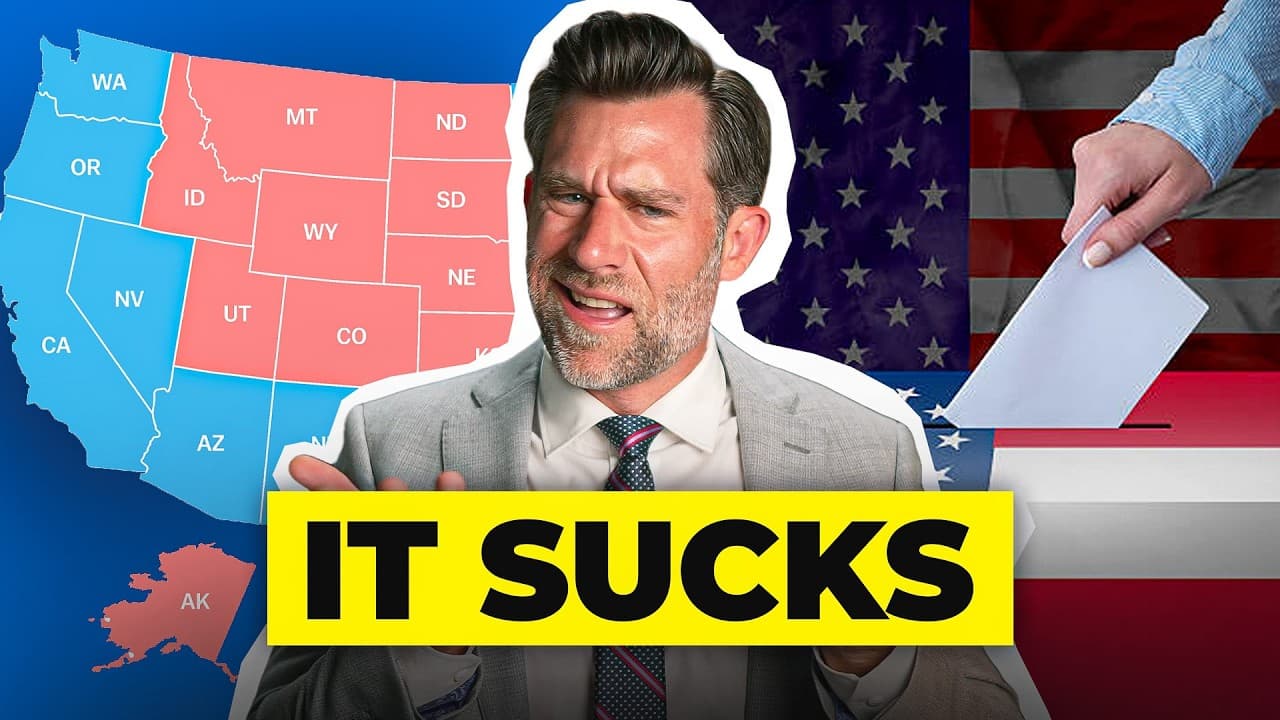
- The Electoral College sucks. Since 1992, 32 years ago, Republicans have only won the popular vote once, and that was George W. Bush's second term following 9/11. Yet the Republicans won the presidency three of the last eight times. That is deeply disturbing. But imagine this world. This just in, given the influx of Californians to Texas, thanks i... Read More
Key Insights
- The Electoral College has been a controversial institution, criticized for distorting elections and having roots in slavery. Its existence is seen as problematic for democracy.
- Since 1992, Republicans have won the popular vote only once but secured the presidency three times, highlighting the Electoral College's impact on election outcomes.
- A constitutional amendment is required to abolish the Electoral College, but over 700 attempts have been made to reform it in the past 200 years.
- The Electoral College system was initially a compromise to appease slave states, allowing them more influence in presidential elections through increased congressional representation.
- Faithless electors, who do not vote as pledged, have been a historical issue, though some states have laws against this and the Supreme Court has upheld penalties for such actions.
- The National Popular Vote Interstate Compact aims to ensure the president is elected by popular vote, bypassing the Electoral College without a constitutional amendment, but its legality is debated.
- Proposals to reform or abolish the Electoral College include adopting a nationwide popular vote or modifying the current system to address its inequities.
- Critics argue that the Electoral College does not prevent election disputes and may exacerbate polarization, with some reform proposals suggesting a proportional allocation of electoral votes.
Install to Summarize YouTube Videos and Get Transcripts
Explore YouTube Video Summarizer or Get YouTube Transcript Extractor
Questions & Answers
Q: Why is the Electoral College controversial?
The Electoral College is controversial because it can distort election outcomes, allowing a candidate to win the presidency without winning the popular vote. It also has historical roots in slavery, as it was designed to give slave states more influence in elections. Critics argue it undermines democratic principles.
Q: How does the Electoral College affect election outcomes?
The Electoral College affects election outcomes by allowing a candidate to win the presidency without winning the popular vote. This has happened in several elections, most notably in 2000 and 2016, where the candidates who won the presidency did not receive the majority of the popular vote, highlighting its impact on democratic representation.
Q: What is the National Popular Vote Interstate Compact?
The National Popular Vote Interstate Compact is an agreement among several states to allocate their electoral votes to the candidate who wins the national popular vote, regardless of state outcomes. It aims to ensure the president is elected by popular vote without needing a constitutional amendment, but its legality and potential effectiveness are debated.
Q: What are faithless electors?
Faithless electors are members of the Electoral College who do not vote as pledged for the presidential candidate who won their state's popular vote. This can undermine the democratic process and has led some states to pass laws penalizing such actions. The Supreme Court has upheld the ability of states to enforce penalties on faithless electors.
Q: Why was the Electoral College created?
The Electoral College was created as a compromise during the Constitutional Convention to balance the influence of slave and non-slave states in presidential elections. It allowed slave states to count a portion of their enslaved population for congressional representation, thus increasing their electoral influence, despite the lack of voting rights for enslaved people.
Q: What are some proposed reforms for the Electoral College?
Proposed reforms for the Electoral College include abolishing it in favor of a nationwide popular vote, adopting the district plan used by Maine and Nebraska, or implementing a proportional allocation of electoral votes based on the popular vote within each state. These reforms aim to address the system's inequities and improve democratic representation.
Q: How does the Electoral College impact campaign strategies?
The Electoral College impacts campaign strategies by focusing candidates' efforts on swing states, where the outcome is uncertain, rather than on states with a predictable majority. This leads to disproportionate attention and resources being allocated to a few key states, potentially neglecting the interests and issues of voters in other regions.
Q: What legal challenges exist for the National Popular Vote Interstate Compact?
The National Popular Vote Interstate Compact faces legal challenges regarding its constitutionality. Critics argue it may violate the Compact Clause, which requires congressional consent for interstate agreements. Additionally, the compact's reliance on states' rights to appoint electors could conflict with constitutional provisions for indirect presidential elections through the Electoral College.
Summary & Key Takeaways
-
The Electoral College has faced criticism for its role in distorting presidential elections and its historical ties to slavery. Despite numerous reform attempts, it remains a contentious issue.
-
Reform proposals include abolishing the Electoral College in favor of a popular vote or modifying the current system to address its weaknesses, such as faithless electors and unequal representation.
-
The National Popular Vote Interstate Compact seeks to bypass the Electoral College by ensuring the president is elected by popular vote, but its constitutionality and effectiveness are debated.
Read in Other Languages (beta)
Share This Summary 📚
Summarize YouTube Videos and Get Video Transcripts with 1-Click
Try YouTube Summary with ChatGPT & Claude or YouTube Transcript Generator
Explore More Summaries from LegalEagle 📚





Summarize YouTube Videos and Get Video Transcripts with 1-Click
Try YouTube Summary with ChatGPT & Claude or YouTube Transcript Generator