Puerto Rico's Governor Says He's 'Open' to Creditor Talks
TL;DR
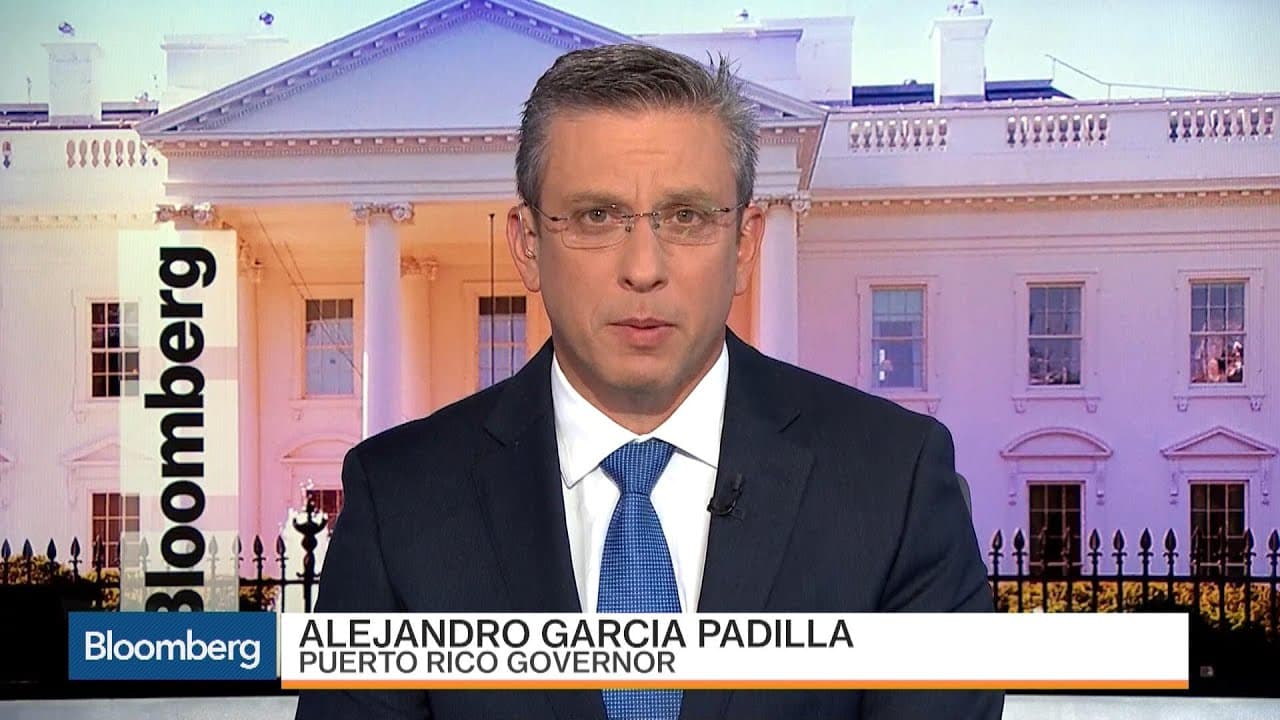
Puerto Rico's governor is open to creditor negotiations post-PROMESA.
Transcript
now that we've had this default now that the promesa law has been passed what happens next with negotiations with creditors well uh we we are we are open to uh continue discussion with them the same week the promesa was approved we was supposed to have a meeting in New York but they they decided not to have the the the meeting and listen uh promess... Read More
Key Insights
- Puerto Rico's governor is open to continuing negotiations with creditors despite past failures to reach an agreement. The PROMESA law provides a new framework for these discussions.
- The passage of PROMESA has shifted the leverage in negotiations, giving Puerto Rico more protection against litigation and potentially encouraging creditors to engage in voluntary negotiations.
- The creation of a federally appointed oversight board is a contentious issue, as it protects against litigation but also intervenes in Puerto Rico's democratic institutions.
- Governor Padilla expresses discomfort with federal intervention but acknowledges it as a necessary step to avoid further economic hardship for Puerto Rico.
- The PROMESA law has established a stay on litigation against the Commonwealth, providing a pathway for debt restructuring and economic growth.
- Governor Padilla is considering signing several pieces of legislation, including a fiscal year 2017 budget bill and a $2 billion water bill, in light of the new oversight board.
- The governor emphasizes responsible fiscal management, highlighting a reduction in government expenditure from $11.9 billion to $9.1 billion and achieving a balanced budget.
- Despite challenges, the governor remains optimistic about reaching a solution by the next payment deadline, leveraging the protections offered by PROMESA.
Install to Summarize YouTube Videos and Get Transcripts
Explore YouTube Video Summarizer or Get YouTube Transcript Extractor
Questions & Answers
Q: What is the governor's stance on negotiating with creditors post-PROMESA?
Governor Padilla is open to continuing negotiations with creditors following the passage of the PROMESA law. He believes that the law has shifted the leverage in Puerto Rico's favor by providing protection against litigation, which could encourage creditors to engage in voluntary negotiations. Despite past failures, he remains optimistic about reaching an agreement.
Q: How does the PROMESA law affect Puerto Rico's leverage in negotiations?
The PROMESA law significantly affects Puerto Rico's leverage by instituting a stay on litigation against the Commonwealth, which was not available prior to its passage. This legal protection allows Puerto Rico to negotiate from a stronger position, as creditors might prefer to negotiate with the government rather than face the oversight board. This shift is crucial for potential debt restructuring.
Q: What are the governor's views on the federally appointed oversight board?
Governor Padilla has mixed feelings about the federally appointed oversight board created by PROMESA. While it provides essential protection against litigation and aids in the restructuring process, it also represents an unwelcome federal intervention in Puerto Rico's democratic institutions. The governor sees it as a necessary compromise to avoid greater economic hardship.
Q: What legislative actions is the governor considering in light of the oversight board?
In light of the oversight board's creation, Governor Padilla is evaluating several legislative actions, including signing a fiscal year 2017 budget bill and a $2 billion water bill. He emphasizes that any decision to sign or veto will be driven by a commitment to responsible fiscal management, ensuring that legislation aligns with the goal of maintaining a balanced budget.
Q: How has Puerto Rico's fiscal management changed under Governor Padilla?
Under Governor Padilla, Puerto Rico has seen a significant reduction in government expenditure, from $11.9 billion to $9.1 billion, resulting in a balanced budget. This fiscal discipline is a key aspect of his administration's strategy to manage the debt crisis and negotiate effectively with creditors, ensuring that financial decisions are sustainable and responsible.
Q: What is the significance of the next payment deadline for Puerto Rico?
The next payment deadline is significant for Puerto Rico as it represents a critical juncture in the debt crisis. Governor Padilla is optimistic about reaching a solution by this deadline, leveraging the protections and framework provided by the PROMESA law. Successful negotiations could prevent further defaults and set a course for economic recovery.
Q: Why does the governor believe creditors should prefer negotiating with Puerto Rico rather than the oversight board?
Governor Padilla believes creditors should prefer negotiating directly with Puerto Rico rather than the oversight board because the government is more invested in the welfare of its people. He argues that the board may not prioritize the needs of Puerto Ricans in the same way, making direct negotiations more favorable for both parties.
Q: What challenges does the PROMESA law present to Puerto Rico's democratic institutions?
The PROMESA law presents challenges to Puerto Rico's democratic institutions by introducing federal oversight, which some perceive as an intrusion. This intervention can limit the autonomy of local governance. However, Governor Padilla sees it as a necessary measure to protect against litigation and facilitate debt restructuring, despite its impact on democratic processes.
Summary & Key Takeaways
-
Puerto Rico's governor is open to negotiating with creditors, using the PROMESA law as leverage. The law introduces a federally appointed oversight board, which is controversial but necessary to protect against litigation. Despite discomfort with federal intervention, the governor sees it as a lesser evil compared to economic misery.
-
The PROMESA law has shifted the dynamics of Puerto Rico's debt negotiations, providing a stay on litigation and a framework for restructuring. Governor Padilla is considering signing key legislation in light of the oversight board, focusing on responsible fiscal management and reduced government expenditure.
-
Governor Padilla is optimistic about resolving the debt crisis by the next payment deadline, emphasizing the importance of voluntary negotiations with creditors. The PROMESA law's protections and the creation of an oversight board are seen as crucial steps in Puerto Rico's path to economic recovery.
Read in Other Languages (beta)
Share This Summary 📚
Summarize YouTube Videos and Get Video Transcripts with 1-Click
Try YouTube Summary with ChatGPT & Claude or YouTube Transcript Generator
Explore More Summaries from Bloomberg Originals 📚




Summarize YouTube Videos and Get Video Transcripts with 1-Click
Try YouTube Summary with ChatGPT & Claude or YouTube Transcript Generator