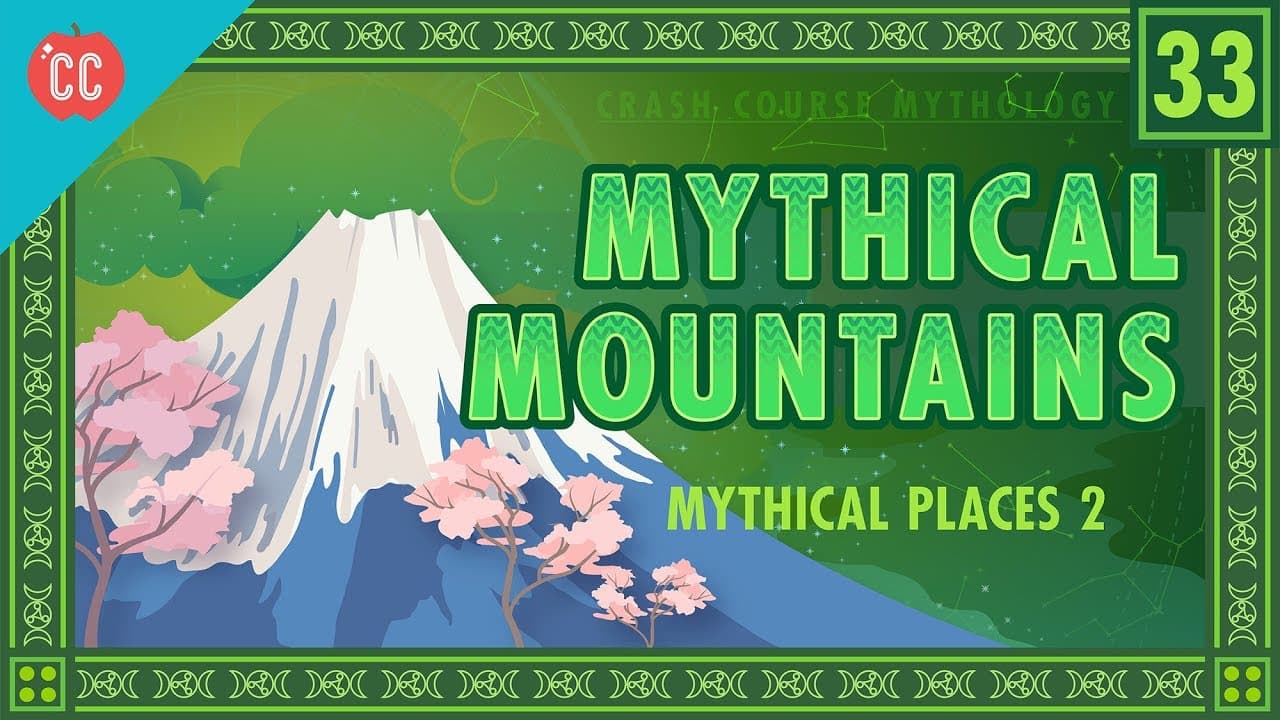
Mythical Mountains: Crash Course World Mythology #33
TL;DR
Mountains in mythology symbolize danger, treasure, and divine presence.
Transcript
Hi, I’m Mike Rugnetta, this is Crashcourse Mythology and today we’re following up our spelunking episode with some rock-climbing. [[[Thoth in climbing gear?]]] That’s right, today we’re taking on mountains of myth. Big mountains, small mountains, holy mountains, volcanic mountains. Thoth! You got your crampons … on? Excelsior! [Intro] In myth, moun... Read More
Key Insights
- Mountains in myths often symbolize mystery and danger, serving as homes for gods and sites for hero myths due to their perilous nature.
- Mount Olympus is a well-known mythological mountain, representing both a real location and the home of Greek gods.
- Mountains are often depicted as treasure sites in myths, containing valuable minerals and magical artifacts, such as in the Chinese story of K’o-li.
- The story of K’o-li highlights themes of humility and practicality, as he chooses simple, utilitarian treasures over gold and riches.
- In Japan, mountains are associated with kami, or gods, and play a significant role in the syncretic relationship between Shintoism and Buddhism.
- The myth of Mt. Fuji and Yatsu-ga-take illustrates the competitive and sometimes aggressive nature of mountains, as well as their revered status in Japanese culture.
- The story of Yosoji and the goddess of Mt. Fuji demonstrates the life-giving and benevolent aspects of mountains, providing healing waters to the sick.
- Mountains in mythology are anthropomorphized, representing gods and embodying various human traits, from generosity to competitiveness.
Install to Summarize YouTube Videos and Get Transcripts
Explore YouTube Video Summarizer or Get YouTube Transcript Extractor
Questions & Answers
Q: What role do mountains play in mythology?
Mountains in mythology often symbolize mystery, danger, and divine presence. They serve as homes for gods, sites for hero myths, and locations for great treasures. Their perilous nature and association with valuable minerals make them significant in mythological narratives.
Q: What is the significance of Mount Olympus in mythology?
Mount Olympus is a significant mythological mountain, known as the home of the Greek gods. It represents both a real location in Greece and a divine realm, symbolizing the connection between the earthly and the divine. Its presence in myths underscores the importance of mountains as sacred spaces.
Q: How does the story of K’o-li illustrate themes of humility and practicality?
The story of K’o-li highlights themes of humility and practicality as he chooses simple, utilitarian treasures over gold and riches. Despite having access to a mountain filled with treasures, K’o-li selects items that provide practical benefits, like a grinder that produces food, demonstrating his humble and pragmatic nature.
Q: What is the role of mountains in Japanese mythology?
In Japanese mythology, mountains are closely associated with kami, or gods, reflecting the syncretic relationship between Shintoism and Buddhism. Mountains are revered as sacred spaces, embodying divine presence and playing significant roles in myths, such as the story of Mt. Fuji and Yatsu-ga-take, highlighting their cultural and spiritual importance.
Q: How does the myth of Mt. Fuji and Yatsu-ga-take illustrate the competitive nature of mountains?
The myth of Mt. Fuji and Yatsu-ga-take illustrates the competitive nature of mountains through the argument between the two mountains over their height. The story highlights the aggressive and revered status of mountains in Japanese culture, with Fuji's reaction to losing the contest demonstrating their anthropomorphized traits.
Q: What does the story of Yosoji and the goddess of Mt. Fuji reveal about mountains?
The story of Yosoji and the goddess of Mt. Fuji reveals the life-giving and benevolent aspects of mountains. The goddess provides healing waters to the sick, showcasing the nurturing side of mountains and their role as sources of life and healing in mythology, contrasting with their often perilous depiction.
Q: Why are mountains anthropomorphized in mythology?
Mountains are anthropomorphized in mythology to embody various human traits and represent divine presence. This anthropomorphism allows mountains to be depicted as characters with emotions and motivations, such as competitiveness or generosity, making them relatable and significant in mythological narratives as powerful natural entities.
Q: What insights can be drawn about human interaction with mountains from these myths?
These myths reveal that human interaction with mountains is complex, involving reverence, fear, and the pursuit of treasure. Mountains are seen as both perilous and sacred, embodying divine presence and offering challenges and rewards. The myths reflect humanity's awe and respect for these majestic natural formations and their cultural significance.
Summary & Key Takeaways
-
Mountains in mythology are seen as mysterious and dangerous, often serving as homes for gods and sites for hero myths. They symbolize both peril and treasure, as seen in the story of K’o-li and the Ten Thousand Treasure Mountain in China.
-
In Japan, mountains are closely associated with kami, or gods, reflecting the syncretic relationship between Shintoism and Buddhism. Myths like that of Mt. Fuji and Yatsu-ga-take highlight the revered and competitive nature of these natural formations.
-
The story of Yosoji and the goddess of Mt. Fuji showcases the life-giving aspects of mountains, providing healing waters to the sick. Mountains in mythology are anthropomorphized, embodying various human traits and representing divine presence.
Read in Other Languages (beta)
Share This Summary 📚
Summarize YouTube Videos and Get Video Transcripts with 1-Click
Try YouTube Summary with ChatGPT & Claude or YouTube Transcript Generator
Explore More Summaries from CrashCourse 📚






Summarize YouTube Videos and Get Video Transcripts with 1-Click
Try YouTube Summary with ChatGPT & Claude or YouTube Transcript Generator