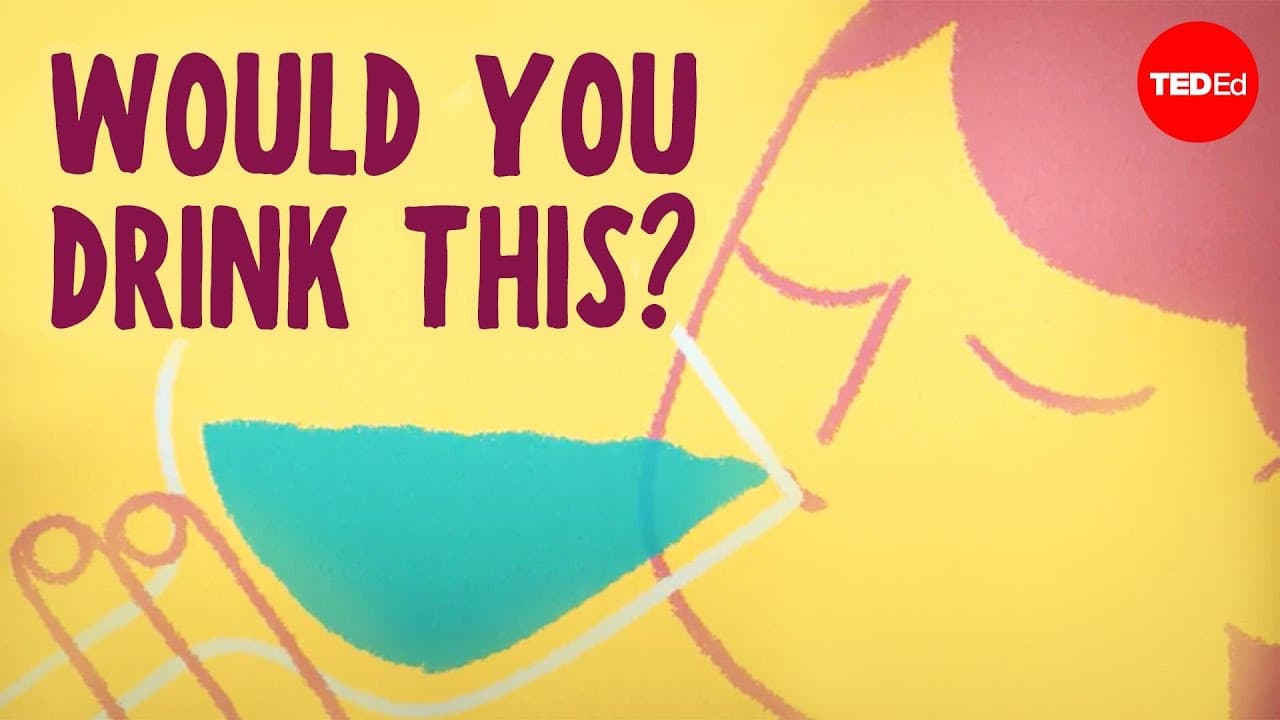
How the water you flush becomes the water you drink - Francis de los Reyes
TL;DR
Singapore implemented a program to recycle wastewater and provide over 50% of its water supply, highlighting the need for water conservation and treatment in the face of increasing droughts.
Transcript
In 2003, Singapore’s national water agency launched an unprecedented program. Using two new facilities, they planned to provide more than 50% of their nation’s water supply by recycling wastewater. And yes, we do mean that wastewater. While this might seem like a desperate decision, this program had been planned for decades to ensure the island nat... Read More
Key Insights
- 💦 Wastewater recycling programs can provide a sustainable and reliable water supply, particularly in drought-prone regions.
- 🎁 Different types of contaminants are present in wastewater, highlighting the need for comprehensive treatment processes.
- 💦 Wastewater treatment plants remove major contaminants, making treated wastewater safe for discharge into natural bodies of water.
- 🍸 Additional treatment processes are required to make recycled wastewater safe for drinking.
- 👻 Indirect potable reuse is a common method of using recycled wastewater, allowing for the degradation and diffusion of any remaining chemicals.
- 🛩️ Smaller-scale technologies are being developed to recycle wastewater on-site, benefiting communities with sanitation challenges.
- 💦 Water conservation and reusing wastewater are crucial in solving water scarcity and addressing global water challenges.
Install to Summarize YouTube Videos and Get Transcripts
Explore YouTube Video Summarizer or Get YouTube Transcript Extractor
Questions & Answers
Q: How does wastewater recycling help in providing a sustainable water supply?
Wastewater recycling allows for a reliable source of clean water, reducing reliance on traditional water sources and mitigating the impact of droughts and water shortages.
Q: Is treated wastewater safe to drink?
Treated wastewater undergoes various treatment processes, including microfiltration, reverse osmosis, UV disinfection, and chemical disinfection, making it clean and safe to drink.
Q: What are the benefits of indirect potable reuse compared to direct potable reuse?
Indirect potable reuse involves discharging treated wastewater into an environmental buffer before extracting it for drinking water, allowing time for any remaining chemicals to degrade and diffuse.
Q: How does wastewater recycling help in addressing sanitation issues?
Wastewater recycling technologies can be adapted for smaller-scale systems, providing communities dealing with sanitation issues access to clean and potable water on-site.
Key Insights:
- Wastewater recycling programs can provide a sustainable and reliable water supply, particularly in drought-prone regions.
- Different types of contaminants are present in wastewater, highlighting the need for comprehensive treatment processes.
- Wastewater treatment plants remove major contaminants, making treated wastewater safe for discharge into natural bodies of water.
- Additional treatment processes are required to make recycled wastewater safe for drinking.
- Indirect potable reuse is a common method of using recycled wastewater, allowing for the degradation and diffusion of any remaining chemicals.
- Smaller-scale technologies are being developed to recycle wastewater on-site, benefiting communities with sanitation challenges.
- Water conservation and reusing wastewater are crucial in solving water scarcity and addressing global water challenges.
- Access to clean water is a basic human right, and efforts should be made to provide clean and potable water to communities facing sanitation issues.
Summary & Key Takeaways
-
Singapore planned to recycle wastewater to meet over 50% of its water supply, ensuring a constant source of clean water.
-
Wastewater is classified into gray, yellow, and black water, each containing different types of contaminants.
-
Wastewater treatment plants remove major contaminants, making treated wastewater safe for discharge into rivers and lakes.
Read in Other Languages (beta)
Share This Summary 📚
Summarize YouTube Videos and Get Video Transcripts with 1-Click
Try YouTube Summary with ChatGPT & Claude or YouTube Transcript Generator
Explore More Summaries from TED-Ed 📚


Summarize YouTube Videos and Get Video Transcripts with 1-Click
Try YouTube Summary with ChatGPT & Claude or YouTube Transcript Generator