The Technology That Could Make Blind People See Again
TL;DR
New technology may restore sight to the blind using neural code.
Transcript
uh what does vision mean Vision means being able to see beauty especially in human faces and um that I I grieve the loss of that my M generation started about 8 years ago it results in loss of central Focus vision like I'm looking directly at the camera right now actually can't see the lens of that camera at all I can't recognize faces I can't read... Read More
Key Insights
- Vision is crucial for perceiving beauty, especially in human faces, and its loss significantly impacts daily life and functionality.
- Bionic technology has made progress in addressing disabilities, but creating bionic vision remains complex due to the intricate relationship between the eye and brain.
- Neuroscientist Sheila Nirenberg discovered the neural code used by retinas to communicate with the brain, a breakthrough in understanding vision.
- Nirenberg's research started as a basic scientific inquiry but evolved into a potential application for a prosthetic device to restore sight.
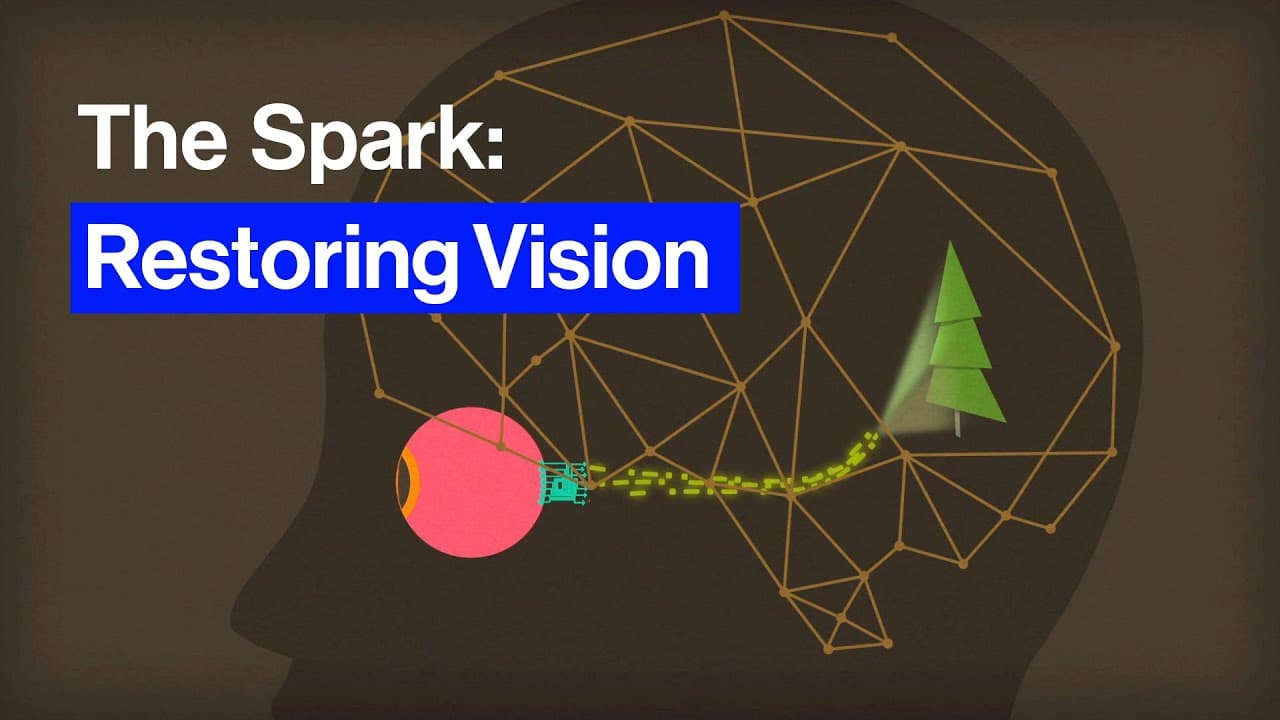
- The device prototype involves a camera and encoder that translates visual information into neural code, which can then be sent to the brain.
- The implementation involves glasses with a camera and a light-sensitive gene injected into the eye to transmit the neural code.
- Human trials are planned to test if the technology can restore vision, with the hope of allowing patients to see faces and interact socially.
- Even if initial trials aren't fully successful, the breakthrough in decoding neural signals paves the way for future advancements in vision restoration.
Install to Summarize YouTube Videos and Get Transcripts
Explore YouTube Video Summarizer or Get YouTube Transcript Extractor
Questions & Answers
Q: What is the main goal of the technology being developed?
The main goal of the technology being developed by Sheila Nirenberg is to restore sight to individuals who are blind. This is achieved by decoding the neural signals that the retina uses to communicate with the brain and integrating this code into a prosthetic device that can transmit visual information.
Q: How does the device prototype work?
The device prototype consists of a camera and encoder that capture visual images and convert them into the neural code used by the retina. This code is then sent to the brain using a light-sensitive gene injected into the eye, allowing the brain to perceive the visual information as if it were naturally received.
Q: What challenges have been faced in creating bionic vision?
Creating bionic vision has been challenging due to the complex relationship between the eye and brain, specifically understanding the neural code that conveys visual information. Previous attempts focused on implanting electrodes in the retina, but they were limited by the lack of understanding of the retina's signal processing.
Q: What is the significance of Sheila Nirenberg's discovery?
Sheila Nirenberg's discovery of the neural code used by the retina to communicate with the brain is significant because it provides a fundamental understanding required to develop effective bionic vision devices. This breakthrough could lead to new treatments for blindness, offering hope to millions of visually impaired individuals.
Q: What are the next steps for the technology's development?
The next steps for the technology's development include conducting human trials to test its effectiveness in restoring vision. These trials will involve injecting a light-sensitive gene into patients' eyes and using the device to transmit neural code, with the aim of enabling them to perceive visual information.
Q: How might this technology impact patients like Rosemary?
For patients like Rosemary, who have irreversible retinal damage, this technology offers the possibility of regaining the ability to see faces and interact socially. While it may not fully restore vision initially, it represents a significant step towards improving their quality of life and independence.
Q: What is the potential impact of this technology on the field of vision restoration?
The potential impact of this technology on the field of vision restoration is profound. By decoding the neural signals of the retina, it opens new avenues for developing devices that can effectively restore sight, transforming the treatment of blindness and offering hope for future advancements in the field.
Q: What role does the light-sensitive gene play in the device's function?
The light-sensitive gene, known as Channel rhodopsin, plays a crucial role in the device's function by allowing the transmission of the neural code to the brain. When exposed to light pulses, it triggers electrical signals in the retina, enabling the brain to perceive the encoded visual information as natural sight.
Summary & Key Takeaways
-
Sheila Nirenberg has developed a technology that could potentially restore sight to the blind by decoding the neural signals retinas use to communicate with the brain. This discovery started as a basic research project and is now being integrated into a prosthetic device.
-
The device involves a camera and encoder that captures images and translates them into neural code, which is then transmitted to the brain using a light-sensitive gene. This innovative approach could revolutionize how vision loss is treated.
-
Human trials are on the horizon to test the effectiveness of this technology in restoring vision. The ultimate goal is to enable blind individuals to see faces and interact socially, significantly improving their quality of life.
Read in Other Languages (beta)
Share This Summary 📚
Summarize YouTube Videos and Get Video Transcripts with 1-Click
Try YouTube Summary with ChatGPT & Claude or YouTube Transcript Generator
Explore More Summaries from Bloomberg Originals 📚





Summarize YouTube Videos and Get Video Transcripts with 1-Click
Try YouTube Summary with ChatGPT & Claude or YouTube Transcript Generator