How to Give Advice in English Using Modal Verbs
TL;DR
To give advice in English, use modal verbs like 'should,' 'could,' and 'would' with a base verb. 'Should' and 'could' can be used interchangeably for general advice, but 'would' is specific to the subject 'I.' Remember that giving advice requires knowledge; avoid advising if you lack information.
Transcript
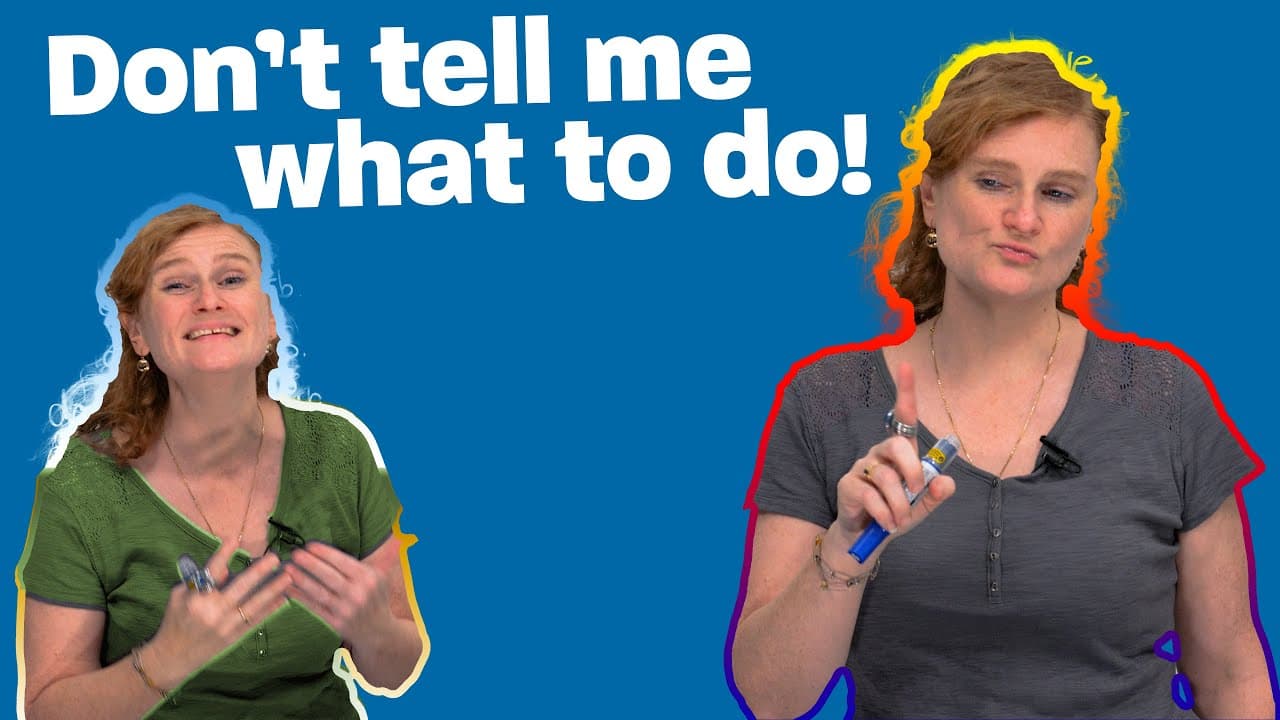
Hey there. I'm Ronnie, and I am here to give you some advice. I don't know about what, but I'm sure something
- Oh, English. Yeah, I'm an English teacher. I'm here to give you some advice about giving advice in English. So much advice happening right now. Maybe you like to give people advice, or maybe you have a problem and you ask your friends for... Read More
Key Insights
- ❓ Giving advice in English requires using modal verbs like should, could, and would.
- ❓ When advising oneself, "should" and "could" can be used interchangeably.
- ❓ "Would" is only used with the subject "I".
- ❓ The verb and subject agreement is important when giving advice to someone else.
- 💁 Modal verbs can also be used in the negative form to give advice.
- 😑 Slang expressions like "you don't know jack" or "you're talking bullsh*t" convey a lack of knowledge or understanding.
- ❓ It is important to be knowledgeable and informed before giving advice.
Install to Summarize YouTube Videos and Get Transcripts
Explore YouTube Video Summarizer or Get YouTube Transcript Extractor
Questions & Answers
Q: What are some examples of giving advice using modal verbs?
Some examples include saying "You should go for a bike ride" or "If I were you, I would go to the mall."
Q: Can we use "should" and "would" with the subject "I"?
No, with the subject "I", we can only use "would" for giving advice to ourselves. For giving advice to others, we use "you", "he", "she", or "they".
Q: How can we ask someone to do something using modal verbs?
We can say "Why don't you go to the park?" or "Why doesn't he/she go to the park?"
Q: Can we use modal verbs in the negative form?
Yes, we can use "shouldn't" or "wouldn't" to give negative advice, such as "You shouldn't go on vacation" or "If I were you, I wouldn't go to the mall."
Summary & Key Takeaways
-
Ronnie, an English teacher, provides advice on giving advice in English using modal verbs.
-
Modal verbs such as should, could, and would are always followed by a base verb.
-
"Should" and "could" can be used interchangeably, but "would" is used only with the subject "I".
Read in Other Languages (beta)
Share This Summary 📚
Summarize YouTube Videos and Get Video Transcripts with 1-Click
Try YouTube Summary with ChatGPT & Claude or YouTube Transcript Generator
Explore More Summaries from English with Ronnie · EnglishLessons4U with engVid 📚





Summarize YouTube Videos and Get Video Transcripts with 1-Click
Try YouTube Summary with ChatGPT & Claude or YouTube Transcript Generator