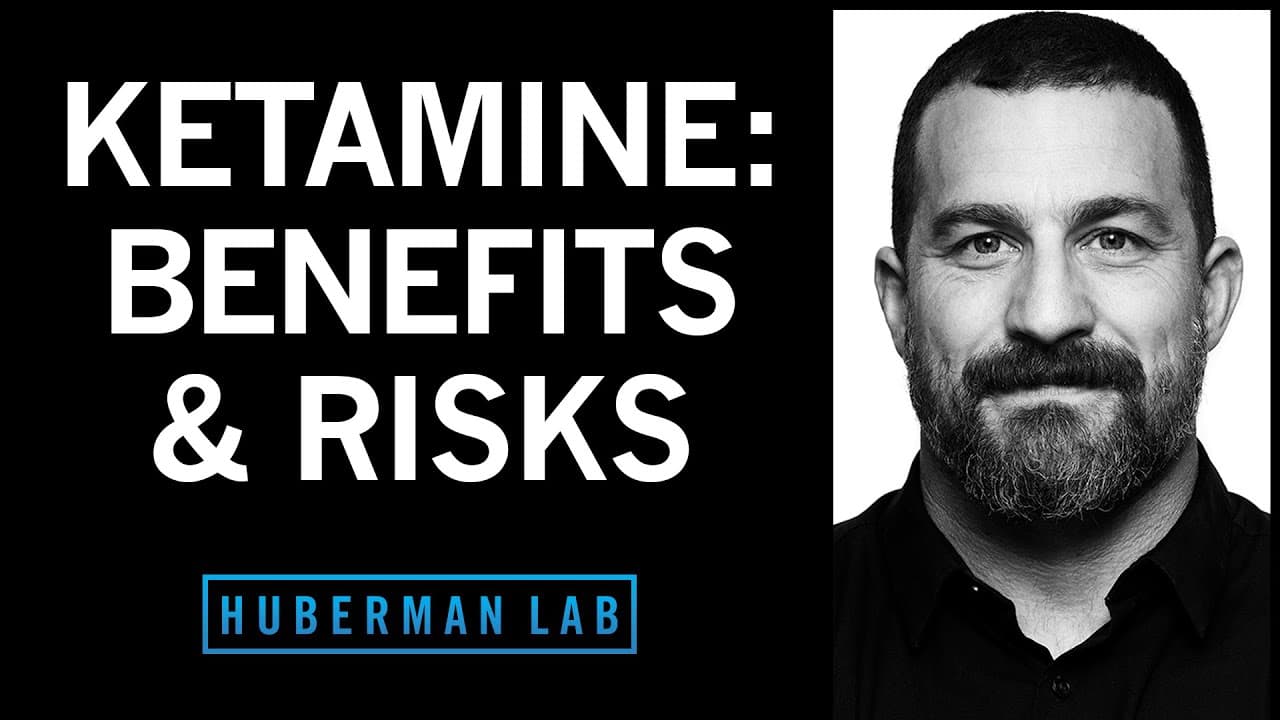
Ketamine: Benefits and Risks for Depression, PTSD & Neuroplasticity | Huberman Lab Podcast
TL;DR
Ketamine is a drug that has both clinical benefits for treating depression and PTSD and a potential for abuse. It works by blocking the NMDA receptor and inducing neuroplasticity in brain circuits associated with mood.
Transcript
welcome to the huberman Lab podcast where we discuss science and science-based tools for everyday life I'm Andrew huberman and I'm a professor of neurobiology and Ophthalmology at Stanford school of medicine today we are discussing ketamine ketamine is a fascinating compound and it's one that nowadays is being used both clinically for the treatment... Read More
Key Insights
- ✳️ Ketamine is a fascinating compound that has both clinical benefits and potential risks.
- 🥺 The drug works by blocking the NMDA receptor, leading to increased excitatory communication and neuroplasticity in mood-related circuits.
- 🥡 Ketamine provides rapid relief from depression, but its effects are not solely dependent on the immediate experience of taking the drug.
- 🍉 Long-term changes in neural circuitry contribute to the enduring antidepressant effects of ketamine.
- 🈸 Ketamine has significant applications in the treatment of depression, bipolar depression, PTSD, OCD, anxiety, and substance addiction.
- 🍰 Its short duration of action and potential for abuse highlight the need for careful administration and monitoring.
- 💦 Understanding the mechanisms of how ketamine works in the brain enhances our understanding of depression and neuroplasticity.
Install to Summarize YouTube Videos and Get Transcripts
Explore YouTube Video Summarizer or Get YouTube Transcript Extractor
Questions & Answers
Q: How does ketamine work in the brain to relieve depression?
Ketamine blocks the NMDA receptor, which increases excitatory communication between neurons in mood-related circuits. This induces neuroplasticity and strengthens connections associated with positive mood.
Q: Can ketamine be addictive?
While ketamine has a high potential for abuse, it is not inherently addictive. However, some individuals may develop a compulsion to use ketamine, even if it negatively impacts their overall life performance.
Q: What is the relationship between ketamine and neuroplasticity?
Ketamine induces neuroplasticity by blocking the NMDA receptor. This leads to changes in neural circuitry that allow for increased excitatory activity and long-term relief from depression.
Q: How long do the antidepressant effects of ketamine last?
The antidepressant effects of ketamine are typically short-lived, lasting only a few days to a week. However, repeated treatments over several weeks can lead to more sustained relief from depressive symptoms.
Key Insights:
- Ketamine is a fascinating compound that has both clinical benefits and potential risks.
- The drug works by blocking the NMDA receptor, leading to increased excitatory communication and neuroplasticity in mood-related circuits.
- Ketamine provides rapid relief from depression, but its effects are not solely dependent on the immediate experience of taking the drug.
- Long-term changes in neural circuitry contribute to the enduring antidepressant effects of ketamine.
- Ketamine has significant applications in the treatment of depression, bipolar depression, PTSD, OCD, anxiety, and substance addiction.
- Its short duration of action and potential for abuse highlight the need for careful administration and monitoring.
- Understanding the mechanisms of how ketamine works in the brain enhances our understanding of depression and neuroplasticity.
- Ketamine therapy provides a valuable alternative for individuals who do not respond to traditional antidepressant medications.
Summary & Key Takeaways
-
Ketamine is being used clinically for the treatment of depression, suicidality, and PTSD. It has shown remarkable effects in providing immediate relief from depressive symptoms.
-
The drug works by blocking the NMDA receptor, which leads to increased excitatory communication between neurons and induces neuroplasticity in mood-related brain circuits.
-
Ketamine's effects are not just short-term; it can produce lasting changes in neural circuitry that provide ongoing relief from depression.
Read in Other Languages (beta)
Share This Summary 📚
Summarize YouTube Videos and Get Video Transcripts with 1-Click
Try YouTube Summary with ChatGPT & Claude or YouTube Transcript Generator
Explore More Summaries from Andrew Huberman 📚




Summarize YouTube Videos and Get Video Transcripts with 1-Click
Try YouTube Summary with ChatGPT & Claude or YouTube Transcript Generator