Playing With Fire - The First Flame Thrower I THE GREAT WAR Week 32
TL;DR
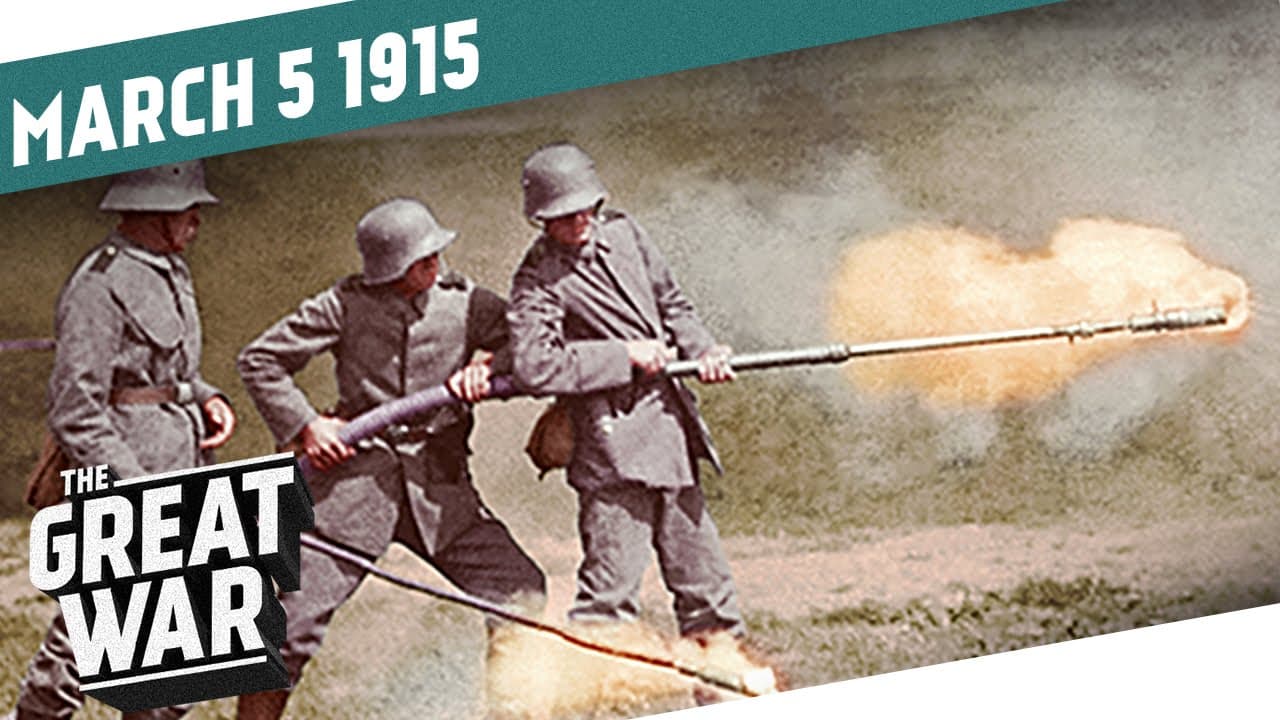
Flamethrowers were used for the first time in WWI.
Transcript
We’ve seen men die by the hundreds of thousands, as Europe has been ripped apart in just half a year. New battlefronts have been opened to gain any advantage and soldiers come from all around the world to die, while new technology has taken the war to the skies and beneath the seas. Technology now turns to close combat as this week new weapons make... Read More
Key Insights
- The introduction of flamethrowers marked a new level of brutality in warfare, signaling the relentless pursuit of technological advancements to gain an edge in combat.
- The British and French strategized their 1915 offensives based on cutting German railway lines to force a German retreat and potentially reopen conditions for open warfare.
- The Austro-Hungarian Empire's Second Carpathian Winter Offensive against Russia faced logistical challenges, including exhaustion and frostbite among troops, leading to significant setbacks.
- The use of new weapons like flamethrowers, grenades, and armored shields in battle demonstrated the evolving nature of warfare, though initial uses were often ineffective.
- The bombing of Dardanelles forts by British and French navies continued, aiming to weaken Ottoman defenses and open new fronts in the war.
- In Persia, Indian cavalry played a crucial role in protecting British forces during the Battle of Ahwaz, showcasing the continued importance of cavalry in certain battles.
- The Great War was characterized by a constant search for newer, more effective means of warfare, with poison gas and flamethrowers being early examples of this trend.
- Animals played a significant role in the logistics of World War I, highlighting their importance as essential helpers in the war effort.
Install to Summarize YouTube Videos and Get Transcripts
Explore YouTube Video Summarizer or Get YouTube Transcript Extractor
Questions & Answers
Q: What was the significance of the flamethrower's introduction in WWI?
The introduction of the flamethrower in World War I marked a significant escalation in the brutality of combat. It represented a shift towards more aggressive and terrifying weapons designed to break the stalemate of trench warfare. Although its initial use was ineffective, it signaled the beginning of a new era in military technology, where psychological impact was as important as physical destruction.
Q: What were the British and French strategic goals for their 1915 offensives?
The British and French strategized their 1915 offensives with the goal of cutting the German railway lines that supplied their troops. By targeting the Aubers and Vimy ridges in the north and the Champagne heights in the south, they aimed to force a German retreat from the salient between Flanders and Verdun. This strategy was intended to create conditions for open warfare and potentially achieve a decisive victory.
Q: How did the Austro-Hungarian Empire fare in their Second Carpathian Winter Offensive?
The Austro-Hungarian Empire faced significant challenges during their Second Carpathian Winter Offensive against Russia. Despite having numerical superiority, the offensive was plagued by logistical issues, including exhausted troops suffering from frostbite and illness. The Russians strategically retreated, causing the Austrians to overextend their supply lines. The offensive ultimately resulted in catastrophic losses and was deemed unsuccessful.
Q: What role did new weapons play in the battles of this period?
New weapons such as flamethrowers, grenades, and armored shields began to make their appearance in battles during this period. These innovations were part of the ongoing search for technological advantages in warfare. However, their initial uses were often ineffective, as seen with the German attempts to use flamethrowers and armored shields. Nevertheless, these weapons foreshadowed the evolving nature of combat and the increasing emphasis on technological superiority.
Q: How did the bombing of the Dardanelles forts progress?
The bombing of the Dardanelles forts by the British and French navies continued as part of their strategy to weaken Ottoman defenses and open new fronts in the war. The bombardment, which began on February 19th, targeted the inner forts after the outer ones had been reduced. This ongoing campaign aimed to breach the defenses guarding the entrance to the Black Sea and exert pressure on the Ottoman Empire.
Q: What was the outcome of the Battle of Ahwaz in Persia?
During the Battle of Ahwaz in Persia, British and Indian troops launched an attack on an enemy camp. Despite being outnumbered, they managed to withdraw strategically, protected by artillery until reinforcements arrived. Although the attack was daring, it effectively deterred further serious threats to the British pipeline, as the Turks withdrew toward Amara. The Indian cavalry played a crucial role in protecting the British forces during this engagement.
Q: How did the Great War reflect the pursuit of more effective warfare methods?
The Great War was characterized by a relentless pursuit of more effective warfare methods, as seen in the introduction of poison gas and flamethrowers. These weapons, though initially in their infancy, represented the ongoing innovation in military technology aimed at breaking the deadlock of trench warfare. This pursuit of technological superiority led to the development of increasingly deadly and psychologically impactful weapons throughout the conflict.
Q: What role did animals play in World War I?
Animals played a crucial role in the logistics of World War I, serving as essential helpers at the front. They were used for transportation, communication, and support in various capacities, highlighting their importance in the war effort. Horses, mules, and dogs, among others, were integral to maintaining supply lines and facilitating communication across the challenging terrains of the battlefields, underscoring their vital contribution to the war.
Summary & Key Takeaways
-
This week in the Great War, the first use of flamethrowers in battle introduced a new level of brutality, as nations sought technological advantages. The British and French planned offensives to cut German rail lines, while the Austro-Hungarian Empire faced setbacks in their winter offensive against Russia.
-
Despite the introduction of new weapons, initial uses were often ineffective. The bombing of Dardanelles forts continued, and Indian cavalry proved vital in Persia. The relentless pursuit of more effective warfare methods characterized the conflict, with poison gas and flamethrowers marking early advancements.
-
Animals played a crucial role in World War I logistics, underscoring their importance. The Great War was marked by constant innovation in warfare technology, with nations seeking any advantage to gain an upper hand in the brutal conflict.
Read in Other Languages (beta)
Share This Summary 📚
Summarize YouTube Videos and Get Video Transcripts with 1-Click
Try YouTube Summary with ChatGPT & Claude or YouTube Transcript Generator
Explore More Summaries from The Great War 📚


Summarize YouTube Videos and Get Video Transcripts with 1-Click
Try YouTube Summary with ChatGPT & Claude or YouTube Transcript Generator