What Was the Treaty of Brest-Litovsk?
TL;DR
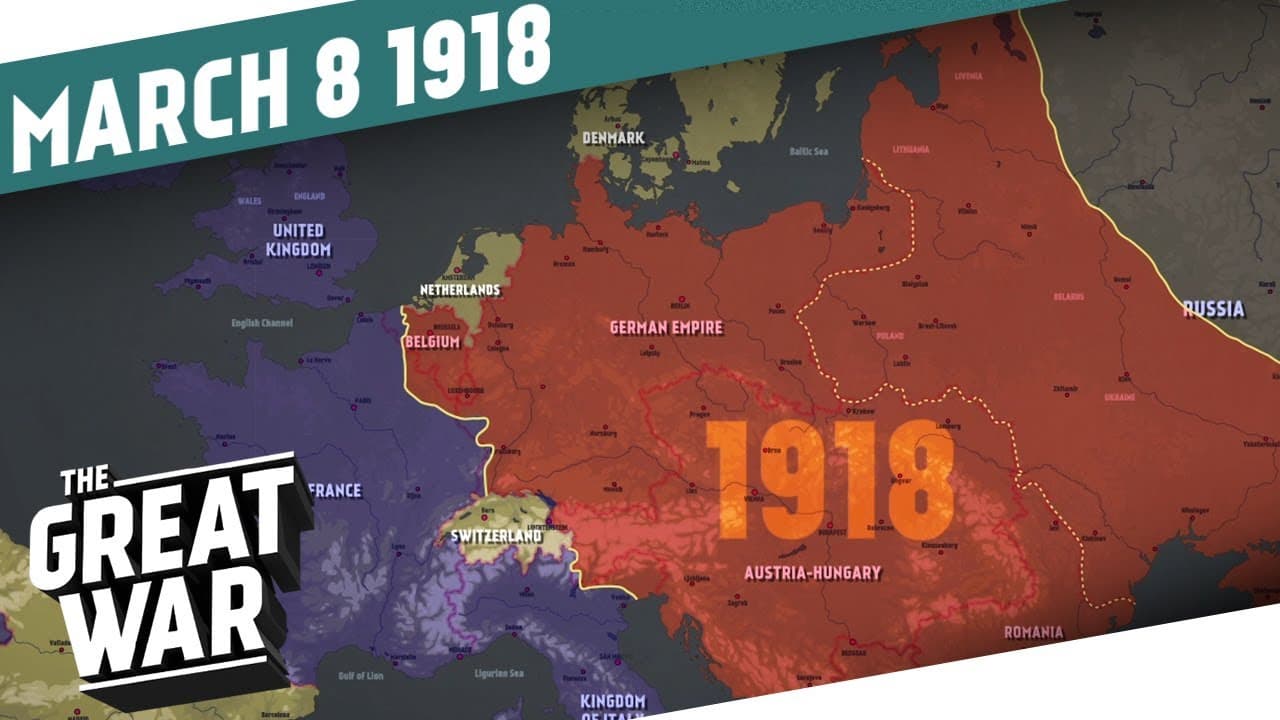
The Treaty of Brest-Litovsk marked Russia's exit from World War I, with significant territorial and economic concessions to Germany. Russia ceded large areas of land, including Ukraine and the Baltic states, and lost a third of its population. This treaty, however, did not bring peace to the region, as German expansion continued and internal conflict in Russia escalated.
Transcript
It was a momentous occasion. 43 months after the war began, the first one of the major players was leaving it for good. This week, Russia signed a peace treaty with the Central Powers. I’m Indy Neidell; welcome to the Great War. Last week the Ottomans advanced toward the Caucasus and the Germans advanced along the whole Eastern Front. The Russians ... Read More
Key Insights
- The Treaty of Brest-Litovsk ended Russia's participation in World War I.
- Russia ceded a third of its population and significant territory to Germany.
- The treaty resulted in Russia losing 90% of its coal production and much of its heavy industry.
- Germany's strategic aim was to strengthen its borders and deter future conflicts.
- The treaty accelerated internal conflict in Russia, leading to civil war.
- Germany's occupation of new territories required significant military resources.
- Despite the treaty, German military operations continued in Eastern Europe.
- The treaty's terms were seen as humiliating for Russia, leading to further unrest.
Install to Summarize YouTube Videos and Get Transcripts
Explore YouTube Video Summarizer or Get YouTube Transcript Extractor
Questions & Answers
Q: What was the Treaty of Brest-Litovsk?
The Treaty of Brest-Litovsk was a peace agreement signed on March 3, 1918, between Soviet Russia and the Central Powers, led by Germany, marking Russia's exit from World War I. The treaty imposed harsh terms on Russia, including territorial losses and significant economic concessions, such as ceding a third of its population and 90% of its coal production.
Q: What territories did Russia lose in the Treaty of Brest-Litovsk?
Under the Treaty of Brest-Litovsk, Russia ceded significant territories to Germany, including Ukraine, the Baltic states (Estonia, Latvia, and Lithuania), and parts of Belarus. Additionally, Russia had to recognize the independence of Finland and evacuate its forces from the Caucasus regions of Kars, Batum, and Ardahan, significantly altering the geopolitical landscape of Eastern Europe.
Q: How did the Treaty of Brest-Litovsk affect Germany's military strategy?
The Treaty of Brest-Litovsk allowed Germany to redirect military resources from the Eastern Front to the Western Front, bolstering its forces for a planned offensive before American troops could arrive in significant numbers. However, managing and pacifying the newly acquired territories required substantial military presence, potentially straining Germany's ability to sustain prolonged offensives elsewhere.
Q: Why was the Treaty of Brest-Litovsk considered humiliating for Russia?
The Treaty of Brest-Litovsk was seen as humiliating for Russia due to the severe terms imposed by Germany. Russia lost a third of its population, significant industrial and agricultural resources, and key territories. These harsh conditions not only weakened Russia economically and militarily but also fueled internal unrest, contributing to the onset of civil war and destabilizing the post-revolutionary government.
Q: What were the economic terms of the Treaty of Brest-Litovsk?
Economically, the Treaty of Brest-Litovsk reaffirmed the 1904 commercial treaty between Russia and Germany, with Russia agreeing to stay out of any postwar economic boycott of Germany. Russia did not have to pay reparations, but both sides would reimburse each other for prisoner of war care. The treaty's significant impact was the loss of 90% of Russia's coal production and much of its heavy industry.
Q: How did the Treaty of Brest-Litovsk impact Russian internal politics?
The Treaty of Brest-Litovsk exacerbated internal political tensions in Russia, as the Bolshevik regime's inability to secure better terms highlighted its weaknesses. The treaty's harsh conditions and territorial concessions fueled dissatisfaction and unrest, accelerating the drift towards mass terror and civil war. The loss of bargaining leverage due to the army's disbandment left Russia vulnerable to internal and external pressures.
Q: What was Germany's strategic goal in negotiating the Treaty of Brest-Litovsk?
Germany's strategic goal in negotiating the Treaty of Brest-Litovsk was to secure favorable borders and strengthen its geopolitical position. By imposing harsh terms on Russia, Germany aimed to deter future conflicts and establish a buffer zone in Eastern Europe. The acquisition of key territories and resources was intended to bolster Germany's economic and military strength, although it also required significant resources to maintain control.
Q: Did the Treaty of Brest-Litovsk bring peace to Eastern Europe?
The Treaty of Brest-Litovsk did not bring lasting peace to Eastern Europe. While it ended hostilities between Russia and the Central Powers, German expansion into former Tsarist territories continued. The treaty's terms fueled internal conflict in Russia, leading to civil war, and German military operations persisted in the region, maintaining instability and unrest despite the formal cessation of hostilities.
Summary & Key Takeaways
-
The Treaty of Brest-Litovsk officially ended Russia's involvement in World War I, forcing it to cede significant territories and resources to Germany. This included a third of its population and 90% of its coal production. Despite the harsh terms, the treaty did not stop German military operations in the East and further fueled internal conflict in Russia.
-
Germany's strategic goals included strengthening its borders and preventing future conflicts, which influenced the harsh terms imposed on Russia. The treaty resulted in significant territorial losses for Russia, including Ukraine and the Baltic states, and marked a shift in the Eastern Front's dynamics.
-
The Treaty of Brest-Litovsk had major implications for both Russia and Germany. While it allowed Germany to focus on the Western Front, it also required substantial military resources to control the newly acquired territories. Meanwhile, the treaty's terms exacerbated internal unrest in Russia, contributing to the outbreak of civil war.
Read in Other Languages (beta)
Share This Summary 📚
Summarize YouTube Videos and Get Video Transcripts with 1-Click
Try YouTube Summary with ChatGPT & Claude or YouTube Transcript Generator
Explore More Summaries from The Great War 📚
Summarize YouTube Videos and Get Video Transcripts with 1-Click
Try YouTube Summary with ChatGPT & Claude or YouTube Transcript Generator