What If - Two Pivotal Moments of World War 1 I THE GREAT WAR Week 99
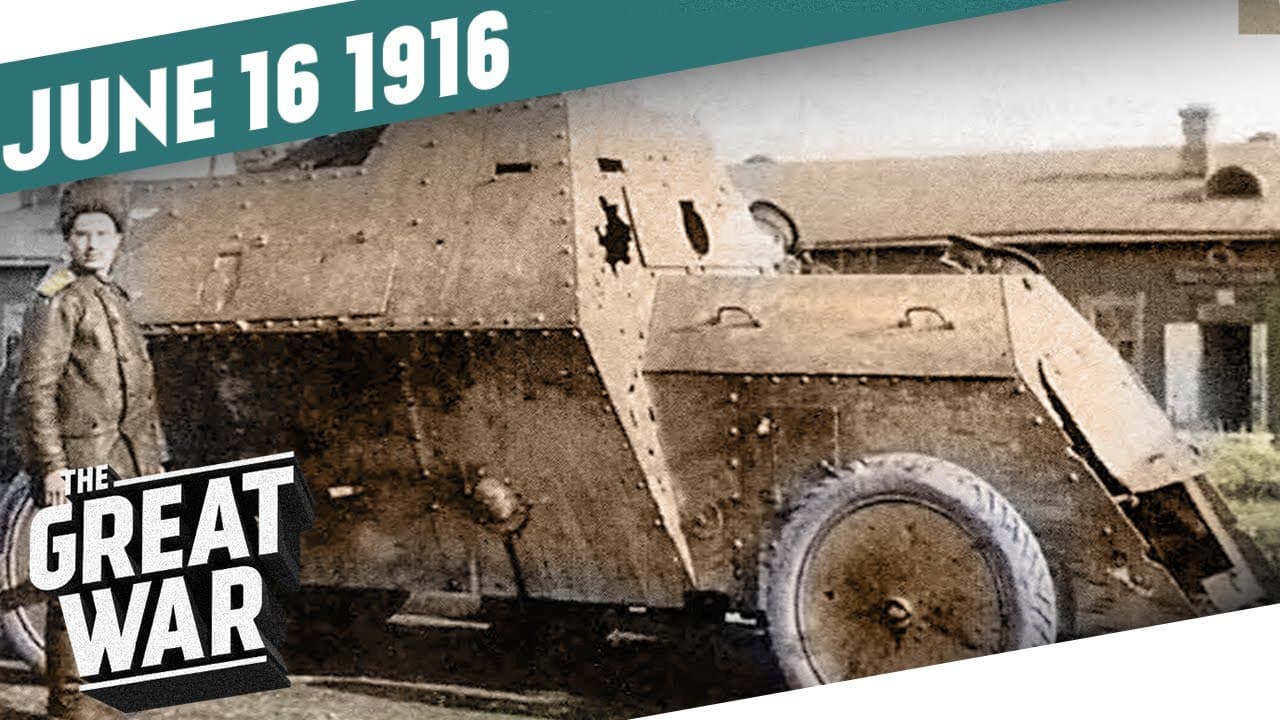
TL;DR
Two critical events shaped the course of World War I.
Transcript
Think of a war, say... World War Two, and you can usually think of a pivotal moment or battle, say, Stalingrad, where the future of the war could maybe be determined. Well, this week 100 years ago, the First World War saw not one, but two such moments. I’m Indy Neidell; welcome to the Great War. Last week saw the Russians launch a new offensive fro... Read More
Key Insights
- The week 100 years ago was marked by two pivotal moments in World War I, with significant actions on both the Eastern and Western Fronts.
- The Russian offensive achieved remarkable success, capturing tens of thousands of Austrian prisoners and advancing significantly, yet failed to capitalize fully on the opportunity.
- German forces captured Fort Vaux at Verdun, but hesitation and strategic missteps prevented them from breaking through the French defenses.
- The lack of coordination between German and Austrian forces, exacerbated by poor personal relations between leaders, hindered their strategic advantage.
- The Austro-Hungarian front collapsed in the face of the Russian advance, leading to a significant loss of territory and resources.
- The Arab Revolt gained momentum, with British support helping to capture key Ottoman positions in the Middle East.
- In East Africa, Allied forces made gains against German positions, further stretching German resources.
- The potential outcomes of different strategic decisions during this week highlight the importance of communication and coordination in military operations.
Install to Summarize YouTube Videos and Get Transcripts
Explore YouTube Video Summarizer or Get YouTube Transcript Extractor
Questions & Answers
Q: What was the significance of the Russian offensive during this week?
The Russian offensive was highly significant as it resulted in a major breakthrough against Austro-Hungarian forces. The Russians captured tens of thousands of prisoners and advanced deep into enemy territory. This success demonstrated the potential of Russian military power but also highlighted the challenges of maintaining momentum due to logistical issues and lack of coordination with other Russian forces.
Q: Why did the German forces hesitate at Verdun?
The German forces hesitated at Verdun due to a combination of strategic caution and the need to redirect resources to support the Austro-Hungarian front. The lack of coordination between German and Austrian leaders, along with personal animosities, further complicated their efforts. This hesitation allowed French forces to regroup and prevent a German breakthrough.
Q: How did the lack of coordination between Germany and Austria-Hungary affect their war efforts?
The lack of coordination between Germany and Austria-Hungary significantly affected their war efforts by preventing them from fully exploiting their strategic advantages. Poor personal relations between leaders and a failure to communicate plans led to missed opportunities and weakened their overall military effectiveness. This lack of cooperation was a major factor in the eventual defeat of the Central Powers.
Q: What role did the Arab Revolt play in the Middle East during this week?
The Arab Revolt played a crucial role in the Middle East by challenging Ottoman control and gaining ground with British support. British naval forces assisted in capturing key Ottoman positions, such as Jeddah, and the revolt's momentum posed a significant threat to Ottoman stability in the region. This development was part of the broader strategic efforts to weaken the Central Powers.
Q: What were the outcomes of the fighting in East Africa during this week?
In East Africa, Allied forces made significant progress against German positions. Rhodesian troops pushed the Germans towards Iringa, and Belgian forces advanced in the region, capturing key locations. The Germans evacuated Tanga, further stretching their resources. These actions underscored the global nature of the conflict and the challenges faced by the Central Powers in maintaining control over their colonial territories.
Q: How did logistical challenges impact the Russian offensive?
Logistical challenges significantly impacted the Russian offensive by limiting their ability to sustain momentum. The rapid advance led to supply line issues, with Russian forces outrunning their supply of shells and other resources. These challenges, combined with a lack of support from other Russian forces, prevented the full exploitation of their initial success against Austro-Hungarian forces.
Q: What if the Germans had pressed their advantage at Verdun?
If the Germans had pressed their advantage at Verdun, they might have broken through French lines, potentially changing the course of the war. This could have forced the French to abandon key positions, leading to a strategic advantage for the Central Powers. However, the hesitation and strategic caution displayed by German leaders prevented this outcome, allowing the French to regroup and hold their defenses.
Q: What were the potential consequences of a continued Russian advance in Galicia?
A continued Russian advance in Galicia could have forced the Austro-Hungarian Empire to sue for peace or face collapse. The capture of more territory and resources would have weakened the Central Powers' position significantly. However, logistical challenges and lack of coordination with other Russian forces prevented this scenario, highlighting the importance of sustained support and strategic planning in military operations.
Summary & Key Takeaways
-
This week in World War I saw critical developments on multiple fronts. The Russians achieved a major breakthrough against Austro-Hungarian forces, capturing large numbers of prisoners and advancing deep into enemy territory. However, they failed to fully exploit their advantage due to logistical challenges and lack of support from other Russian forces.
-
On the Western Front, the Germans captured Fort Vaux at Verdun but hesitated to press their advantage, allowing French forces to regroup. The lack of coordination between German and Austrian leaders, coupled with personal animosities, prevented them from making the most of their strategic positions.
-
Elsewhere, the Arab Revolt gained ground with British naval support, capturing key Ottoman positions. In East Africa, Allied forces made progress against German forces. These developments underscored the global nature of the conflict and the interconnectedness of various theaters of war.
Read in Other Languages (beta)
Share This Summary 📚
Summarize YouTube Videos and Get Video Transcripts with 1-Click
Try YouTube Summary with ChatGPT & Claude or YouTube Transcript Generator
Explore More Summaries from The Great War 📚
Summarize YouTube Videos and Get Video Transcripts with 1-Click
Try YouTube Summary with ChatGPT & Claude or YouTube Transcript Generator