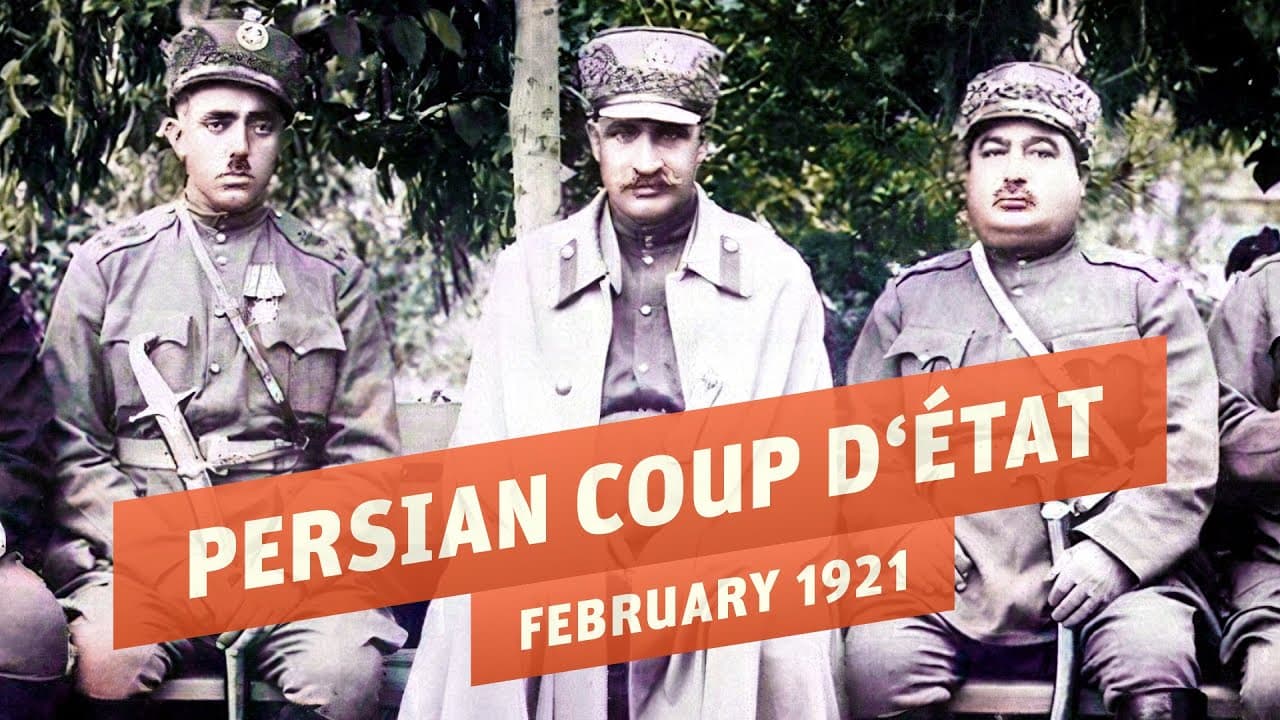
The Persian Coup 1921 And The British Thirst For Oil
TL;DR
The 1921 Persian coup thwarted British control ambitions over Persia.
Transcript
hi I'm Jesse Alexander and welcome to the Great War at the start of the 20th century Persia Modern Day Iran was at the center of an imperial power struggle between Britain and Russia known as the great game in English and to the Russians as V the shadow War for the most part both sides ignored the interests of Persian nationalists but growing tensi... Read More
Key Insights
- The Persian coup of 1921 was a pivotal moment in history, marking a shift in power dynamics and thwarting British ambitions to control Persia and its oil resources.
- Britain and Russia's interests in Persia were driven by strategic and economic factors, with both seeking influence over different regions of the country.
- The Anglo-Russian Convention of 1907 divided Persia into spheres of influence, largely ignoring Persian sovereignty and nationalist sentiments.
- The Constitutional Revolution of 1906 was a response to foreign influence, uniting various Persian factions in a rare display of unity against external economic concessions.
- World War I exacerbated Persia's internal problems, leading to famine, political instability, and the eventual withdrawal of Russian influence due to the Russian Revolution.
- The Anglo-Persian Agreement of 1919 aimed to solidify British control over Persia's military and economy, but faced significant opposition from Persian nationalists and constitutionalists.
- Reza Khan's rise to power in the 1921 coup was supported by British military assistance, though his subsequent policies favored independence from foreign influence.
- The Russo-Persian Treaty post-coup marked a significant shift in Persia's foreign policy, aligning more closely with Bolshevik Russia and challenging British interests.
Install to Summarize YouTube Videos and Get Transcripts
Explore YouTube Video Summarizer or Get YouTube Transcript Extractor
Questions & Answers
Q: What were the main motivations behind the British and Russian interests in Persia?
The primary motivations for British and Russian interests in Persia were strategic and economic. Britain aimed to protect its interests in the southern part of the country, crucial for sea lanes to India, while Russia sought influence in northern Persia to secure its borders and potentially threaten British communications with its Asian empire. Both powers were interested in Persia's resources, particularly oil.
Q: How did the Constitutional Revolution of 1906 impact Persia's political landscape?
The Constitutional Revolution of 1906 significantly impacted Persia's political landscape by challenging foreign influence and advocating for democratic reforms. It united secular moderates, merchant guilds, religious leaders, and the press against economic concessions to foreign powers. This movement led to the creation of the Majlis, a legislative body that aimed to limit the Shah's power and increase Persian sovereignty.
Q: What role did World War I play in Persia's internal and external dynamics?
World War I played a crucial role in exacerbating Persia's internal and external dynamics. The country became a strategic battlefield, with Ottoman, Russian, and British forces vying for control. This conflict, coupled with a devastating famine and the Russian Revolution, weakened Persia's central authority and led to increased political instability, setting the stage for the 1921 coup.
Q: Why did the Anglo-Persian Agreement of 1919 face opposition in Persia?
The Anglo-Persian Agreement of 1919 faced opposition in Persia because it aimed to extend British control over the country's military, economy, and resources, including oil. Persian nationalists and constitutionalists were outraged by the agreement, particularly because it bypassed the Majlis, the legislative body, and was seen as undermining Persian sovereignty and independence.
Q: What were the outcomes of the 1921 Persian coup led by Reza Khan?
The 1921 Persian coup led by Reza Khan resulted in a significant shift in Persia's political landscape. It marked the end of the old government and led to policies favoring national independence from foreign influence. Reza Khan consolidated power, centralized authority, and pursued reforms, including land reform and military strengthening, while aligning more closely with Bolshevik Russia.
Q: How did the Russo-Persian Treaty after the coup affect Persia's foreign relations?
The Russo-Persian Treaty after the 1921 coup significantly affected Persia's foreign relations by aligning the country more closely with Bolshevik Russia. The treaty stipulated non-intervention and mutual non-aggression, challenging British interests and influence in the region. It marked a departure from previous foreign policies and underscored Persia's desire for greater autonomy and independence.
Q: What was the British perspective on the 1921 Persian coup?
The British perspective on the 1921 Persian coup was complex. While some British officials, like Major General Edmund Ironside, supported and facilitated the coup, others were surprised by its occurrence. The coup was seen as a means to stabilize Persia and maintain British influence, but it ultimately led to policies that challenged British interests and aligned Persia more closely with Russia.
Q: How did Reza Khan consolidate power after the coup?
After the coup, Reza Khan consolidated power by centralizing authority, banning public gatherings, arresting politicians, imposing martial law, and suppressing the press. He focused on building a strong military to end foreign influence and tribalism. His alliance with Prime Minister Zia al-Din Tabataba'i was short-lived, and Reza Khan quickly became the dominant political figure, setting the stage for his eventual rise to the throne.
Summary & Key Takeaways
-
The 1921 Persian coup, led by Reza Khan and the Persian Cossack Brigade, marked a significant shift in Persian politics and thwarted British ambitions to control the region and its oil resources. The coup was influenced by British military support but resulted in policies that favored Persian independence.
-
Persia's strategic importance in the early 20th century was underscored by British and Russian interests, leading to the Anglo-Russian Convention of 1907, which divided the country into spheres of influence. This division ignored Persian sovereignty and fueled nationalist movements seeking reform and independence.
-
The aftermath of World War I and the Russian Revolution left Britain as the dominant foreign power in Persia. However, the Anglo-Persian Agreement of 1919 faced strong opposition, and the subsequent coup led to a realignment of Persian foreign policy, favoring closer ties with Bolshevik Russia over Britain.
Read in Other Languages (beta)
Share This Summary 📚
Summarize YouTube Videos and Get Video Transcripts with 1-Click
Try YouTube Summary with ChatGPT & Claude or YouTube Transcript Generator
Explore More Summaries from The Great War 📚

Summarize YouTube Videos and Get Video Transcripts with 1-Click
Try YouTube Summary with ChatGPT & Claude or YouTube Transcript Generator