The Creation of Lebanon After The First World War (Full Documentary)
TL;DR
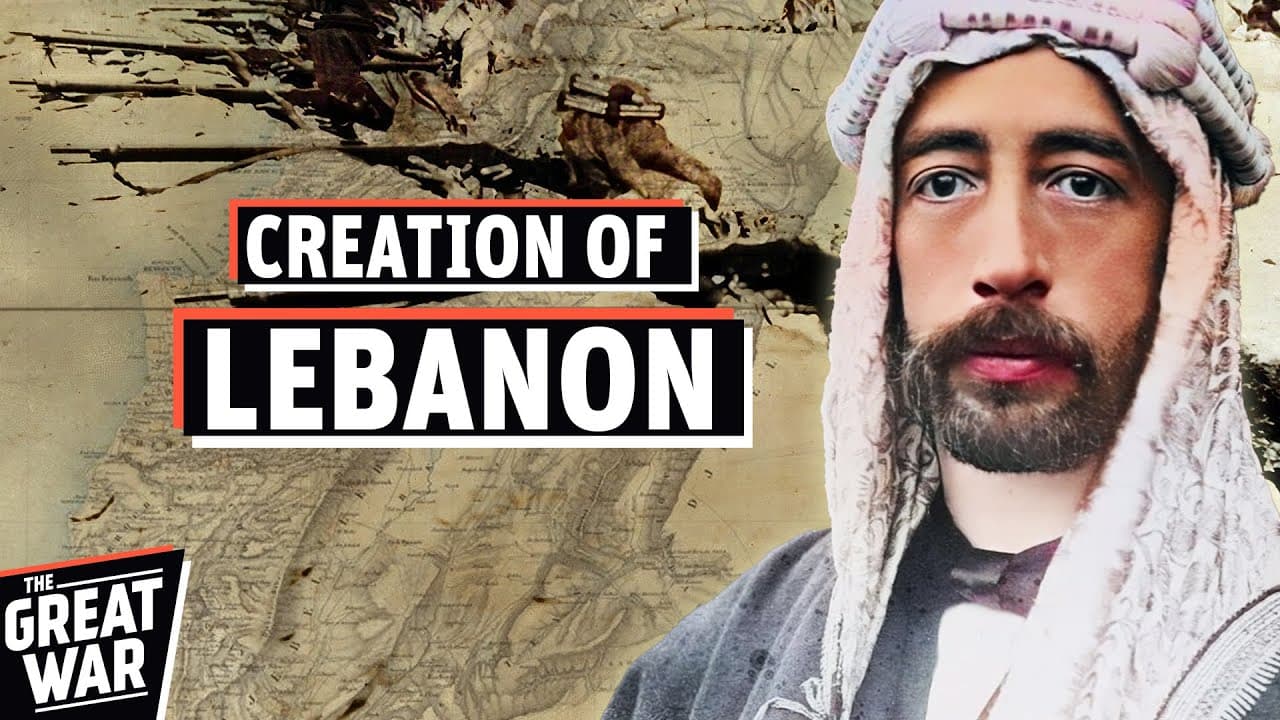
The creation of Greater Lebanon in 1920 under French mandate.
Transcript
In the fall of 1920, the French were ready to re-organize the Middle Eastern lands where they held a League of Nations mandate. These included the territory of what is today Lebanon, Syria, and part of southern Turkey. The French decided to divide these lands into five separate states which they would oversee – officially to help them achieve indep... Read More
Key Insights
- The French restructured Middle Eastern territories post-WWI, creating five states, including Greater Lebanon, under their mandate.
- Mount Lebanon, with a Christian majority, was historically tied to France, influencing its push for independence post-Ottoman Empire.
- The region faced severe famine during WWI due to Ottoman blockades and Allied naval actions, leading to widespread starvation.
- French and British interests clashed over the Middle East, with the Sykes-Picot Agreement outlining their spheres of influence.
- Arab nationalist movements, led by Faisal, sought a unified Arab state, conflicting with French plans for separate mandates.
- The creation of Greater Lebanon was controversial, balancing Christian aspirations and Muslim majority concerns.
- The 1920 establishment of Greater Lebanon laid the groundwork for its eventual independence despite initial French oversight.
- Humanitarian efforts post-WWI included addressing famine and resettling Armenian refugees in Lebanese territories.
Install to Summarize YouTube Videos and Get Transcripts
Explore YouTube Video Summarizer or Get YouTube Transcript Extractor
Questions & Answers
Q: What was the role of France in the creation of Greater Lebanon?
France played a pivotal role in the creation of Greater Lebanon as part of its mandate following the Sykes-Picot Agreement. The French aimed to establish a state that would serve as a protectorate for Christians in the region while also expanding their influence in the Middle East. They supported the territorial claims of Lebanese delegations and ensured the establishment of Lebanon as a separate entity from Syria.
Q: How did World War I impact the region that became Greater Lebanon?
World War I had devastating effects on the region that became Greater Lebanon. The area suffered from severe famine due to Ottoman blockades and Allied naval actions, resulting in widespread starvation and a high death toll. The war also disrupted local economies, particularly silk production, and led to political repression and conscription under Ottoman rule. These conditions set the stage for post-war humanitarian efforts by the French and other Allied powers.
Q: What were the main challenges faced by the French in establishing Greater Lebanon?
The French faced several challenges in establishing Greater Lebanon, including resistance from Arab nationalist movements led by Faisal, who sought a unified Arab state. Additionally, there were tensions with the British over territorial control and influence in the Middle East. Locally, the French had to navigate the diverse political aspirations and communal conflicts among Christians, Druze, and Muslims, which were exacerbated by the region's complex historical and social dynamics.
Q: How did the Sykes-Picot Agreement influence the creation of Greater Lebanon?
The Sykes-Picot Agreement, a secret 1916 treaty between Britain and France, significantly influenced the creation of Greater Lebanon. It delineated spheres of influence in the Middle East, with France gaining control over Syria and Lebanon. This agreement laid the groundwork for the French mandate system, under which Greater Lebanon was established, despite local opposition and competing nationalist aspirations. The agreement's implementation shaped the geopolitical landscape of the region.
Q: What was the response of local communities to the establishment of Greater Lebanon?
Local communities had mixed responses to the establishment of Greater Lebanon. Many Christians, particularly Maronites, viewed it as a fulfillment of their nation-building aspirations under French protection. However, Arab nationalists and some Muslim communities opposed the division, favoring a unified Arab state. The new borders and French mandate sparked tensions among the diverse religious and ethnic groups, setting the stage for future conflicts and challenges in state-building.
Q: What were the humanitarian efforts undertaken in Greater Lebanon post-WWI?
Post-WWI, humanitarian efforts in Greater Lebanon focused on addressing the severe famine that had ravaged the region. The French, British, local churches, and councils collaborated to distribute food and supplies. Efforts also included resettling Armenian refugees and caring for orphans left by the war's high mortality rate. Reforestation and economic restoration, particularly in agriculture and silk production, were also priorities to stabilize the region.
Q: How did the geopolitical interests of France and Britain affect the Middle East post-WWI?
France and Britain's geopolitical interests significantly shaped the post-WWI Middle East. Their mandates, established through the Sykes-Picot Agreement, divided the region into spheres of influence, with France overseeing Syria and Lebanon, and Britain controlling Palestine and Iraq. This division disregarded local nationalist aspirations, leading to tensions and conflicts. The mandates reflected colonial ambitions, with both powers seeking to expand their influence and control over strategic territories.
Q: What were the long-term implications of the creation of Greater Lebanon?
The creation of Greater Lebanon had long-term implications, establishing a framework for the modern Lebanese state. While it fulfilled some Christian aspirations, it also incorporated a significant Muslim population, leading to inter-communal tensions. The French mandate laid the groundwork for Lebanon's eventual independence but also set the stage for future conflicts, as the diverse religious and ethnic communities navigated state-building in a region marked by geopolitical rivalries and historical grievances.
Summary & Key Takeaways
-
In 1920, the French established Greater Lebanon under their mandate, reshaping former Ottoman territories. This move was part of broader geopolitical strategies involving British and French interests in the Middle East, as outlined in the Sykes-Picot Agreement. The creation of Greater Lebanon was influenced by historical ties to France and diverse local political aspirations.
-
The region suffered greatly during WWI due to famine and political repression under Ottoman rule. French efforts post-war focused on humanitarian relief and reforestation, addressing the severe famine that had decimated the population. The French also aimed to restore economic stability, particularly in silk production, which had collapsed during the war.
-
The establishment of Greater Lebanon was met with mixed reactions. While it fulfilled Christian Lebanese aspirations for a nation-state, it also sparked tensions with Arab nationalists and within the diverse local communities. The new state's borders, influenced by French colonial interests, set the stage for future inter-communal conflicts and the eventual struggle for full independence.
Read in Other Languages (beta)
Share This Summary 📚
Summarize YouTube Videos and Get Video Transcripts with 1-Click
Try YouTube Summary with ChatGPT & Claude or YouTube Transcript Generator
Explore More Summaries from The Great War 📚
Summarize YouTube Videos and Get Video Transcripts with 1-Click
Try YouTube Summary with ChatGPT & Claude or YouTube Transcript Generator