What Were the Most Significant Supreme Court Cases of 2019?
TL;DR
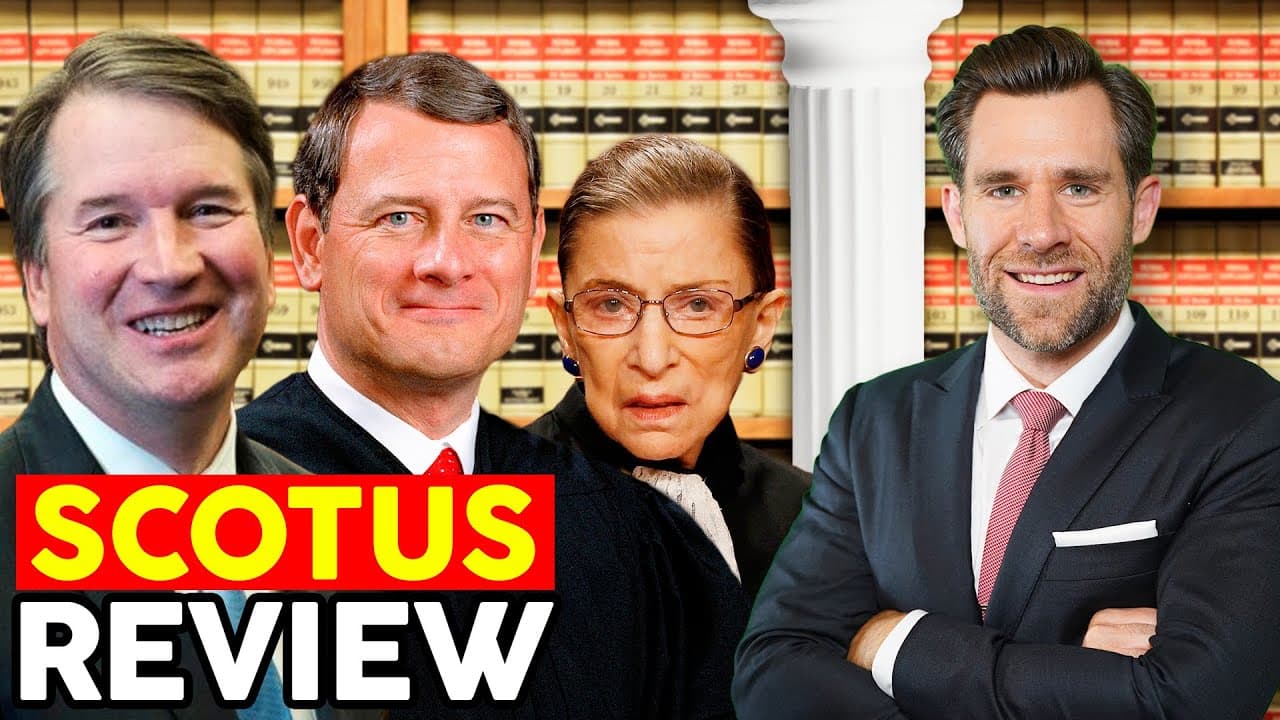
The Supreme Court's most significant cases in 2019 included a ruling that protects scandalous trademarks under the First Amendment, a decision mandating a new trial due to racial bias in jury selection, and the rejection of a citizenship question in the census due to arbitrary reasoning. Additionally, the court addressed partisan gerrymandering and upheld the Dual Sovereignty Doctrine in criminal prosecutions.
Transcript
- Thanks to Indochino for keeping LegalEagle in the air and helping me look fly. (eagle squawking) Justice Brett Kavanaugh's first term as Supreme Court justice has come to a close and it was a big one for the Supreme Court. To recap, Justice Anthony Kennedy retired in 2018, leaving a very important vacancy with the court. Kennedy had been the cour... Read More
Key Insights
- 💼 The Supreme Court addressed significant cases on trademark protection, impartial jury selection, and census citizenship in 2019.
- ⁉️ Decisions on partisan gerrymandering showcased the court's stance on political questions and its limitations in intervening in such matters.
- 🚂 The court's scrutiny of the government's motives in adding a citizenship question to the census emphasized the importance of transparency and legality in administrative actions.
Install to Summarize YouTube Videos and Get Transcripts
Explore YouTube Video Summarizer or Get YouTube Transcript Extractor
Questions & Answers
Q: What was the significance of the FUCT trademark case?
The Supreme Court invalidated a law prohibiting "immoral or scandalous" trademarks, citing First Amendment issues and expanding free speech protection.
Q: How did the court rule on the census citizenship question?
The court found the government's rationale for adding the question to be contrived, violating the Administrative Procedure Act and potentially leading to undercounts.
Q: What was the outcome of the cases on partisan gerrymandering?
The court ruled that federal courts lack jurisdiction in partisan gerrymandering cases, deeming them non-justiciable political questions.
Q: How did the court address the issue of dual sovereignty and double jeopardy?
The court affirmed the Dual Sovereignty Doctrine, allowing states to prosecute individuals for the same conduct under both state and federal laws, sidestepping double jeopardy concerns.
Summary & Key Takeaways
-
Justice Brett Kavanaugh's first term saw key decisions on trademark protection and impartial jury selection.
-
The court ruled against adding a citizenship question to the census, citing pretextual reasons.
-
Decisions on partisan gerrymandering, dual sovereignty, and religious symbols like the Bladensburg Peace Cross were also highlighted.
Read in Other Languages (beta)
Share This Summary 📚
Summarize YouTube Videos and Get Video Transcripts with 1-Click
Try YouTube Summary with ChatGPT & Claude or YouTube Transcript Generator
Explore More Summaries from LegalEagle 📚





Summarize YouTube Videos and Get Video Transcripts with 1-Click
Try YouTube Summary with ChatGPT & Claude or YouTube Transcript Generator