Inside Luxury’s Secret India Supply Chain
TL;DR
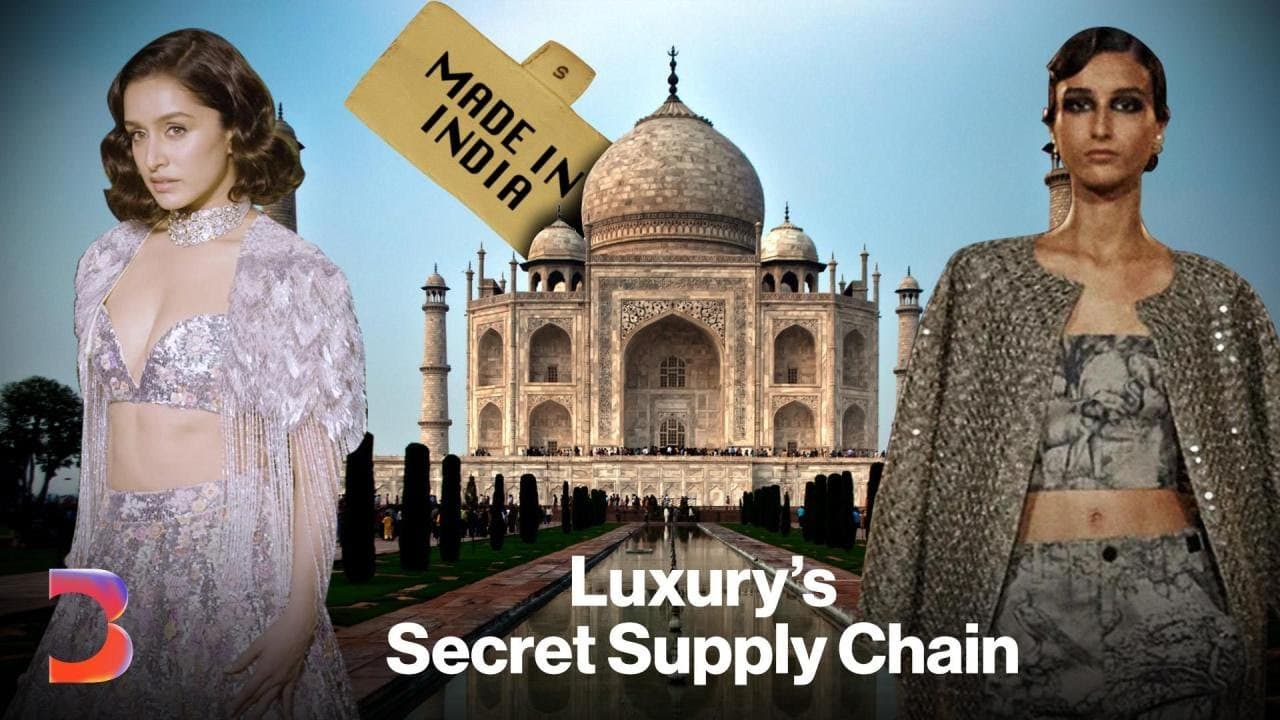
Luxury fashion relies heavily on India's craftsmanship, often uncredited.
Transcript
There is not a single luxury house that does not produce in India. We've recently had Beyonce in her tours wearing a few of our outfits. High quality. Exclusive. And European. The hallmarks of the 180 billion euro luxury fashion industry. But unknown to many consumers is a closely guarded secret. Countries like India are often at the heart of what’... Read More
Key Insights
- Luxury fashion brands have long outsourced production to India, benefiting from its skilled artisans while maintaining a European image.
- Labels like 'Made in France' or 'Made in Italy' are used to justify higher prices, despite much of the labor occurring in India.
- India's embroiderers, known as 'karigar,' play a crucial role in luxury fashion, with their work often unacknowledged.
- Subcontracting in small factories in India can lead to poor working conditions, highlighting the need for improved transparency.
- Despite India's significant contribution, luxury brands have historically hesitated to use 'Made in India' labels due to consumer stereotypes.
- The global fashion system is built on exploitation, with transparency seen as a threat to business rather than a necessity.
- A case study jacket, primarily embroidered in India, illustrates the discrepancy between where labor is done and the 'Made in' label.
- Dior's recent acknowledgment of its Indian suppliers marks a shift towards greater transparency and recognition of Indian craftsmanship.
Install to Summarize YouTube Videos and Get Transcripts
Explore YouTube Video Summarizer or Get YouTube Transcript Extractor
Questions & Answers
Q: Why do luxury fashion brands outsource production to India?
Luxury fashion brands outsource production to India because of the country's skilled artisans, known as 'karigar,' who possess rare handicraft skills. India offers high-quality craftsmanship at a lower cost compared to Europe, allowing brands to maintain their exclusivity while maximizing profits. However, this often leads to a lack of recognition for India's contribution.
Q: What are the implications of using labels like 'Made in France' or 'Made in Italy'?
Labels like 'Made in France' or 'Made in Italy' imply a higher quality and exclusivity, justifying premium prices for luxury fashion items. However, these labels can be misleading, as much of the labor and craftsmanship occur in countries like India. This practice obscures the true origins of the products and undermines the recognition of skilled artisans in developing nations.
Q: How does the subcontracting system in India affect working conditions?
The subcontracting system in India often results in poor working conditions for artisans. Small factories, where much of the subcontracted work occurs, can lack proper ventilation and safety measures. Artisans may work long hours and, in some cases, sleep on factory floors to save on rent. This highlights the need for improved transparency and accountability in the supply chain.
Q: Why have luxury brands been hesitant to use 'Made in India' labels?
Luxury brands have been hesitant to use 'Made in India' labels due to consumer stereotypes that associate Indian-made products with lower quality. By labeling products as 'Made in Europe,' brands can maintain an image of exclusivity and justify higher prices. However, this practice obscures the significant role India plays in the industry and denies recognition to skilled artisans.
Q: What role does transparency play in the global fashion industry?
Transparency is crucial in the global fashion industry as it ensures accountability and ethical practices. Improved transparency can help protect vulnerable workers in supply chains by revealing working conditions and labor practices. However, many brands view transparency as commercially sensitive, fearing it could harm their business by exposing the true origins of their products.
Q: How does the case study jacket illustrate issues in the luxury fashion industry?
The case study jacket, primarily embroidered in India but labeled 'Made in France,' illustrates the discrepancy between where labor is done and the 'Made in' label. This reflects European Union regulations that define the country of origin as where the last substantial transformation occurred, not where the bulk of labor was completed. This practice undermines the recognition of Indian artisans' contributions.
Q: What recent changes indicate a shift towards greater transparency in luxury fashion?
Recent changes, such as Dior's acknowledgment of its Indian suppliers, indicate a shift towards greater transparency in luxury fashion. This move marks a departure from the industry's historical reluctance to credit Indian artisans. It reflects a growing recognition of India's contribution and aligns with a younger, progressive generation seeking fairness and transparency in the industry.
Q: How is India's growing importance impacting the luxury fashion industry?
India's growing importance in the luxury fashion industry is making it increasingly difficult for brands to ignore the country's contributions. As the world's most populous nation, India's skilled artisans and significant role in production are gaining recognition. This shift is driven by a desire for more transparency and fairness, paving the way for a new generation of creatives seeking to celebrate Indian craftsmanship.
Summary & Key Takeaways
-
Luxury fashion brands have long relied on India's skilled artisans for production, yet often label their products as 'Made in Europe' to maintain an image of exclusivity and justify higher prices. This practice obscures the significant role India plays in the industry.
-
India's embroiderers, known as 'karigar,' are essential to luxury fashion, yet face poor working conditions due to subcontracting in small factories. The industry's lack of transparency perpetuates these issues, as brands are reluctant to acknowledge their Indian ties.
-
Recent shifts towards transparency, such as Dior's acknowledgment of its Indian suppliers, signal a growing recognition of India's contribution to luxury fashion. This change is driven by a younger generation seeking fairness and transparency in the industry.
Read in Other Languages (beta)
Share This Summary 📚
Summarize YouTube Videos and Get Video Transcripts with 1-Click
Try YouTube Summary with ChatGPT & Claude or YouTube Transcript Generator
Explore More Summaries from Bloomberg Originals 📚





Summarize YouTube Videos and Get Video Transcripts with 1-Click
Try YouTube Summary with ChatGPT & Claude or YouTube Transcript Generator