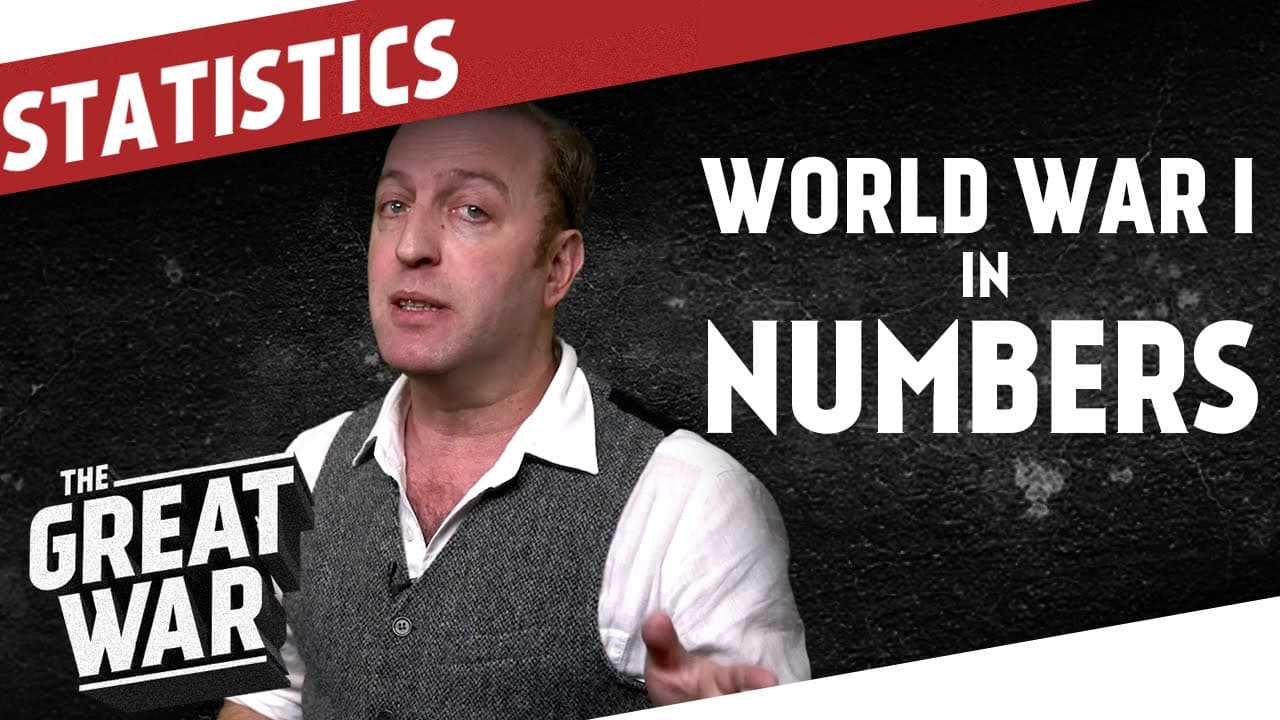
World War 1 in Numbers I THE GREAT WAR Special
TL;DR
World War 1's immense scale depicted through staggering logistical numbers.
Transcript
The scale of the First World War was so large that it was often difficult to gauge. I talk a lot about the numbers of the dead, the wounded, even the refugees, but today I’m going to throw some other numbers at you to help get some more perspective; not numbers of people, numbers of things. I’m Indy Neidell; welcome to a Great War Special Episode o... Read More
Key Insights
- Artillery advancements during World War 1 drastically increased the war's lethality, with millions of shells fired in major battles like Verdun and Chemin des Dames.
- The logistics of supplying millions of soldiers on the Western Front were unprecedented, involving extensive infrastructure for transportation, communication, and daily necessities.
- The Canadian Corps, holding a small section of the front, operated like a city, requiring significant resources and infrastructure to maintain military operations.
- Engineers constructed extensive road and rail networks to support troop movements and supply lines, crucial for maintaining the war effort on the Western Front.
- The supply requirements for armies were massive, with millions of pounds of food and supplies needed monthly, highlighting the logistical challenges faced during the war.
- Forestry Companies played a crucial role in providing the necessary wood for infrastructure, which was essential for maintaining roads, railways, and other military necessities.
- Communication systems were vital for coordination, with thousands of kilometers of telephone wire laid to ensure effective command and control across the front.
- The war's scale required innovative solutions for troop movement and supply, with underground subways and tramways playing key roles in logistical operations.
Install to Summarize YouTube Videos and Get Transcripts
Explore YouTube Video Summarizer or Get YouTube Transcript Extractor
Questions & Answers
Q: What role did artillery play in World War 1?
Artillery was a pivotal factor in World War 1, with its destructive power increasing exponentially as the war progressed. Major battles like Verdun saw millions of shells fired, resulting in massive casualties. The development of artillery technology and tactics significantly contributed to the war's lethality, making it one of the deadliest conflicts in history.
Q: How did logistics support the war effort on the Western Front?
Logistics were vital to the war effort on the Western Front, involving the construction of extensive infrastructure including roads, railways, and communication systems. Supplying millions of soldiers required efficient transport of food, ammunition, and other necessities. Engineers played a key role in maintaining these supply lines, ensuring that operations could continue despite the challenging conditions.
Q: What logistical challenges did the Canadian Corps face during the war?
The Canadian Corps faced significant logistical challenges, operating like a city with over 170,000 men. They required vast amounts of resources, including food, water, and medical supplies. Infrastructure such as roads and railways had to be built and maintained, and communication systems established, to ensure effective coordination and supply of their section of the front.
Q: How was wood used in the war effort?
Wood was a critical resource during World War 1, used extensively for constructing roads, railways, duckboards, and tunnel supports. Forestry Companies provided the necessary wood, erecting mobile sawmills to supply the vast quantities needed. This was essential for maintaining the infrastructure that supported military operations on the front lines.
Q: What were the food supply requirements for the German Army?
The German Army's food supply requirements were enormous, with a single unit of 35,000 men consuming millions of pounds of meat, bread, and other staples monthly. Extrapolated to the entire army, these numbers highlight the immense logistical challenge of feeding such a large force, necessitating efficient supply chains and resource management.
Q: How did the war's scale affect communication systems?
The scale of World War 1 necessitated robust communication systems to ensure effective command and control. Thousands of kilometers of telephone wire were laid across the front, both aboveground and in tunnels, allowing for real-time coordination of military operations. This infrastructure was crucial for maintaining the war effort and responding to the dynamic battlefield environment.
Q: What innovative solutions were implemented for troop movement?
Innovative solutions such as underground subways and tramways were implemented to facilitate troop movement and supply transport. These systems allowed for discreet and efficient movement of soldiers and materials, reducing exposure to enemy fire and maintaining the element of surprise during offensives. Such innovations were critical to overcoming the logistical challenges of the war.
Q: What impact did the war's numbers have on its outcome?
The staggering numbers associated with World War 1, from artillery shells to supply requirements, underscore the scale and intensity of the conflict. These numbers reflect the immense human and material costs, shaping the war's outcome by influencing military strategy, resource allocation, and the eventual exhaustion of the warring nations. The logistical demands played a crucial role in determining the war's trajectory and eventual conclusion.
Summary & Key Takeaways
-
World War 1's scale was immense, with artillery playing a crucial role in its destructiveness. The logistical demands were unprecedented, requiring extensive infrastructure to support military operations and supply millions of soldiers on the front lines.
-
The Canadian Corps' operations on a small section of the front illustrate the complexity of wartime logistics, involving road and rail construction, communication systems, and massive supply chains to maintain combat effectiveness.
-
Supplying the armies required vast quantities of food and materials, with innovative solutions like underground subways aiding in troop movement. The war's numbers reflect both the scale of destruction and the logistical challenges faced.
Read in Other Languages (beta)
Share This Summary 📚
Summarize YouTube Videos and Get Video Transcripts with 1-Click
Try YouTube Summary with ChatGPT & Claude or YouTube Transcript Generator
Explore More Summaries from The Great War 📚


Summarize YouTube Videos and Get Video Transcripts with 1-Click
Try YouTube Summary with ChatGPT & Claude or YouTube Transcript Generator