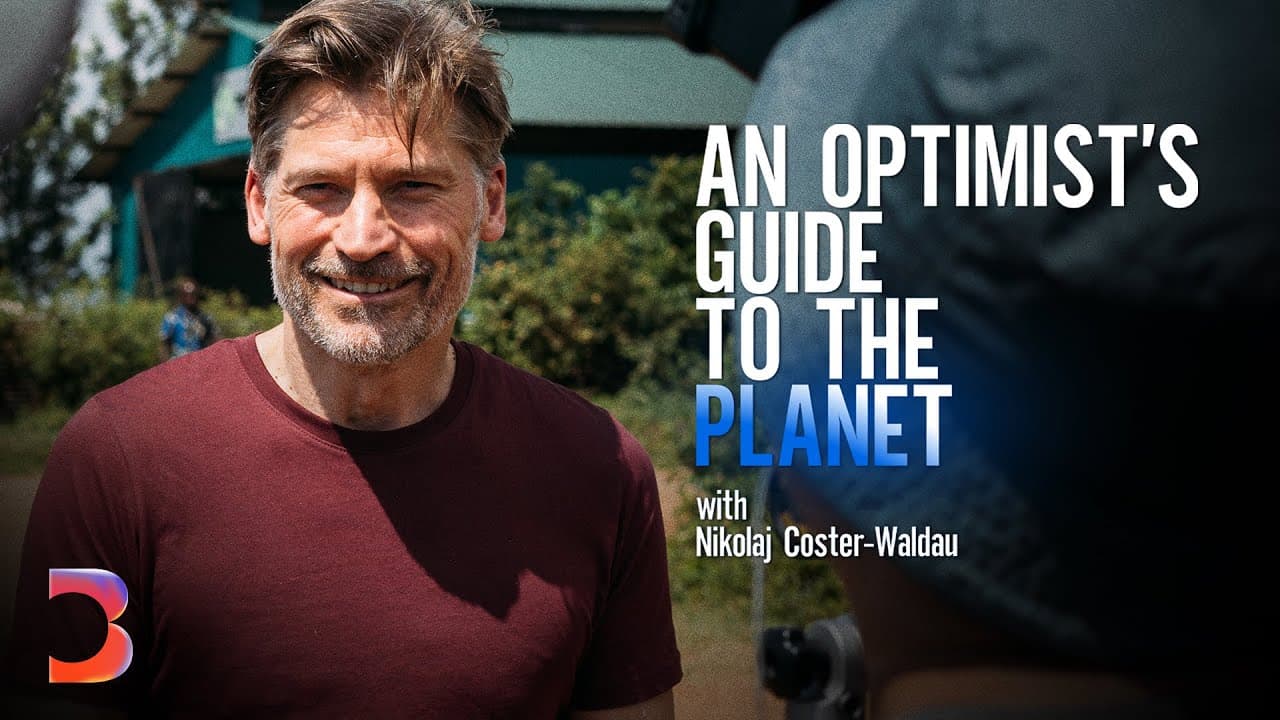
Nourish: Rethinking Our Approach to Food | An Optimist’s Guide to the Planet
TL;DR
Exploring global efforts to nourish sustainably amid climate challenges.
Transcript
Oh my God, this is so good. There's no better feeling than that of being well-nourished in body and in soul. We grow vegetables, but to me, we give life. Globally, we produce more than enough food to feed the world, yet millions of children go to bed hungry in the poorest countries and in the wealthiest. So when I walked, I didn't see any grocery s... Read More
Key Insights
- Nikolaj Coster-Waldau highlights the paradox of global food production, where surplus coexists with hunger, emphasizing the need for sustainable solutions.
- Urban farming in Cleveland, Ohio, transforms a neglected area into a thriving community hub, showcasing the power of local initiatives to combat food deserts.
- The Rid-All farm's regenerative practices double their produce output, demonstrating the potential of sustainable agriculture in urban settings.
- Agave farming in Mexico, led by Faby and Diana, illustrates how traditional methods can preserve biodiversity while producing high-quality mezcal.
- Wageningen University's Farm of the Future employs crop diversity and cutting-edge technology to reduce pesticide use and maintain biodiversity.
- Charlot's Mukuru stove innovation in Kenya offers an affordable, efficient cooking solution, reducing household air pollution and promoting sustainable fuel use.
- The Mukuru stove project exemplifies social entrepreneurship, balancing profit with impactful community benefits, like mosquito-repellent fuels.
- Nikolaj's journey underscores the importance of empathy and social responsibility in business, advocating for a shift from profit-centric to purpose-driven models.
Install to Summarize YouTube Videos and Get Transcripts
Explore YouTube Video Summarizer or Get YouTube Transcript Extractor
Questions & Answers
Q: What is the main focus of the video content?
The main focus of the video is on exploring innovative and sustainable approaches to food production and distribution across different regions. It highlights the efforts of individuals and communities in the US, Mexico, and Kenya who are implementing creative solutions to address food insecurity, promote biodiversity, and adapt to climate change.
Q: How does the Rid-All farm in Cleveland contribute to sustainability?
The Rid-All farm in Cleveland contributes to sustainability by transforming a neglected urban area into a thriving community hub. The farm employs regenerative agricultural practices, which have doubled their produce output without relying on chemical fertilizers or pesticides. This initiative not only provides fresh produce to a food desert but also serves as a model for urban farming, creating jobs and fostering community resilience.
Q: What is unique about the agave farming approach in Mexico?
The agave farming approach in Mexico, led by Faby and Diana, is unique in its integration of traditional methods with modern sustainability goals. They focus on preserving biodiversity by maintaining a diverse ecosystem around their agave plants. By allowing a portion of the agave to remain unharvested, they support natural pollinators like bats, which are crucial for the ecological balance. Their approach produces high-quality mezcal while conserving the environment.
Q: What innovations are being tested at Wageningen University's Farm of the Future?
Wageningen University's Farm of the Future is testing innovations such as crop diversity and autonomous machinery to reduce pesticide use and maintain biodiversity. The farm features multiple crops within a single field, supported by flower strips and beetle banks that naturally control pests. This approach, coupled with the use of hydrogen-powered equipment, aims to demonstrate sustainable farming practices that can be scaled globally.
Q: How does the Mukuru stove project impact communities in Kenya?
The Mukuru stove project impacts communities in Kenya by providing an affordable and efficient cooking solution that reduces household air pollution. The stoves, made from recycled materials, offer 90% more efficiency than traditional stoves, thus lowering fuel consumption. Charlot's initiative also includes a sustainable fuel exchange program, making the stoves accessible to low-income households and promoting environmental conservation.
Q: What challenges do the Mukuru stove project address?
The Mukuru stove project addresses challenges such as household air pollution, high fuel costs, and inefficient cooking methods. By offering a stove that is both affordable and efficient, the project reduces the reliance on traditional, smoke-producing stoves, thus improving indoor air quality and health outcomes. Additionally, the project promotes the use of sustainable fuels, contributing to environmental conservation and economic savings for families.
Q: What role does social entrepreneurship play in the Mukuru stove project?
Social entrepreneurship plays a crucial role in the Mukuru stove project by balancing profit with community impact. Charlot's business model focuses on making the stoves accessible to low-income households, ensuring that the benefits of reduced air pollution and fuel efficiency reach those who need it most. The project also provides economic opportunities for local women entrepreneurs, who earn commissions by selling the stoves, thereby fostering community empowerment.
Q: How does the video content inspire viewers to think about sustainability?
The video content inspires viewers to think about sustainability by showcasing real-world examples of innovative solutions to food production and environmental challenges. It highlights the power of local initiatives and the potential for positive change when communities come together to address common issues. By demonstrating the impact of sustainable practices on both people and the planet, the video encourages viewers to consider how they can contribute to a more sustainable future.
Summary & Key Takeaways
-
Nikolaj Coster-Waldau explores innovative approaches to food production and sustainability across the globe, highlighting efforts in the US, Mexico, and Kenya. From urban farming in Cleveland to agave cultivation in Mexico and efficient cooking solutions in Kenya, these initiatives showcase the potential for positive change.
-
In Cleveland, the Rid-All farm transforms a neglected urban area into a sustainable community resource, doubling its produce output through regenerative practices. Meanwhile, in Mexico, agave farmers Faby and Diana preserve biodiversity by integrating traditional methods with modern sustainability goals.
-
Charlot's Mukuru stove project in Kenya offers an affordable, efficient cooking solution that reduces household air pollution and promotes sustainable fuel use. These stories collectively demonstrate the potential of local initiatives to address global challenges and inspire broader systemic change.
Read in Other Languages (beta)
Share This Summary 📚
Summarize YouTube Videos and Get Video Transcripts with 1-Click
Try YouTube Summary with ChatGPT & Claude or YouTube Transcript Generator
Explore More Summaries from Bloomberg Originals 📚





Summarize YouTube Videos and Get Video Transcripts with 1-Click
Try YouTube Summary with ChatGPT & Claude or YouTube Transcript Generator