What Was the Brusilov Offensive in WW1?
TL;DR
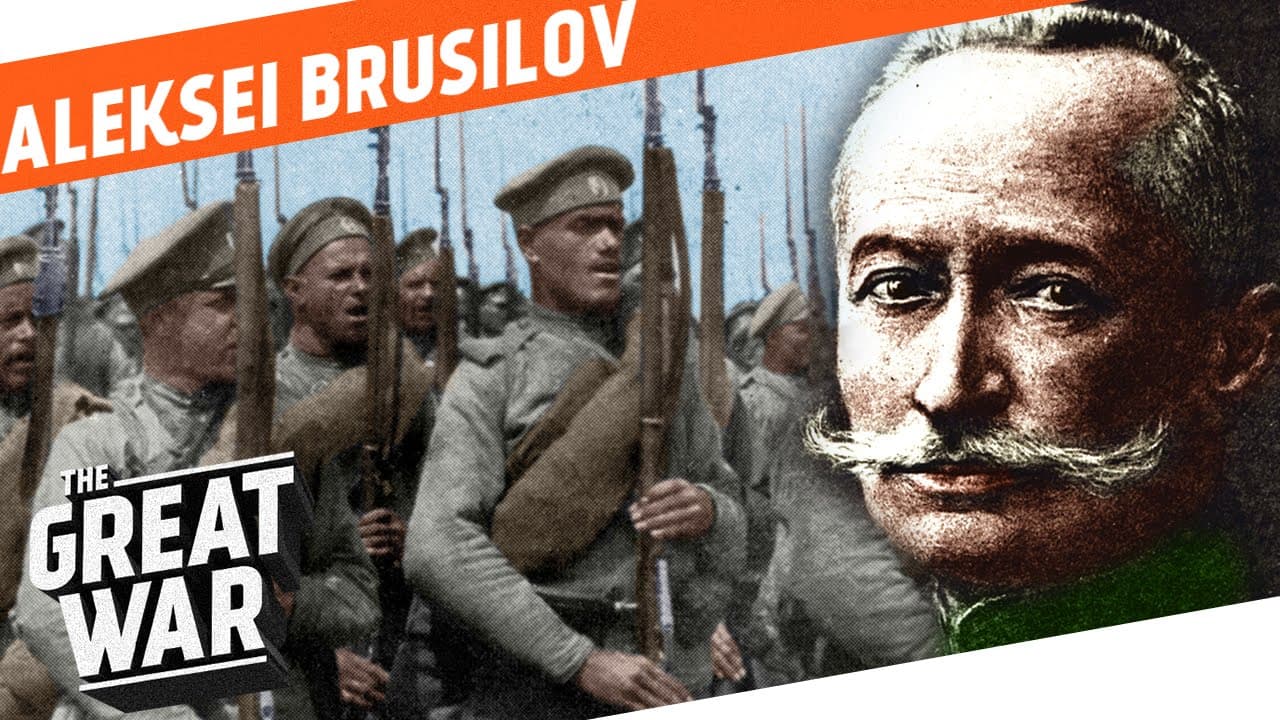
The Brusilov Offensive was a major Russian military operation during World War I, led by General Aleksei Brusilov. It was one of the most successful Allied offensives, inflicting massive casualties on the Austro-Hungarian Army. Despite its success, the operation did not achieve its strategic goals due to lack of coordination and support from other Russian fronts.
Transcript
The Offensive operation of the First World War that claimed the most casualties is also the only major one named after its mastermind. I’m talking about Russia’s Brusilov Offensive and its creator General Alexei Brusilov. I’m Indy Neidell; welcome to our Great War bio series of specials “Who did what in World War One?” today featuring Alexei Brusil... Read More
Key Insights
- Aleksei Brusilov was a Russian general known for his innovative tactics during the Brusilov Offensive.
- The Brusilov Offensive was launched in June 1916 and aimed to break through Austro-Hungarian lines.
- Brusilov's tactics included surprise attacks and concentrated artillery bombardments to disorient the enemy.
- The offensive resulted in over a million Austro-Hungarian casualties, severely weakening their military.
- Despite its initial success, the offensive failed to achieve its strategic objectives due to lack of support.
- Brusilov's approach influenced future military tactics, emphasizing preparation and coordination.
- The operation highlighted the logistical challenges faced by the Russian army during World War I.
- Brusilov's career spanned both Tsarist and Bolshevik regimes, reflecting his adaptability and commitment.
Install to Summarize YouTube Videos and Get Transcripts
Explore YouTube Video Summarizer or Get YouTube Transcript Extractor
Questions & Answers
Q: What was the Brusilov Offensive?
The Brusilov Offensive was a major Russian military campaign during World War I, led by General Aleksei Brusilov in 1916. It aimed to break through Austro-Hungarian lines on the Eastern Front. The offensive was notable for its innovative tactics and resulted in significant Austro-Hungarian casualties, but it ultimately failed to achieve its strategic objectives due to lack of support from other Russian fronts.
Q: Who was Aleksei Brusilov?
Aleksei Brusilov was a prominent Russian general best known for leading the Brusilov Offensive during World War I. Born in 1853, he had a distinguished military career, serving in both the Tsarist and Bolshevik armies. Brusilov was recognized for his innovative tactics and his ability to adapt to changing political landscapes, making significant contributions to military strategy.
Q: What tactics did Brusilov use in the offensive?
Brusilov employed surprise attacks, concentrated artillery bombardments, and meticulous preparation in the Brusilov Offensive. His tactics involved simultaneous attacks along the front to confuse the enemy and prevent reinforcements. He emphasized thorough training and coordination, which allowed for successful breakthroughs and inflicted heavy casualties on the Austro-Hungarian Army.
Q: What were the outcomes of the Brusilov Offensive?
The Brusilov Offensive resulted in over a million Austro-Hungarian casualties, severely weakening their military capabilities. It was one of the most successful Allied offensives of World War I. However, the operation did not achieve its strategic goals, such as knocking Austria-Hungary out of the war, due to lack of support from other Russian fronts and logistical challenges.
Q: How did the Brusilov Offensive influence future military tactics?
The Brusilov Offensive influenced future military tactics by demonstrating the effectiveness of surprise attacks, concentrated artillery use, and thorough preparation. Brusilov's emphasis on coordination and training set a precedent for future operations, highlighting the importance of well-planned and executed campaigns. His tactics were later mirrored in other successful offensives during World War I.
Q: What challenges did the Russian army face during the offensive?
The Russian army faced significant logistical challenges during the Brusilov Offensive, including supply shortages and inadequate support from other fronts. Despite the initial success of the offensive, these issues, combined with the lack of coordination among Russian commanders, hindered the operation's ability to achieve its strategic objectives. The offensive exposed the limitations of the Russian military's infrastructure.
Q: What was the historical significance of the Brusilov Offensive?
The Brusilov Offensive was historically significant as one of the most successful Allied offensives during World War I, inflicting massive casualties on the Austro-Hungarian Army. It demonstrated the potential of innovative tactics and thorough preparation. Although it failed to achieve long-term strategic goals, the offensive highlighted the need for coordination and logistical efficiency in military operations.
Q: What was Aleksei Brusilov's role after the offensive?
After the Brusilov Offensive, Aleksei Brusilov continued to serve in the Russian military, supporting the Tsar's abdication and later joining the Red Army after the October Revolution. He attempted to restore order during the Russian army's disarray but faced challenges such as widespread desertions and Bolshevik influence. Brusilov retired in 1924 and remained a respected military figure until his death in 1926.
Summary & Key Takeaways
-
Aleksei Brusilov, a Russian general, orchestrated the Brusilov Offensive in 1916, which inflicted heavy casualties on the Austro-Hungarian Army. Despite its tactical success, the offensive did not achieve strategic objectives due to lack of support from other Russian fronts and logistical challenges.
-
Brusilov's innovative tactics, including surprise attacks and concentrated artillery use, set a precedent for future military operations. His approach emphasized thorough preparation and coordination across different levels of command, which was crucial in achieving the initial breakthroughs.
-
The Brusilov Offensive demonstrated the potential of well-coordinated operations but also exposed the limitations of the Russian military's logistics and support systems. Brusilov's legacy includes his influence on military tactics and his complex role in both Tsarist and Bolshevik armies.
Read in Other Languages (beta)
Share This Summary 📚
Summarize YouTube Videos and Get Video Transcripts with 1-Click
Try YouTube Summary with ChatGPT & Claude or YouTube Transcript Generator
Explore More Summaries from The Great War 📚
Summarize YouTube Videos and Get Video Transcripts with 1-Click
Try YouTube Summary with ChatGPT & Claude or YouTube Transcript Generator