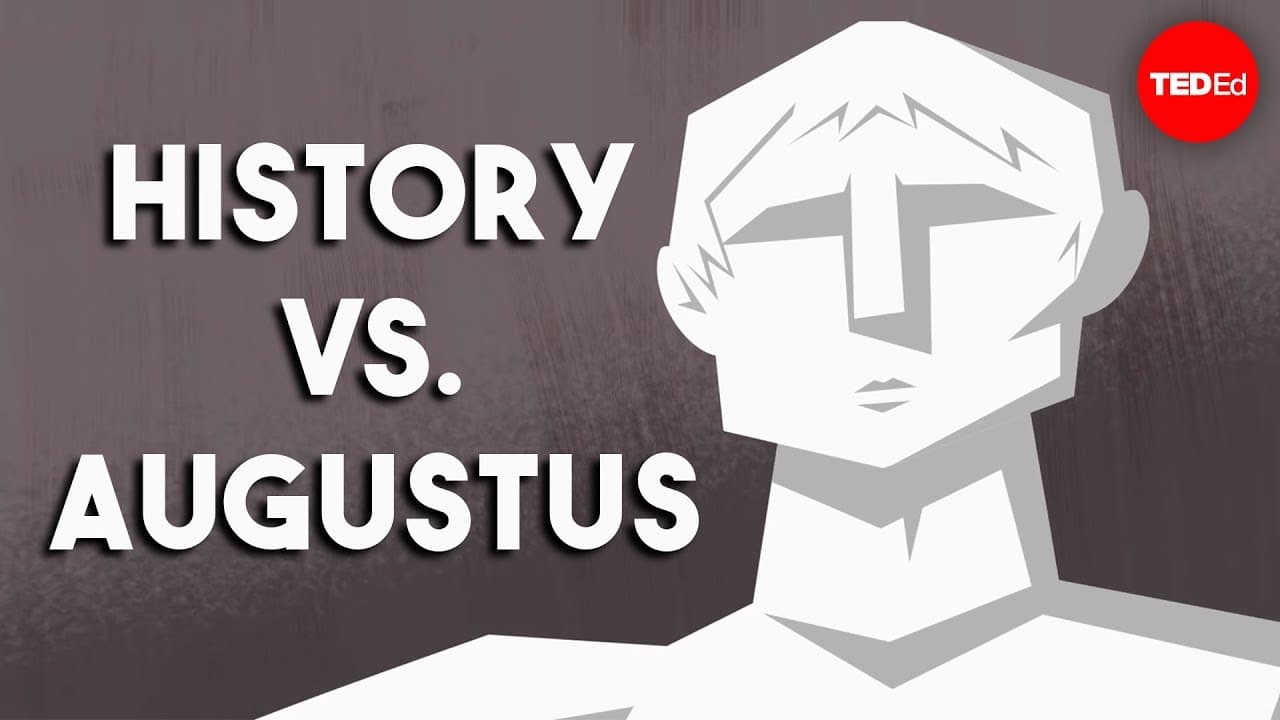
History vs. Augustus - Peta Greenfield & Alex Gendler
TL;DR
Augustus: visionary leader or tyrant? Controversial reign as Rome's first emperor analyzed.
Transcript
His reign marked the beginning of one of history’s greatest empires and the end of one of its first republics. Was Rome’s first emperor a visionary leader who guaranteed his civilization’s place in history or a tyrant who destroyed its core values? Find out in History versus Augustus. Order, order. The defendant today is Gaius Octavius? Gaius Jul... Read More
Key Insights
- 😀 Augustus ended Rome's republic, establishing an empire but facing criticism for autocratic rule.
- ✊ He avenged Caesar's death and defeated rivals like Mark Antony to secure power.
- ❓ Augustus implemented reforms for stability, including taxation, infrastructure, and governance.
- 📏 Critics argue that Augustus' rule was tyrannical, restricting personal freedoms and exiling dissenters.
- ✌️ Augustus' legacy includes 40 years of internal peace, territorial expansion, and lasting impact on Roman governance.
- ⚖️ His reign illustrates the complex balance between effective leadership and oppressive authority.
- 🇨🇫 Augustus' influence on Rome's transition from republic to empire remains a subject of historical debate.
Install to Summarize YouTube Videos and Get Transcripts
Explore YouTube Video Summarizer or Get YouTube Transcript Extractor
Questions & Answers
Q: Was Augustus a visionary leader or a tyrant?
Augustus' reign is debated; while he stabilized Rome and improved governance, his autocratic methods and societal regulations are criticized.
Q: What led Augustus to become Rome's first emperor?
After avenging Caesar's death and defeating Mark Antony, Augustus consolidated power and transformed Rome's governance.
Q: Did Augustus prioritize restoring order in Rome?
Yes, Augustus believed his leadership was essential to prevent the chaos of civil war and ensure stability in the empire.
Q: How is Augustus' legacy viewed historically?
Augustus' legacy is mixed; he is praised for stability and governance, but criticized for autocracy and moral restrictions.
Summary & Key Takeaways
-
Octavius, later known as Augustus, rose to power as Rome's first emperor, ending the republic.
-
He avenged Caesar's death, defeated Mark Antony, and established a stable empire.
-
Augustus implemented reforms but also faced criticism for his autocratic rule and social restrictions.
Read in Other Languages (beta)
Share This Summary 📚
Summarize YouTube Videos and Get Video Transcripts with 1-Click
Try YouTube Summary with ChatGPT & Claude or YouTube Transcript Generator
Explore More Summaries from TED-Ed 📚



Summarize YouTube Videos and Get Video Transcripts with 1-Click
Try YouTube Summary with ChatGPT & Claude or YouTube Transcript Generator