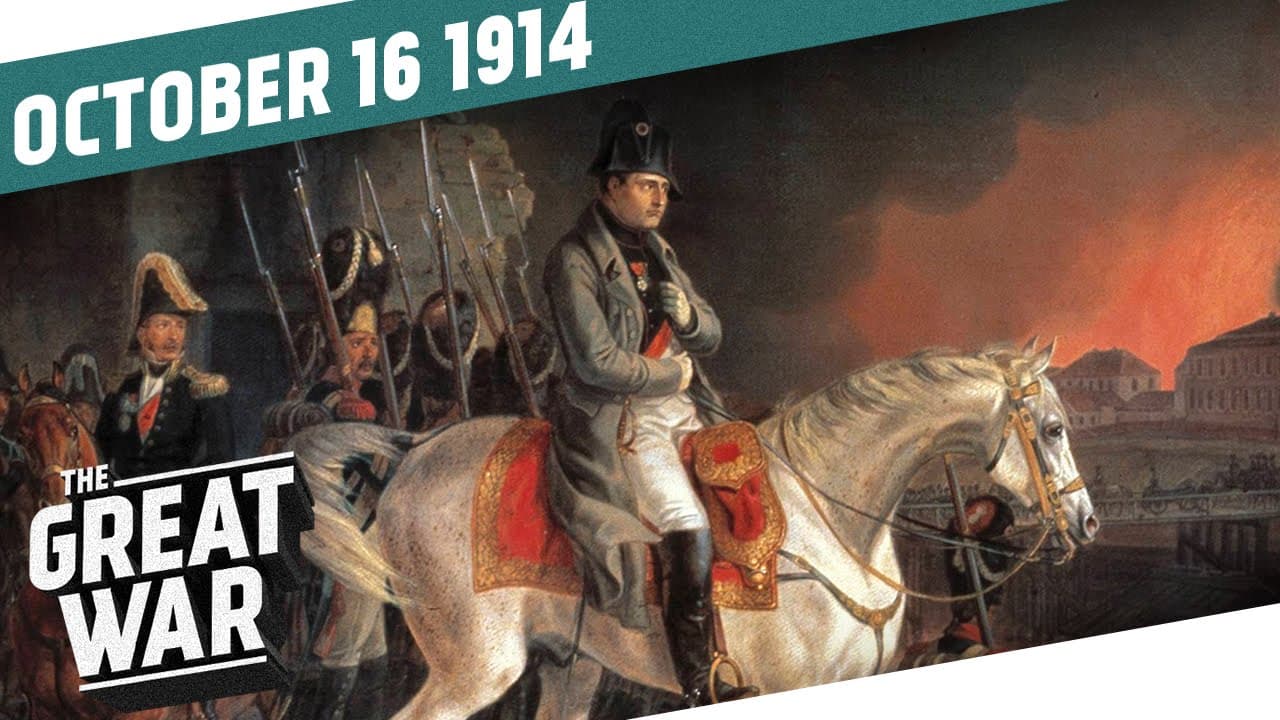
Learning From Napoleon – Russia, The Underestimated Enemy I THE GREAT WAR - Week 12
TL;DR
Russia proves resilient, countering German and Austrian advances.
Transcript
So far this war things had looked grim for the Russians. They had unwillingly entered the war in the first place and the colossal defeats at the battles of Tannenberg and Masurian lakes had convinced the German and Austro-Hungarian armies that Russia’s army was both backward and incompetent, but beginning this week they would learn that Russia was ... Read More
Key Insights
- Germany and Austria underestimated Russia's resilience, similar to Napoleon's mistake a century earlier. Russia's strategic use of space and manpower began to turn the tide on the Eastern Front.
- The German plan to outflank Russian forces near Warsaw failed as Russian reinforcements continually arrived, challenging the German advance.
- Austrian forces faced catastrophic failures due to poor coordination and communication, exemplified by the disastrous crossing attempt at the San River.
- The situation in Russian Poland was chaotic, with frequent changes in control and the rise of a black market for essentials and military supplies.
- Anti-Semitic violence erupted in Russian Poland, with local populations targeting Jews, falsely accusing them of supporting the Germans.
- Russia's military strategy involved ceding land strategically, allowing them to regroup and counterattack when the enemy overextended.
- Trench warfare solidified on the Western Front as both sides attempted to outflank each other, leading to extended battles and entrenched positions.
- The British gained a strategic advantage at sea after acquiring a German signal book, enhancing their ability to intercept and decode enemy communications.
Install to Summarize YouTube Videos and Get Transcripts
Explore YouTube Video Summarizer or Get YouTube Transcript Extractor
Questions & Answers
Q: Why did the Germans and Austrians underestimate the Russian army?
The Germans and Austrians underestimated the Russian army due to early victories at battles like Tannenberg and Masurian Lakes, which portrayed the Russian forces as backward and incompetent. This perception overlooked Russia's strategic depth, vast manpower, and ability to recover and reinforce their positions, ultimately challenging the Central Powers' advances.
Q: What were the key challenges faced by Austrian forces on the Eastern Front?
Austrian forces faced significant challenges due to poor coordination and communication, as seen in the failed San River crossing. Miscommunication led to friendly fire incidents, and inadequate logistical support hindered their operations. These issues, combined with strategic misjudgments, resulted in catastrophic failures against the advancing Russian army.
Q: How did the chaotic situation in Russian Poland affect the local population?
The chaotic wartime environment in Russian Poland led to frequent changes in control between German, Russian, and Austrian forces. This instability fostered a thriving black market for essentials and military supplies. Additionally, anti-Semitic violence erupted, with locals targeting Jews based on unfounded accusations of German sympathy, exacerbating the region's turmoil.
Q: What strategic advantage did Russia have over the Germans and Austrians?
Russia's strategic advantage lay in its ability to use vast space and manpower effectively. Unlike the Germans and Austrians, Russia could afford to cede territory temporarily, allowing them to regroup and counterattack when the enemy overextended. This approach, reminiscent of their strategy against Napoleon, leveraged their geographic and demographic strengths.
Q: How did trench warfare develop on the Western Front?
Trench warfare on the Western Front developed as both the Germans and Allies sought to outflank each other, leading to extended battles and entrenched positions. This stalemate resulted in the construction of extensive trench networks, as neither side could gain a decisive advantage, marking a shift to a war of attrition and positional warfare.
Q: What impact did the captured German signal book have on the British naval efforts?
The captured German signal book provided the British with a significant strategic advantage at sea. It enabled British cryptographers to intercept and decode German naval communications more effectively, allowing them to anticipate and counter German movements. This intelligence boost enhanced the British navy's operational capabilities during the war.
Q: What role did anti-Semitic violence play in the wartime environment of Russian Poland?
Anti-Semitic violence in Russian Poland was fueled by wartime chaos and false accusations that Jews sympathized with the Germans. This led to widespread atrocities, including looting, burning of synagogues, and hangings. Such violence ignored the fact that many Jews served in the Russian army, further complicating the already volatile situation in the region.
Q: How did the Russian army's strategy differ from other combatants during WWI?
The Russian army's strategy differed by its willingness to cede territory strategically, leveraging its vast landmass to absorb enemy advances. This approach allowed them to regroup and counterattack when opponents overextended. Unlike other nations, which viewed territorial loss as unacceptable, Russia's strategy focused on long-term attrition and eventual recovery, reflecting their historical resilience.
Summary & Key Takeaways
-
The German and Austrian forces initially underestimated Russia's military capabilities, expecting quick victories. However, Russia's strategic use of space and substantial reinforcements began to challenge their advances, marking a shift in the Eastern Front dynamics.
-
Austrian military maneuvers suffered from poor execution and communication, leading to disastrous outcomes. Meanwhile, in Russian Poland, the chaotic wartime environment fueled anti-Semitic violence and a thriving black market for essential goods and military supplies.
-
On the Western Front, trench warfare developed as the Germans and Allies attempted to outflank each other, resulting in prolonged battles and entrenched positions. The British gained a significant advantage at sea with a captured German signal book, aiding their naval efforts.
Read in Other Languages (beta)
Share This Summary 📚
Summarize YouTube Videos and Get Video Transcripts with 1-Click
Try YouTube Summary with ChatGPT & Claude or YouTube Transcript Generator
Explore More Summaries from The Great War 📚
Summarize YouTube Videos and Get Video Transcripts with 1-Click
Try YouTube Summary with ChatGPT & Claude or YouTube Transcript Generator